
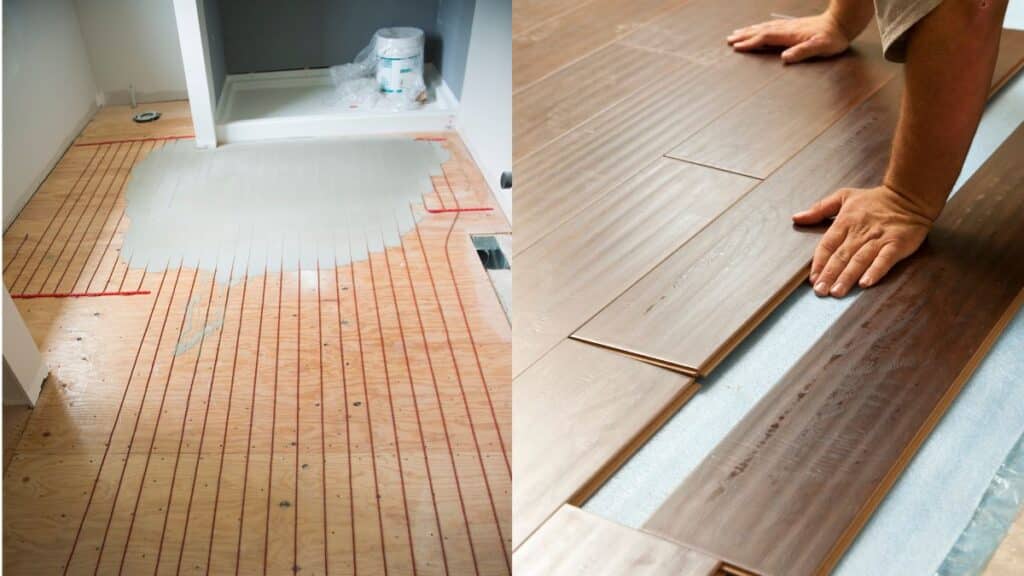
 If you are installing flooring directly over a concrete slab, your material choices must account for conditions that do not exist with wood subfloors. Concrete retains and releases moisture, stays cooler than interior air, and is rarely perfectly level. These factors directly affect how flooring performs over time.
This guide is intended for homeowners finishing basements, upgrading slab-on-grade homes, and investors improving rental properties. It also applies to high-traffic areas such as hallways, where durability matters as much as moisture resistance. Choosing the best flooring for concrete slab installations depends less on appearance and more on how the material handles these conditions.
The goal is to select flooring that resists moisture, installs reliably over concrete, and performs well for the intended use.
Quick Comparison of Top Flooring Options for Concrete Slabs
Art3d Peel and Stick Vinyl Plank Flooring
Type: Luxury Vinyl Plank
Best Use: Basements, living areas, hallways
Moisture Resistance: High
Mold Resistance: High
Durability: Moderate to high
Installation: Peel and stick
Underlayment: Not required if slab is smooth
Price Range: Low to mid
Pros: Easy installation, water-resistant, suitable for DIY
Cons: Requires well-prepared surface
Art3d Peel and Stick Sheet Vinyl Flooring
Type: Sheet Vinyl
Best Use: Rentals, low-budget upgrades
Moisture Resistance: High
Mold Resistance: Moderate to high
Durability: Low to moderate
Installation: Adhesive-backed
Underlayment: Minimal
Price Range: Low
Pros: Affordable, quick to install, continuous surface
Cons: Less durable, shows subfloor imperfections
Jeedeson Multi-ply Engineered Hardwood Flooring
Type: Engineered Wood
Best Use: Living spaces, resale-focused upgrades
Moisture Resistance: Moderate
Mold Resistance: Moderate
Durability: High surface wear, moisture-sensitive core
Installation: Glue-down or floating
Underlayment: Required
Price Range: High
Pros: Premium appearance, improved stability over solid wood
Cons: Higher cost, requires strict moisture control
Best Overall Option: Vinyl Plank Flooring for Concrete Slabs
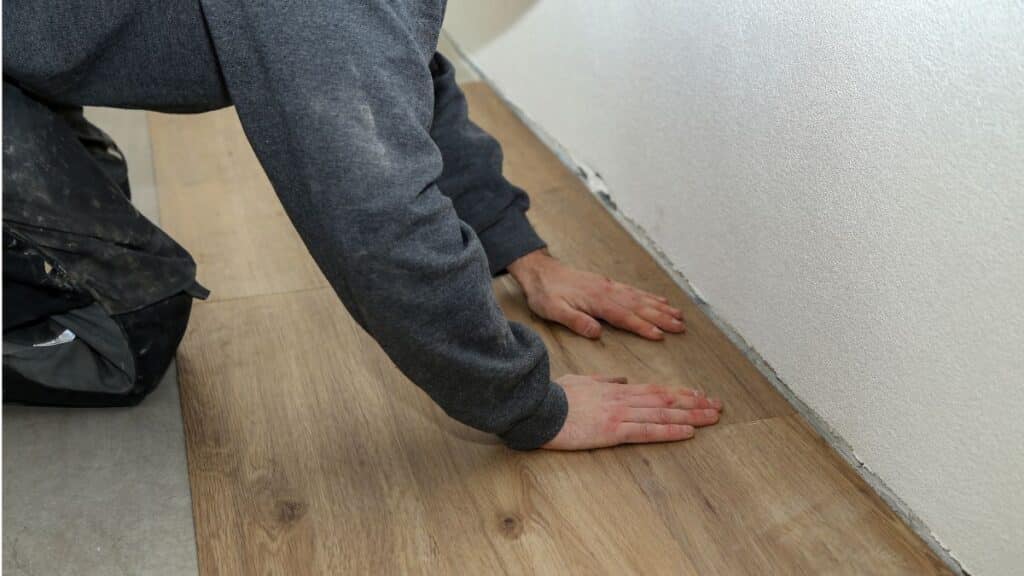 Luxury vinyl plank is one of the most practical materials for installation over concrete. The Art3d peel-and-stick format simplifies installation while maintaining the core advantages of vinyl flooring.
Concrete slabs continuously release moisture vapor, even when they appear dry. Vinyl planks are non-porous, which means they do not absorb that moisture. This significantly reduces the risk of swelling, warping, or mold development beneath the floor.
In high-traffic areas such as hallways, vinyl plank performs reliably. The wear layer protects against abrasion, dirt, and repeated foot traffic. For example, in a rental property where turnover is frequent, vinyl plank typically lasts longer than laminate under similar conditions.
Installation is straightforward but depends heavily on preparation. The slab must be clean, smooth, and level. Adhesive-backed planks will fail if dust, debris, or uneven surfaces are present.
The main limitation is that the flooring reflects the condition of the slab. Cracks or surface irregularities must be corrected before installation to prevent long-term issues.
Best Budget Choice for Concrete Floors: Sheet Vinyl Flooring
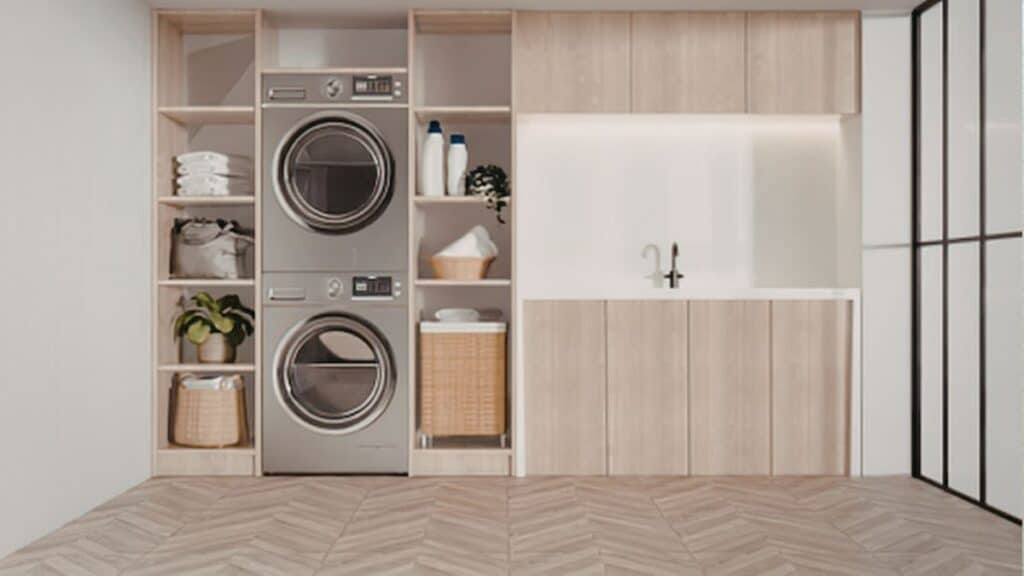 Sheet vinyl is often selected when cost and installation speed are the primary concerns. It provides a continuous, water-resistant surface that works well on concrete slabs.
Fewer seams reduce the number of entry points for moisture. This helps limit the potential for mold, particularly in areas such as laundry rooms or basements where humidity levels may be higher.
Installation is relatively simple, but surface preparation remains critical. Thin materials like sheet vinyl will show imperfections in the slab. Any cracks, dips, or debris can become visible after installation.
The trade-off is durability. In hallways or entry areas, sheet vinyl wears more quickly than thicker materials. It is best suited for low-traffic spaces or short-term applications.
This option is commonly used in rental properties where minimizing upfront cost is a priority and long-term wear is less critical.
Best Professional-Grade Choice: Engineered Hardwood Flooring
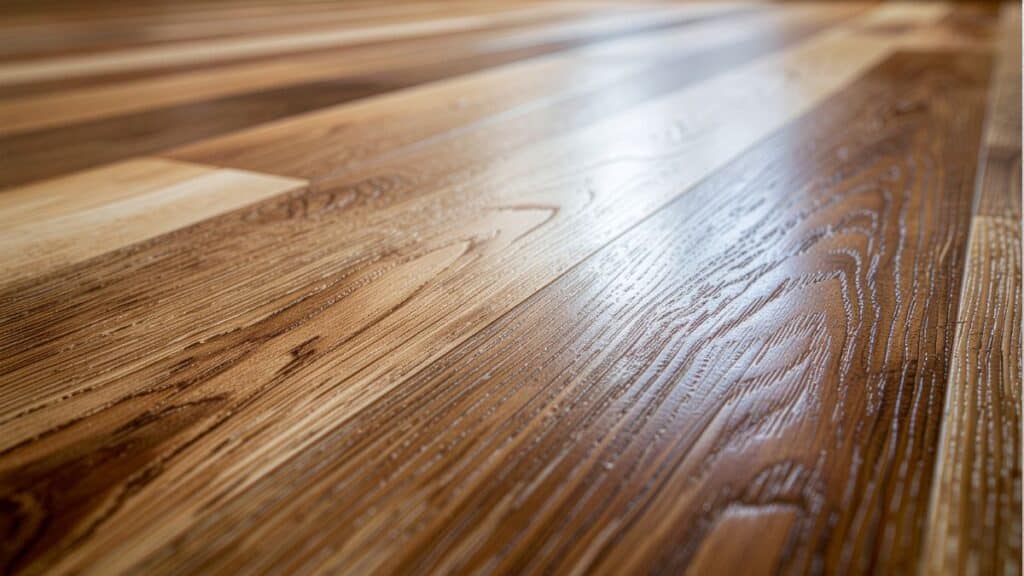 Engineered hardwood is typically chosen for its appearance and potential impact on resale value. The multi-ply construction improves dimensional stability compared to solid wood, making it more suitable for concrete slabs.
However, wood-based products remain sensitive to moisture. Concrete slabs can introduce vapor that affects the core layers of engineered flooring. A proper moisture barrier and compatible underlayment are required to prevent damage.
Installation methods include glue-down or floating systems. Both require precise preparation. Uneven slabs must be leveled, and moisture levels must meet manufacturer specifications before installation begins.
In living areas, engineered hardwood provides a higher-end finish. It is less suitable for basements or areas with elevated moisture unless additional mitigation steps are taken.
This is generally not a DIY-friendly installation. Errors in adhesive application or moisture control can lead to failure that requires full replacement.
How These Flooring Options Were Evaluated
The primary factor in selecting these materials was performance on concrete slabs. Moisture resistance was prioritized because it directly affects durability and long-term reliability.
Mold resistance was also considered. Flooring that traps or absorbs moisture creates conditions for mold growth, particularly in enclosed spaces.
Durability was evaluated based on actual use conditions. Hallways, entryways, and rental units experience higher wear than low-traffic areas, so materials were assessed accordingly.
Installation complexity was included to distinguish between DIY-friendly products and those requiring professional expertise. Cost and availability in the U.S. market were also factored into the selection.
Buying Guide: Choosing the Right Flooring for Concrete Slabs
Managing Moisture and Vapor Transmission
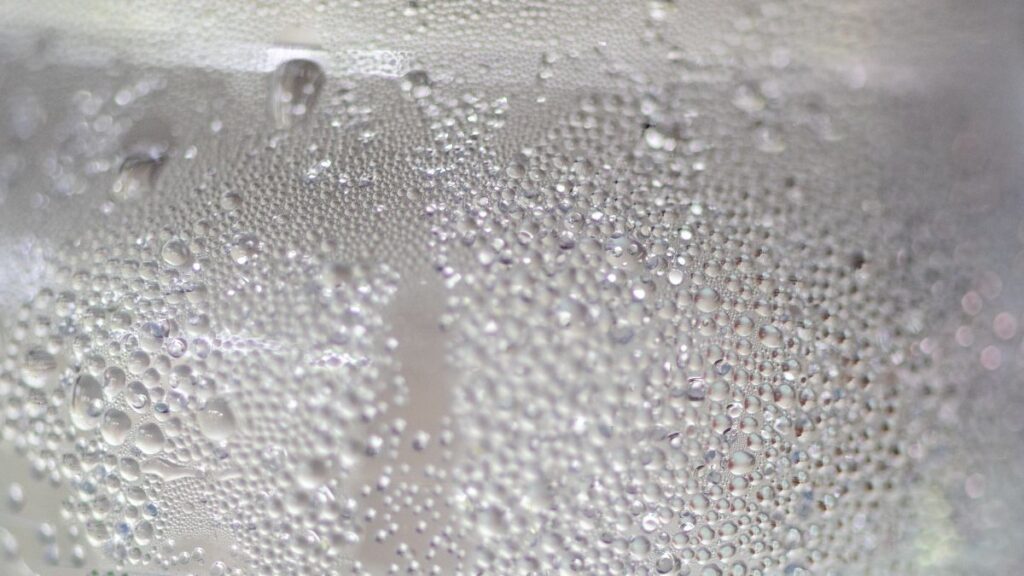
Concrete slabs release moisture through capillary action and vapor diffusion. This occurs even in homes without visible water issues. Ignoring this behavior is a common cause of flooring failure.
Before installation, moisture should be tested. A simple plastic sheet test can indicate surface moisture. More precise methods include moisture meters or calcium chloride testing.
If moisture is present, a vapor barrier or sealer is necessary. Skipping this step can lead to adhesive failure, mold growth, and material degradation.
Choosing the Best Flooring Underlayment
Underlayment plays a critical role when installing certain flooring types over concrete. It can provide cushioning, sound reduction, and moisture protection.
For engineered hardwood and floating floors, a vapor barrier underlayment is typically required. Foam or cork alone may not provide sufficient moisture protection.
Some vinyl products include attached backing, which simplifies installation. However, additional moisture protection may still be needed depending on slab conditions.
Preventing Mold with the Right Flooring Material
Mold develops when moisture is trapped beneath flooring and organic material is present. Non-porous materials such as vinyl reduce this risk because they do not absorb water.
Wood-based products require stricter moisture control. Improper installation can trap moisture, creating conditions for mold growth beneath the surface.
Proper sealing, ventilation, and subfloor preparation are essential to prevent long-term issues.
Durability in Hallways and High-Traffic Areas
Hallways experience continuous use, which accelerates wear. Flooring in these areas must resist scratches, dents, and abrasion.
Vinyl plank flooring performs well due to its protective wear layer. Sheet vinyl, while water-resistant, is less durable and may show wear sooner.
Choosing a material without considering traffic levels often results in early replacement.
Improving Comfort and Thermal Performance
Concrete slabs tend to feel cold underfoot. Flooring can improve comfort by reducing direct contact with the slab.
Vinyl provides moderate improvement, while underlayment can enhance insulation. Engineered wood offers a warmer feel but requires proper installation to avoid moisture-related issues.
In multi-unit buildings, underlayment can also reduce sound transmission between floors.
Installation Methods and Subfloor Preparation
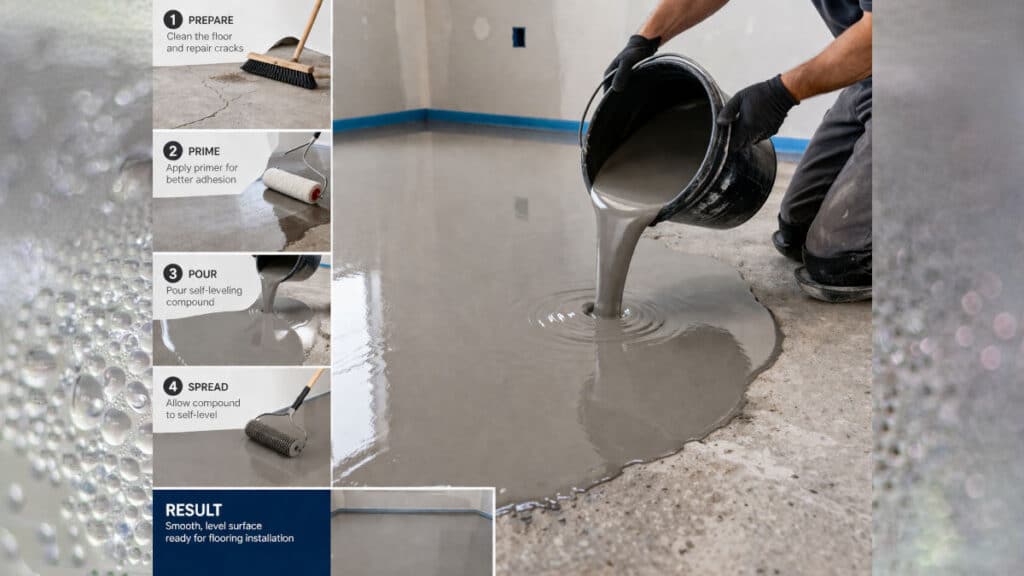
The condition of the slab determines installation success. Cracks, uneven surfaces, and debris must be addressed before flooring is installed.
Peel-and-stick products require smooth, clean surfaces for proper adhesion. Glue-down systems demand even greater precision. Floating floors require expansion gaps to accommodate movement.
Skipping preparation leads to visible defects and premature failure.
Balancing Cost and Long-Term Value
Initial cost is only one factor. Lower-cost materials may require earlier replacement, increasing long-term expense.
For rental properties, durability and ease of maintenance often outweigh appearance. Vinyl products are commonly used for this reason.
In primary residences, higher-end materials can improve resale value. However, they must be installed correctly to justify the investment.
Frequently Asked Questions
What is the best flooring for a concrete slab basement?
Vinyl plank flooring is a reliable option because it resists moisture and does not support mold growth when installed correctly.
Do you need underlayment on a concrete slab?
It depends on the flooring type. Vinyl planks with attached backing may not require it, but engineered wood typically does. Moisture barriers are often necessary.
What flooring helps prevent mold on concrete?
Non-porous materials such as vinyl are effective because they do not absorb moisture and limit conditions for mold growth.
Can engineered hardwood be installed on concrete?
Yes, but it requires a moisture barrier and proper installation method. Glue-down and floating systems are commonly used.
What is the most durable flooring for hallways on slabs?
Vinyl plank flooring is a practical choice due to its resistance to wear and ability to handle high traffic.
How do you test concrete for moisture before installation?
A plastic sheet test provides a basic indication. For more accurate results, use a moisture meter or calcium chloride test.
Final Recommendation for Flooring on Concrete Slabs
Vinyl plank flooring offers the best balance of moisture resistance, durability, and ease of installation for most concrete slab applications. It performs well in basements, hallways, and general living areas.
Sheet vinyl is a practical solution for budget-focused projects or temporary upgrades. It works best in low-traffic areas where long-term durability is not the primary concern.
Engineered hardwood is appropriate for spaces where appearance and resale value are priorities. It requires proper moisture control and professional installation to perform reliably.
Regardless of the material chosen, long-term performance depends on preparation and moisture management. Proper installation is the factor that determines whether the flooring lasts or fails.