
 Bathroom maintenance is a routine responsibility for homeowners, landlords managing rental properties, and anyone responsible for keeping a residential space sanitary. This guide on cleaning the toilets with vinegar and baking soda explains a method commonly used to remove light mineral buildup, odor-causing residue, and everyday staining without relying on harsh chemical cleaners.
When used correctly, vinegar helps dissolve mineral deposits while baking soda provides mild abrasion and odor control. The key is applying the ingredients in the correct order and allowing enough dwell time for the vinegar to soften buildup before scrubbing.
This method works best for routine cleaning and moderate hard water staining rather than severe rust or heavy scale. Used consistently as part of a weekly cleaning routine, it can help prevent stains from becoming difficult to remove and reduce the need for stronger chemical cleaners.
What to Understand Before You Begin
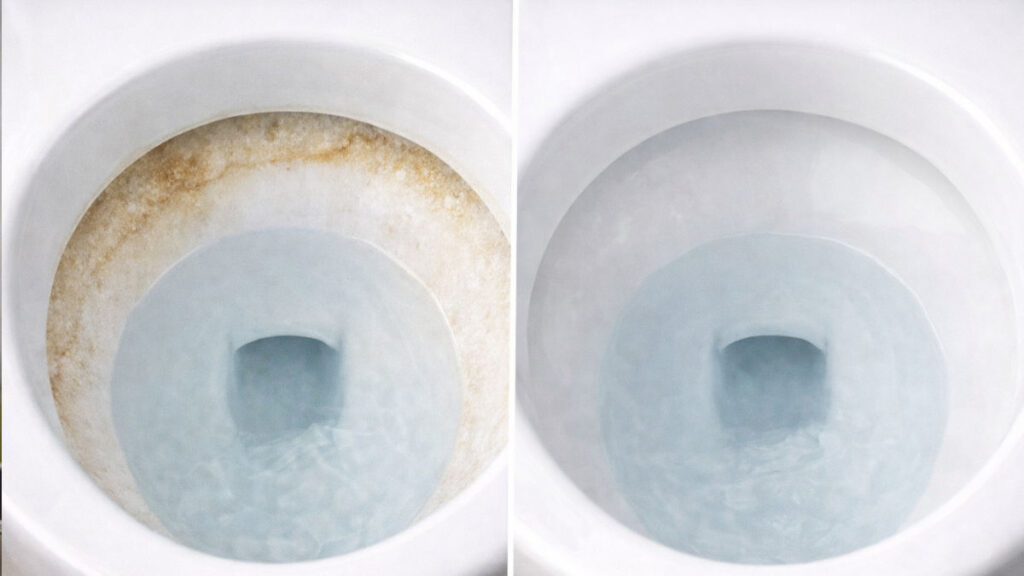
Vinegar and baking soda address two common sources of toilet stains: mineral deposits and organic residue. White distilled vinegar is mildly acidic and helps dissolve calcium, magnesium, and lime deposits left behind by hard water. Baking soda is slightly alkaline and functions as a gentle abrasive that helps loosen residue without damaging porcelain surfaces.
When the two ingredients are combined, they create a brief fizzing reaction that helps lift debris from the bowl surface so it can be brushed away. The reaction itself is not the primary cleaning mechanism. Most of the work comes from vinegar dissolving mineral buildup and the toilet brush removing the softened deposits.
This approach works best for regular maintenance or light staining around the waterline. In homes supplied by municipal water systems with moderate mineral content, toilets often develop a faint gray or tan ring over time. Vinegar can soften these deposits so they are easier to remove with brushing.
However, the method has limitations. Heavy rust staining caused by iron in well water or thick mineral scale that has accumulated over long periods may require stronger descaling products. Vinegar can help prevent these problems from worsening, but it may not remove severe buildup on its own.
This method also fits into a broader bathroom maintenance routine. Vinegar is often used for cleaning the shower with baking soda to remove light soap film and mineral spots. Similar mild cleaners can also help maintain sinks, shower doors, and fixtures when used consistently.
Most bathrooms benefit from a weekly cleaning schedule. High-traffic bathrooms used by multiple people may require quick touch-up cleaning several times during the week to prevent stains and odors from developing.
Tools and Supplies Required
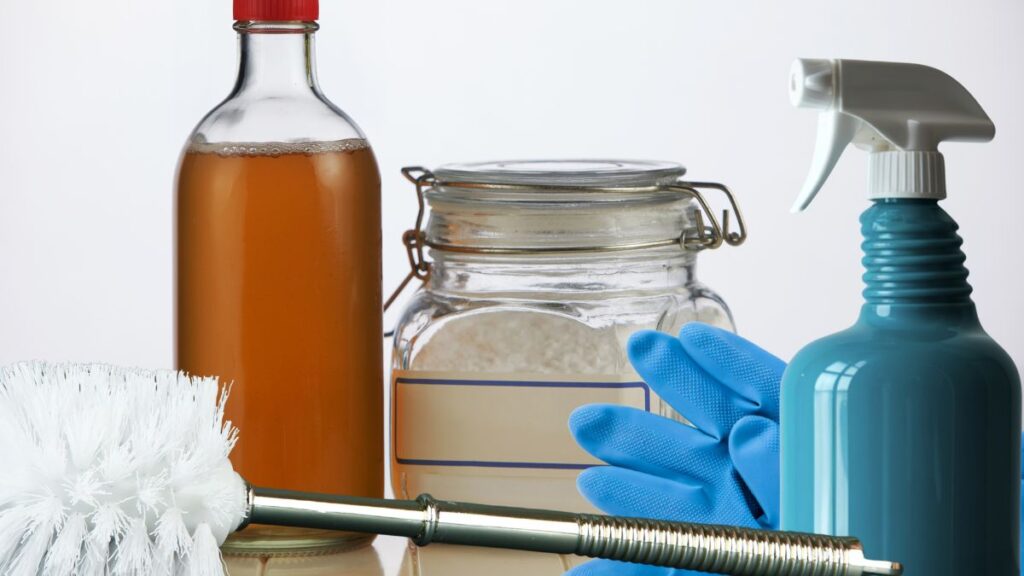
Cleaning a toilet with vinegar and baking soda requires only a few basic household supplies. Having the right tools available makes the process more efficient and helps avoid damage to bathroom fixtures.
Basic supplies include white distilled vinegar, baking soda, a toilet brush with firm bristles, rubber cleaning gloves, and a measuring cup. A spray bottle is helpful for directing vinegar under the toilet rim where mineral deposits often collect. Microfiber cloths and a non-scratch sponge are useful for wiping down the toilet exterior and nearby surfaces.
Although vinegar and baking soda work well for routine toilet maintenance, other bathroom areas often require different products. Soap residue in showers frequently requires a cleaner formulated for soap scum removal. Glass shower doors may require a dedicated bathroom glass door cleaner to prevent streaking and mineral spotting.
Sinks also benefit from periodic cleaning with a gentle bathroom sink cleaner designed for porcelain or ceramic surfaces. In addition, bathroom drains sometimes require a sink drain cleaner designed to break down hair and soap buildup before slow drainage becomes a larger plumbing problem.
Step-by-Step Process
Step 1: Prepare the Toilet Bowl for Cleaning
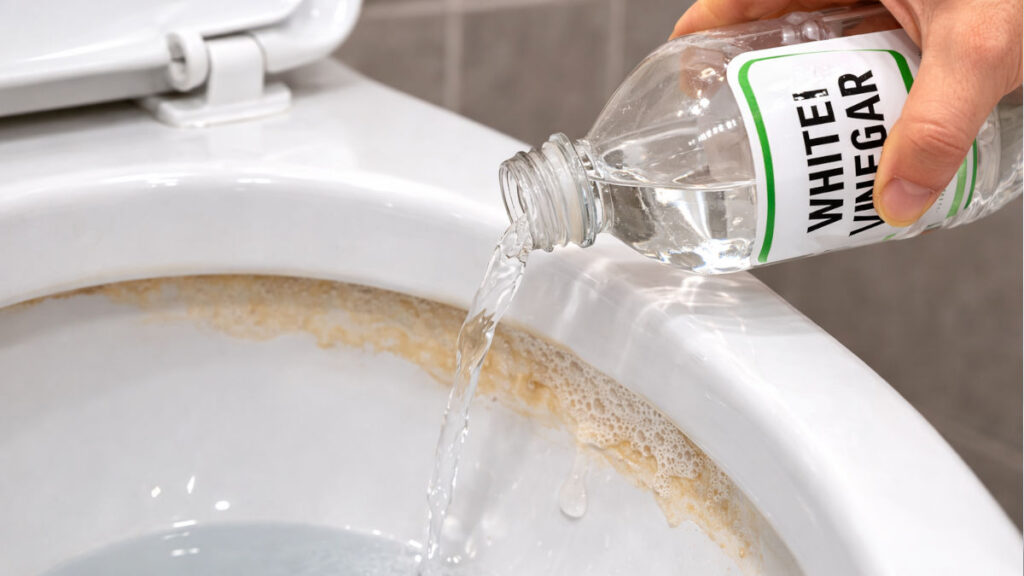
Begin by inspecting the bowl to identify where staining or mineral deposits are concentrated. Most buildup appears along the waterline or beneath the rim where flush water enters the bowl. Flush the toilet once to ensure the bowl contains clean water before applying cleaning solutions.
Next, pour approximately one cup of white distilled vinegar around the inside of the bowl. Focus on stained areas and apply vinegar beneath the rim where mineral deposits often accumulate in the rim jet openings. A spray bottle can help distribute vinegar evenly in these hard-to-reach areas.
Allow the vinegar to sit for at least ten to fifteen minutes. This dwell time allows the acid to begin dissolving calcium and lime deposits. Skipping this soaking period makes scrubbing less effective and often leaves behind mineral residue.
Step 2: Add Baking Soda and Activate the Cleaning Reaction
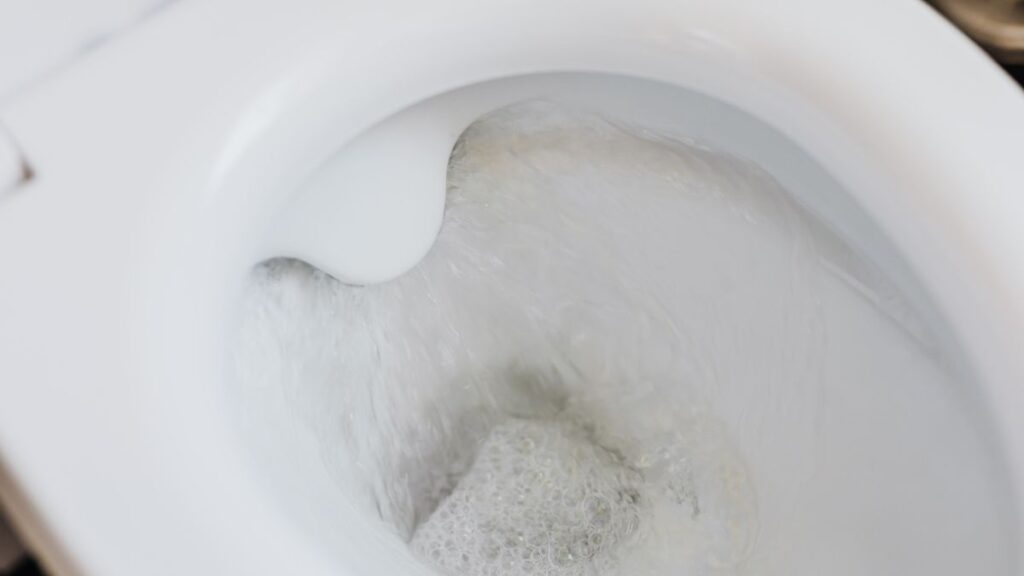
After the vinegar has had time to soften mineral deposits, sprinkle roughly half a cup of baking soda into the bowl. Try to distribute it evenly across the stained areas. Then pour a small amount of additional vinegar over the baking soda to trigger the familiar fizzing reaction.
The bubbling action helps distribute the mixture and lift loosened residue from the bowl surface. Baking soda also provides mild abrasion during scrubbing, which helps remove deposits without damaging the porcelain glaze.
Allow the mixture to sit for several minutes before scrubbing. This additional dwell time allows the cleaning agents to continue breaking down residue, making the brushing step more effective.
Step 3: Brush the Bowl and Flush Away Residue
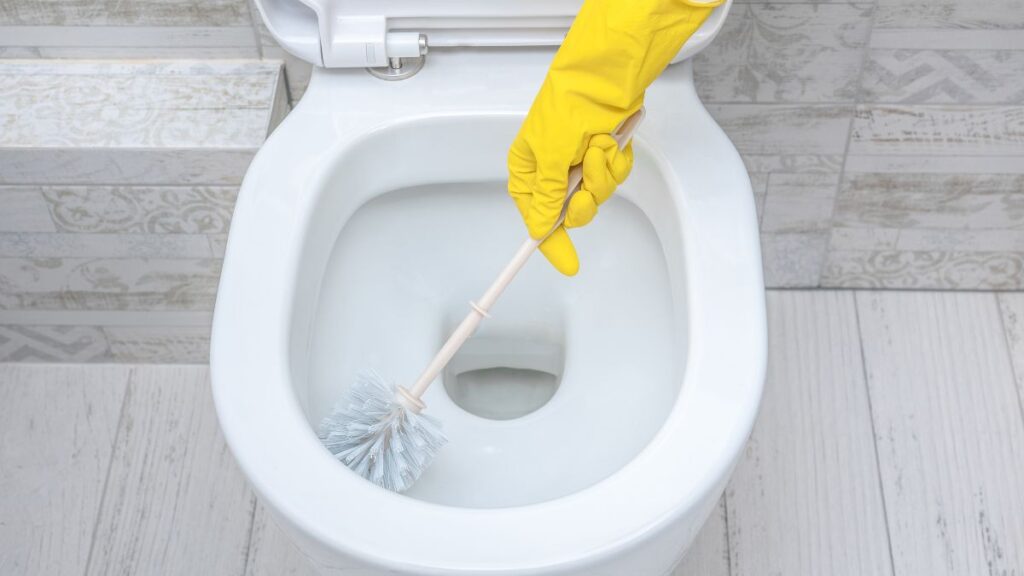
Use a toilet brush to scrub the entire bowl, concentrating on the waterline and the underside of the rim. Mineral buildup often accumulates inside the rim jets, which are the small holes that direct water into the bowl during flushing. Scrubbing these areas helps improve sanitation and can restore more consistent flushing.
Apply firm but controlled pressure while brushing. Porcelain surfaces are durable, but aggressive scraping with abrasive tools can damage the protective glaze. Once scratched, porcelain surfaces tend to stain more easily.
After scrubbing thoroughly, flush the toilet to rinse away the vinegar and baking soda mixture. Inspect the bowl to see whether stains remain. If mineral deposits are still visible, repeat the process or allow the vinegar to soak longer before brushing again.
Cleaning Errors to Avoid
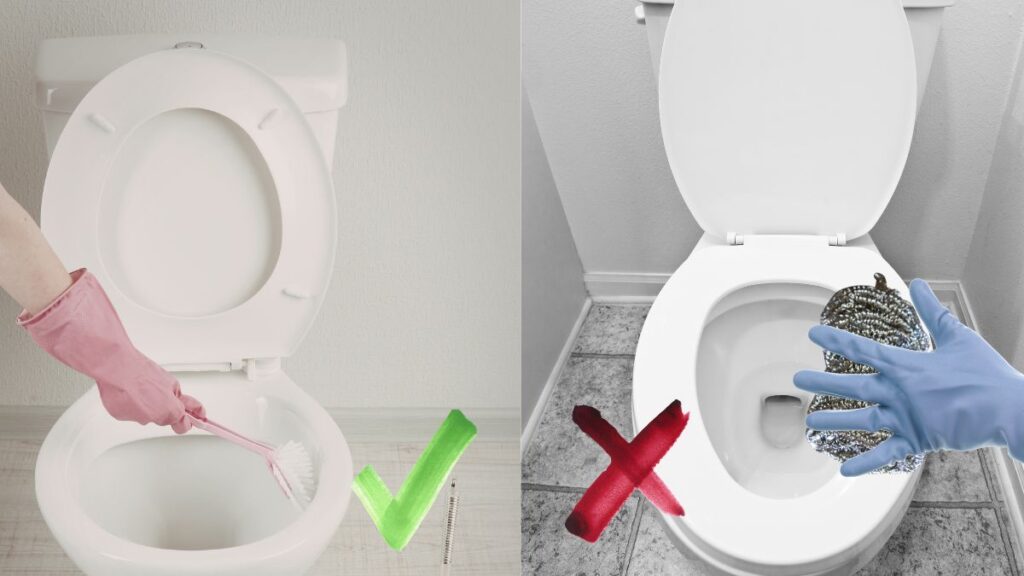
Several common mistakes can reduce the effectiveness of this cleaning method. One frequent error is combining vinegar and baking soda immediately without allowing vinegar to soak first. When mixed instantly, the ingredients neutralize each other quickly and limit vinegar’s ability to dissolve mineral deposits.
Another mistake is using vinegar shortly after bleach-based toilet cleaners. Mixing vinegar with chlorine products can produce chlorine gas, which irritates the respiratory system. If a bleach cleaner has been used previously, flush and rinse the bowl thoroughly before switching to vinegar.
Homeowners sometimes expect this method to remove severe rust staining or thick limescale. These conditions often result from iron-rich water or long-term mineral accumulation. In those cases stronger descaling cleaners may be necessary.
Many people also overlook the underside of the rim. Mineral deposits frequently accumulate in the rim jets where water enters the bowl. If these openings become partially clogged, flushing performance may decline and stains can return quickly.
Finally, avoid using steel wool or overly abrasive pads. Scratching the porcelain glaze creates rough areas where mineral deposits can attach more easily, leading to faster staining in the future.
Safety Practices and Basic Code Considerations
Even when using common household cleaners, basic safety precautions are important. Vinegar is relatively mild but should never be mixed with bleach or ammonia-based cleaners. Chemical reactions between these products can produce gases that irritate the eyes and lungs.
Ventilation is also important when cleaning bathrooms. Bathrooms should have either an operable window or a functioning exhaust fan to remove moisture and odors. Building codes in most U.S. jurisdictions require mechanical ventilation in bathrooms that do not have windows. Running the exhaust fan while cleaning helps improve air circulation.
Care should also be taken when bathrooms contain natural stone materials such as marble or limestone. Vinegar can etch these materials because they are sensitive to acid. If stone surfaces are present, avoid overspray and wipe any spills immediately.
Cleaning supplies should always be stored safely and out of reach of children and pets. Even common household products can cause irritation if they are misused or accidentally ingested.
Most modern toilets are designed to use 1.28 gallons of water per flush or less. These water-efficient designs rely on narrow internal passages to maintain flushing performance. Avoid introducing large quantities of powders or materials that could accumulate inside the trapway or drain.
Frequently Asked Questions
Is it safe to clean a toilet using vinegar and baking soda?
Yes. Vinegar dissolves mineral deposits while baking soda helps loosen residue and neutralize odors. When used correctly, the combination can remove light stains and maintain toilet cleanliness without damaging porcelain surfaces.
How long should vinegar and baking soda remain in the toilet bowl?
Vinegar should sit in the bowl for at least ten to fifteen minutes before baking soda is added. After the baking soda and additional vinegar are introduced, allow the mixture to sit for several more minutes before scrubbing.
Can vinegar remove stains from a toilet bowl?
Vinegar can remove stains caused by mineral deposits and organic buildup. However, stains caused by iron-rich water or heavy limescale may require stronger descaling cleaners.
How frequently should a toilet be cleaned?
Most households benefit from cleaning the toilet once per week. Bathrooms used by several people may require more frequent cleaning to prevent odor and mineral buildup.
How often should an entire bathroom be cleaned?
In most homes, sinks, toilets, and counters should be cleaned weekly. Showers and tubs should also be cleaned regularly to prevent soap scum buildup and mold growth in damp areas.
Can vinegar harm a toilet bowl?
Vinegar is generally safe for porcelain toilet bowls when used occasionally for cleaning. However, it should not be used on natural stone surfaces nearby and should never be mixed with bleach-based cleaners.
What type of cleaner works best for maintaining bathroom sink drains?
For routine maintenance, enzyme-based drain cleaners are commonly used to break down hair and organic residue. Mechanical tools such as small drain snakes can also remove buildup near the drain opening.
What cleaner works well for removing soap scum in bathrooms?
Soap scum typically forms when soap reacts with minerals in hard water. Cleaners formulated for soap scum removal contain surfactants or mild acids that dissolve this residue on tile, fiberglass, and glass surfaces.
What cleaner works best for bathroom glass shower doors?
Glass shower doors often require cleaners designed to remove mineral spots and soap film without leaving streaks. Using a squeegee after showering can also prevent water spots from forming.
Can vinegar be used to clean a shower?
Yes. Vinegar is commonly used for cleaning the shower with baking soda to remove light soap film and mineral spots from tile and fixtures. However, it should not be used on natural stone surfaces because acid can cause etching.
Maintenance Advice and When to Contact a Professional
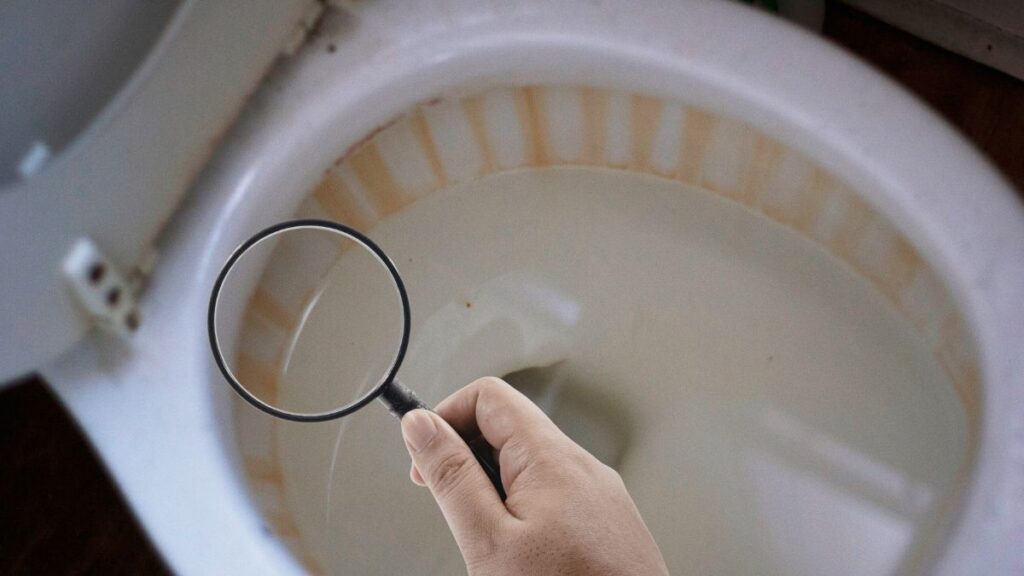
If toilet stains return quickly after cleaning, the cause may be related to water quality rather than cleaning technique. Homes with very hard water often experience recurring mineral buildup in toilets, faucets, and showerheads. In these situations, installing a water softener may help reduce scale throughout the plumbing system.
Persistent toilet odors can also indicate issues beyond routine cleaning. A deteriorated wax ring seal beneath the toilet may allow sewer gases to escape into the bathroom. In some cases, blocked plumbing vents can interfere with proper drainage and cause unpleasant smells.
Slow flushing or repeated clogs may suggest buildup in the trapway or drain line. When multiple plumbing fixtures in the home experience slow drainage, the issue may involve the main drain line rather than the toilet itself.
Professional plumbers should also be contacted if the toilet leaks at the base, rocks on the floor, or shows signs of cracked porcelain. These conditions usually require mechanical repair or replacement rather than cleaning.
Regular maintenance helps prevent many of these problems. Cleaning the toilet weekly, wiping sinks frequently, and removing soap residue from shower surfaces before it hardens can reduce long-term maintenance effort and help keep bathrooms sanitary and functional.