
 Introduction
 Introduction
This guide is intended for homeowners, DIY-minded renters, property managers, and real estate investors responsible for maintaining residential bathrooms. Toilets are exposed to daily use, mineral deposits from water, and bacterial buildup. Over time, these factors can cause staining, odor, and scale formation that becomes harder to remove if ignored.
Cleaning the toilet with vinegar offers a simple method for removing many mineral deposits and light stains without relying on aggressive chemicals. Vinegar contains acetic acid, which reacts with common hard water minerals such as calcium carbonate. When allowed to sit on the surface long enough, it can break down scale so it can be removed with brushing.
The effectiveness of this method depends on proper application and regular maintenance. In most homes, toilets should be cleaned at least once per week. This routine prevents mineral rings and organic buildup from hardening. Understanding how often bathrooms need to be cleaned helps reduce future cleaning effort and keeps fixtures functioning properly.
This article explains how vinegar works, the tools required, and the correct step-by-step process. It also highlights common mistakes, safety considerations, and situations where a plumbing professional may need to evaluate the fixture.
Key Things to Understand Before Cleaning the Toilet With Vinegar
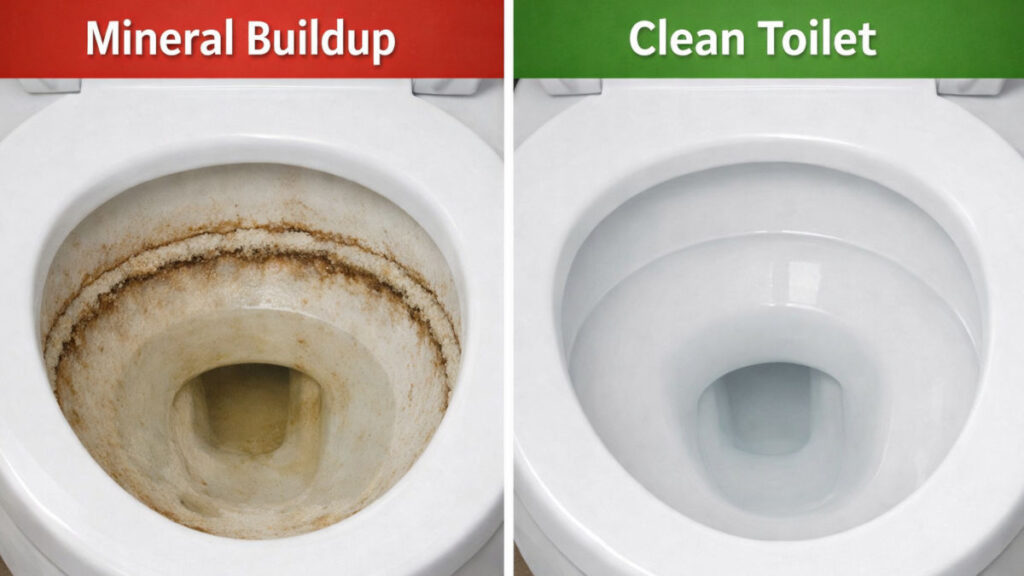
Most toilet stains originate from mineral deposits or organic residue. Hard water commonly contains dissolved calcium and magnesium. When water sits in the bowl and slowly evaporates, these minerals remain behind and form scale. Over time the buildup traps bacteria and debris, creating the familiar ring at the waterline.
Vinegar works because acetic acid reacts with mineral deposits and gradually dissolves them. However, this reaction is not instantaneous. The vinegar must remain in contact with the deposits long enough for the acid to break them down. Scrubbing immediately after applying vinegar often produces poor results because the deposits have not yet softened.
It is also important to recognize the limitations of this method. Vinegar is effective for light to moderate mineral buildup but may struggle with thick limescale or heavy rust staining. In those situations, mechanical cleaning or specialized descaling products may be required.
Cleaning frequency also affects results. Bathrooms that receive weekly cleaning rarely develop thick mineral rings. When cleaning is delayed for months, scale hardens and becomes more difficult to remove. Maintaining a consistent cleaning schedule reduces long-term buildup and protects fixture surfaces.
Tools and Supplies Required for Vinegar Cleaning
Most of the materials required for vinegar toilet cleaning are common household items. Using the correct tools allows effective cleaning without damaging the porcelain finish of the bowl.
White distilled vinegar is the primary cleaning agent. Household vinegar typically contains about five percent acetic acid, which is strong enough to dissolve many mineral deposits without harming glazed porcelain.
A toilet brush with stiff nylon bristles is necessary for scrubbing the bowl and reaching underneath the rim. Brushes designed for toilet cleaning usually have an angled head that allows access to rim jet openings where scale often accumulates.
Rubber cleaning gloves protect the hands from bacteria and prolonged contact with cleaning solutions. Even a clean-looking toilet bowl contains microorganisms, making gloves a sensible precaution.
A spray bottle can be used to apply vinegar to the rim, hinges, and outer surfaces of the toilet. Baking soda is optional but helpful when stains are more stubborn. Microfiber cloths or disposable wipes are useful for cleaning the tank, seat, handle, and base of the toilet.
For toilets with heavy mineral buildup, a pumice stone designed for toilet cleaning may be used carefully to remove thick scale without scratching the porcelain surface.
Step-by-Step Process for Cleaning a Toilet With Vinegar
Step 1: Prepare the Bowl and Apply Vinegar Properly
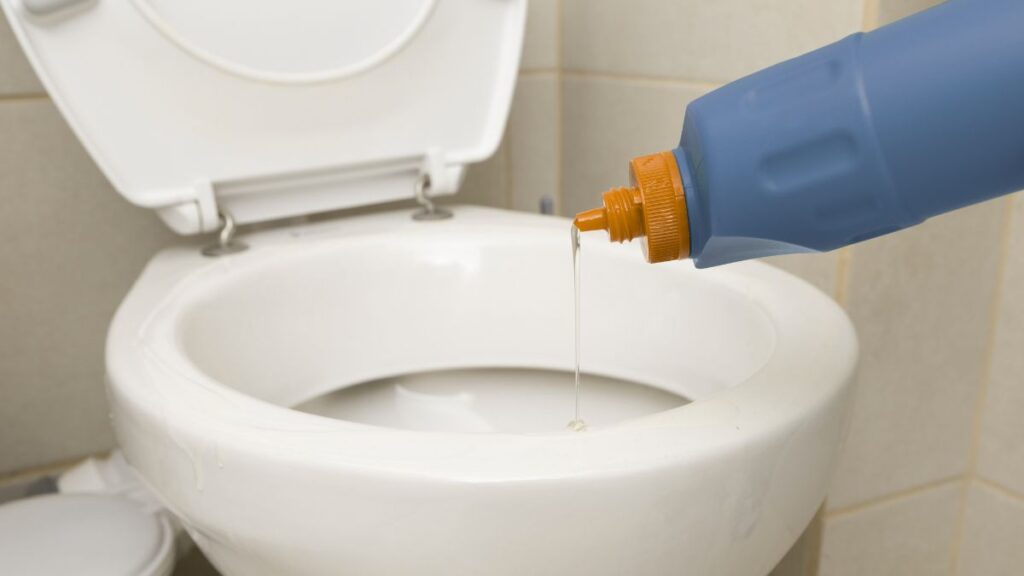
Begin by flushing the toilet to wet the bowl and remove loose debris. A damp surface allows the vinegar to spread more evenly along the porcelain. If the stain is located above the waterline, the water level can be lowered by briefly turning off the supply valve and flushing again.
Pour approximately one to two cups of white vinegar into the bowl. Direct some of the vinegar under the rim where the flush jets are located. These small openings distribute water during flushing and often collect mineral deposits.
Allow the vinegar to remain in the bowl for at least twenty to thirty minutes. This dwell time allows the acetic acid to react with mineral scale. For heavier buildup, leaving the vinegar for an hour or longer can improve results significantly.
Step 2: Scrub the Bowl Surface and Clean Under the Rim
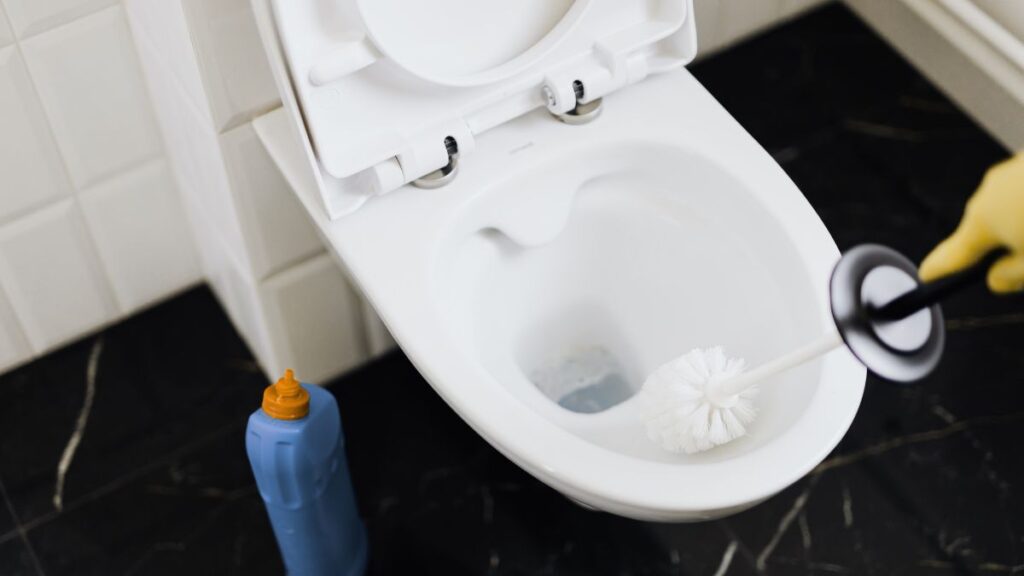
After the vinegar has had time to loosen mineral deposits, scrub the interior of the bowl with a toilet brush. Begin at the waterline, where mineral rings most commonly develop. The deposits should now release more easily because the vinegar has softened them.
Next, focus on the underside of the rim. Mineral buildup inside rim jet openings can reduce flushing performance by restricting water flow. Use the brush to reach these areas and break up any accumulated scale.
If stains remain after the first pass, additional vinegar can be applied directly to the affected area. Scrub again and then flush the toilet to rinse away loosened debris.
Step 3: Remove Remaining Stains Using Baking Soda
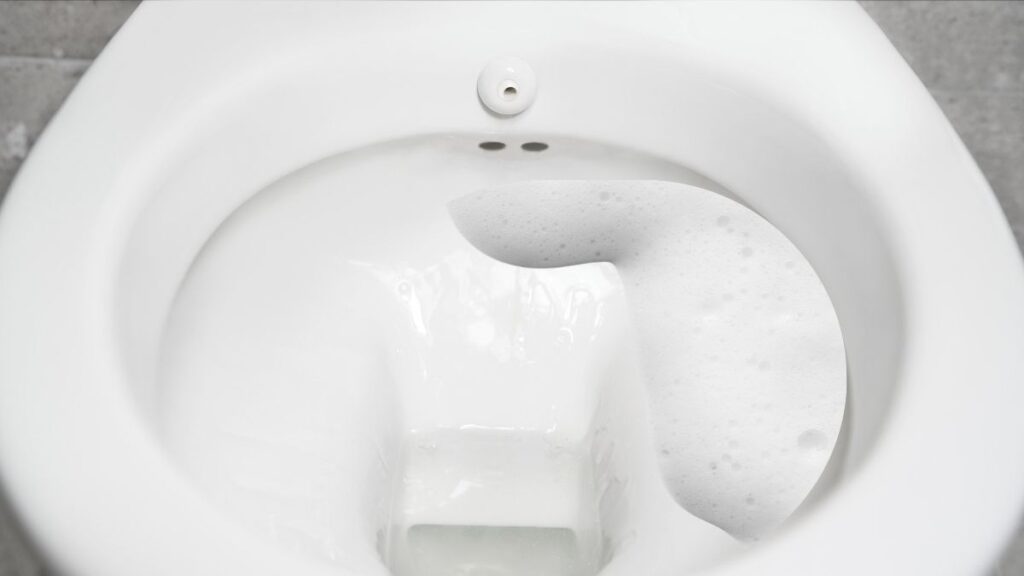
For stains that remain after the initial cleaning, baking soda can provide additional cleaning power. Sprinkle approximately half a cup of baking soda into the bowl, concentrating on the stained areas.
Pour a small amount of vinegar into the bowl. The mixture will produce a bubbling reaction that helps loosen debris attached to the porcelain surface. While the reaction itself is mild, it can help dislodge mineral deposits that brushing alone did not remove.
Allow the mixture to sit for ten to fifteen minutes. Scrub the bowl again with the toilet brush, focusing on the remaining stained areas. Once the stains are removed, flush the toilet to rinse the bowl completely.
Frequent Mistakes When Cleaning Toilets With Vinegar
A common mistake is not allowing vinegar enough time to work. Pouring vinegar into the bowl and immediately scrubbing prevents the acid from dissolving mineral deposits effectively. Proper dwell time is essential for this cleaning method to succeed.
Another frequent error is using vinegar shortly after bleach or ammonia-based cleaners. Mixing these products can produce harmful gases in a confined bathroom environment. The toilet should always be flushed several times before switching cleaning products.
Homeowners also often overlook the rim jets. These openings distribute water during flushing and can accumulate mineral scale over time. Ignoring them allows deposits to build up and gradually reduce flushing efficiency.
Using metal scrubbers or steel wool is another mistake. These tools can scratch the porcelain glaze that protects the bowl surface. Once the glaze is damaged, stains and bacteria adhere more easily to the surface.
Finally, delaying routine cleaning allows mineral deposits to harden. Weekly maintenance prevents buildup from becoming difficult to remove and reduces the need for aggressive cleaning methods.
Safety Practices and Household Compliance Considerations
Although vinegar is a mild household cleaner, basic safety practices should still be followed. Bathrooms often have limited ventilation, so running the exhaust fan or opening a window during cleaning helps improve air circulation.
Never mix vinegar with bleach or ammonia-based cleaners. When acids react with these chemicals, chlorine or chloramine vapors may form. These gases can irritate the respiratory system and should be avoided.
Wearing cleaning gloves helps protect the skin from bacteria and prolonged exposure to cleaning solutions. Toilets contain microorganisms even when they appear clean, making protective gloves a sensible precaution.
Homes connected to septic systems should also limit the use of strong chemical cleaners. Vinegar is generally compatible with septic systems in typical household quantities, making it a reasonable choice for routine maintenance.
Residential building standards in the United States also require proper bathroom ventilation to control moisture and indoor air quality. Operating the bathroom exhaust fan while cleaning aligns with these recommendations and helps reduce odors from cleaning products.
Frequently Asked Questions About Vinegar Toilet Cleaning
How often do bathrooms need to be cleaned?
Most residential bathrooms benefit from light cleaning at least once per week. High-use bathrooms may require cleaning two or three times per week. Weekly cleaning prevents mineral deposits, soap residue, and bacteria from accumulating on fixtures and surfaces.
Deeper cleaning tasks such as scrubbing grout lines, removing mineral buildup from fixtures, and cleaning behind the toilet may only be required once or twice per month. Maintaining a regular schedule keeps these tasks manageable.
Does vinegar disinfect a toilet?
Vinegar has mild antimicrobial properties, but it is not considered a full disinfectant. It can reduce some bacteria and help control odors, but it does not eliminate all pathogens. When true disinfection is required, such as during illness in the household, a disinfectant cleaner may be more appropriate.
Can vinegar remove hard water stains in a toilet?
Yes. Vinegar can dissolve many hard water stains because the acetic acid reacts with calcium and magnesium deposits. However, very thick mineral scale may require longer soaking times or mechanical removal using a pumice stone designed for toilet cleaning.
Is baking soda necessary when cleaning a toilet with vinegar?
Baking soda is not required for routine cleaning. Vinegar alone is usually sufficient for regular maintenance. Baking soda becomes useful when stains are more stubborn because it adds mild abrasion and helps lift debris from the porcelain surface.
Can vinegar damage toilet parts or plumbing?
When used occasionally for cleaning, vinegar is generally safe for porcelain toilet bowls and common plumbing materials. However, leaving strong acidic cleaners in contact with rubber components for extended periods is not recommended. Normal cleaning routines using vinegar present minimal risk.
Can the same method be used for other bathroom fixtures?
Yes. Vinegar is often used to remove mineral deposits from faucets, showerheads, and tile surfaces. Many homeowners also use a combination of vinegar and baking soda when cleaning the shower with vinegar and baking soda to break down soap scum and hard water buildup.
Maintenance Advice and Situations That May Require a Professional
Routine maintenance is the most effective way to prevent toilet stains and mineral buildup. Weekly cleaning prevents deposits from hardening and keeps the porcelain surface smooth. Wiping down the exterior of the toilet during routine cleaning also helps maintain hygiene and appearance.
If stains return quickly after cleaning, the cause may be related to water quality rather than cleaning technique. Homes with high mineral content or iron in the water supply often experience recurring stains. In these situations, a water treatment system such as a water softener may help reduce buildup.
Reduced flushing performance can also indicate mineral deposits inside the rim jets or trapway. If flushing becomes weak despite cleaning, a plumber may need to inspect the toilet and remove internal scale.
Leaks around the base of the toilet are another issue that should be evaluated by a professional. A failing wax ring or damaged flange can allow water to escape and cause floor damage if not repaired.
Understanding how to maintain bathroom fixtures helps prevent many common problems. Simple maintenance routines, including cleaning the toilet with vinegar, allow homeowners to keep fixtures functioning properly and reduce the likelihood of costly repairs.