
 Introduction
 Introduction
A kitchen island with stove changes both how a kitchen works and how it feels. Instead of cooking along the perimeter, the main cooking surface moves to the center of the room. In many U.S. homes, especially open layouts, this setup supports cooking, seating, and social interaction in one space.
This guide focuses on practical decisions behind installing or upgrading an island with a stove. It explains layout planning, utility requirements, safety considerations, and cost factors so you can evaluate whether this feature fits your home or investment goals.
Understanding a Kitchen Island With Stove Layout
A kitchen island with stove typically uses a built-in cooktop installed into the countertop. In most cases, the oven is placed separately in a wall cabinet. This reduces bulk in the island and improves accessibility.
This layout works best in kitchens with enough floor space to maintain proper clearances. In smaller kitchens, placing a stove in the island can restrict movement and reduce usable prep space. In larger kitchens, it can improve workflow by centralizing cooking activities.
Why Homeowners Choose a Kitchen Island With Stove
One of the main benefits is improved workflow. When positioned correctly, the cooktop shortens the distance between prep, cooking, and serving areas. This helps maintain an efficient work triangle without crowding one wall.
It also changes how the kitchen is used. Cooking becomes more interactive since you face outward instead of toward a wall. This is especially useful in homes where the kitchen opens to living or dining areas.
From a property perspective, a well-designed kitchen island upgrade can increase appeal. Buyers often expect modern, open layouts. However, poor execution, such as inadequate ventilation or tight spacing, can reduce functionality and value.
Planning Considerations Before Installation
Space and Clearance Requirements
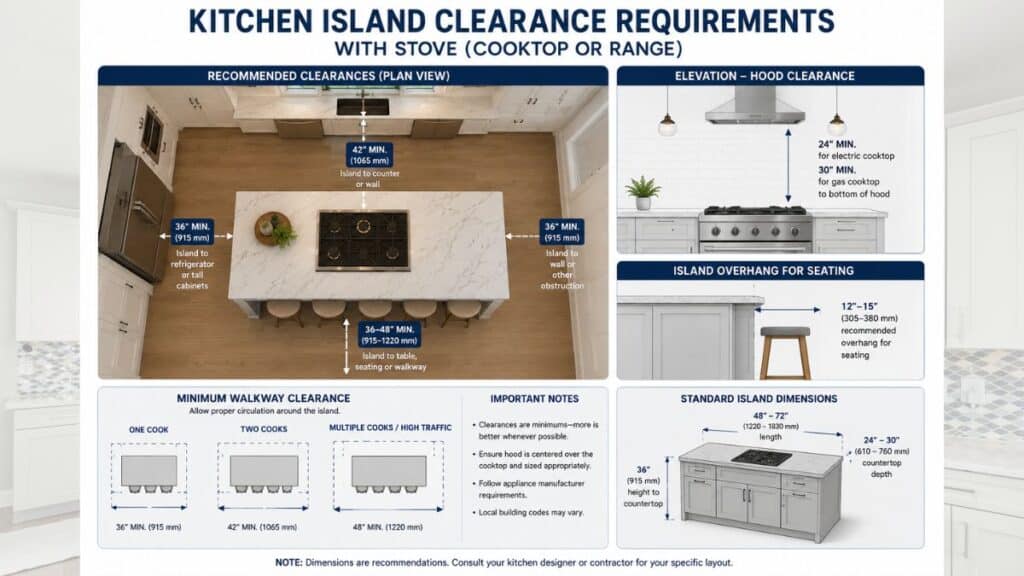 Most installations require enough space to maintain at least 36 inches of clearance around the island, with 42 to 48 inches preferred in active kitchens. These clearances allow safe movement and appliance access.
The cooktop also needs surrounding workspace. Plan for at least 12 inches of countertop on one side and 15 inches on the other. Without this, handling hot cookware becomes unsafe and inconvenient.
Ventilation and Airflow
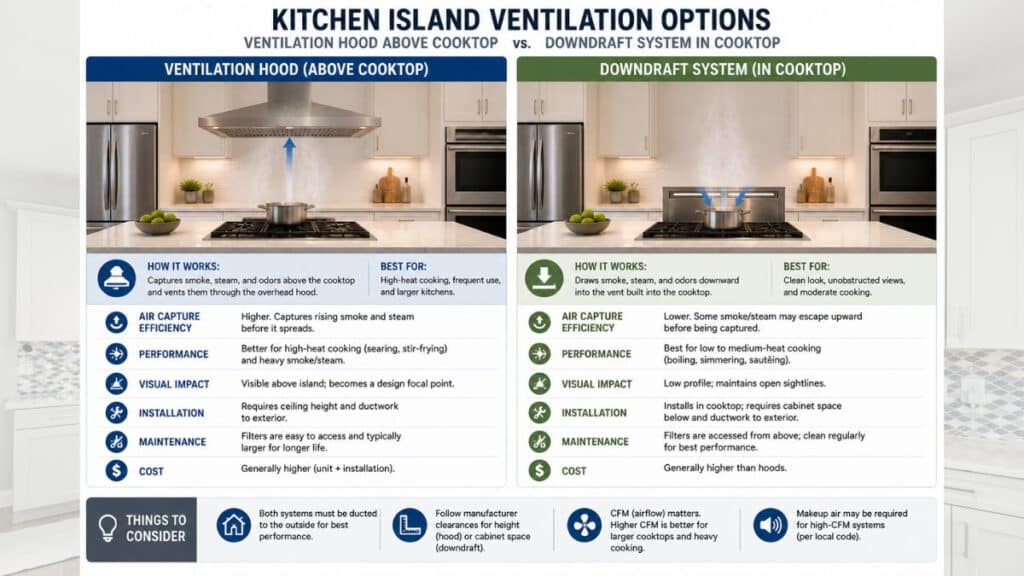 Ventilation is one of the most overlooked aspects. Downdraft systems are often chosen for appearance, but they are less effective at capturing smoke and grease, especially with gas cooking.
Overhead range hoods perform better but require ductwork and proper sizing. In some cases, high-capacity systems require makeup air to maintain indoor air balance, which adds complexity to the project.
Electrical and Gas Access
Electric and induction cooktops typically require dedicated 240-volt circuits. If your home has a slab foundation, running wiring may involve cutting into concrete, which increases labor and cost.
Gas cooktops require properly routed lines and accessible shutoff valves. If gas service is not already available in the island location, installation becomes significantly more involved.
Structural and Flooring Impacts
An island with a stove adds weight and requires secure anchoring. In older homes, the subfloor may need reinforcement to support appliances and countertops.
Running utilities often requires cutting into existing flooring. Matching finishes, especially hardwood, can be challenging and may require refinishing a larger area.
Adding Plumbing to the Island
Including a sink alongside a stove increases complexity. Water supply, drainage, and venting must be installed in addition to electrical or gas connections.
This configuration can work in large kitchens but may create congestion in smaller layouts. It also concentrates multiple functions in one area, which can reduce usable space.
Choosing the Right Stove Type for Your Island
Electric Cooktops
 Electric Cooktops
Electric cooktops are relatively straightforward to install and do not require gas lines. They provide consistent heat but respond more slowly to temperature changes.
Gas Cooktops
Gas offers precise control and is preferred for many cooking styles. However, it requires proper ventilation and careful installation to manage combustion gases safely.
Induction Cooktops
Induction systems heat cookware directly, improving efficiency and reducing surface temperature. They are often chosen for safety and energy performance, though they require compatible cookware and higher upfront cost.
Cooktop Versus Full Range
Installing a full range in the island combines oven and cooktop but requires more space and can be less convenient. Accessing an oven in the middle of the kitchen may not suit all users.
Separating the cooktop from a wall oven allows more flexible placement and is more common in modern kitchen island installation projects.
How Kitchen Island Installation Typically Works
Design and Layout Planning
The process begins with measuring the space and confirming clearances. Utility locations and appliance placement are defined at this stage.
Permits and Code Compliance
Most installations require permits for electrical, gas, or structural work. Following this process helps ensure the installation meets safety standards and passes inspection.
Rough-In Work
Electrical wiring, gas lines, and ventilation ducts are installed before cabinets are set. This work typically requires licensed professionals.
Cabinet and Countertop Installation
The island base is secured to the floor, and countertops are installed with precise cutouts for the cooktop. Materials such as quartz or granite are commonly used for durability and heat resistance.
Appliance Setup and Testing
The cooktop is installed and connected to utilities. Connections are tested for leaks or electrical issues to ensure safe operation.
Final Inspection
Local inspectors verify that the installation meets code requirements. This step confirms that ventilation, clearances, and connections are compliant.
Upgrading an Existing Island for a Stove
Evaluating Feasibility
 Evaluating Feasibility
Not all islands can support a stove. Adequate size, structural support, and access to utilities are required. In some cases, a full rebuild is more practical than modifying an existing island.
Typical Upgrade Scenarios
Common upgrades include adding a cooktop, replacing outdated appliances, or switching to induction. Converting from electric to gas is more complex due to new piping requirements.
Cost and Value Considerations
A kitchen island upgrade can range from several thousand dollars to over $15,000 depending on scope. Costs increase when utilities must be extended or relocated.
In higher-end markets, this feature can improve resale or rental appeal. In lower-demand areas, the return depends more on overall kitchen quality.
Safety Considerations in Daily Use
Fire Risk and Heat Exposure
Maintain proper clearance from combustible materials and avoid placing flammable items near the cooktop. Keep a fire extinguisher accessible but not directly adjacent to the cooking area.
Child and Pet Safety
Island cooktops are exposed on multiple sides. This increases the chance of accidental contact. Induction units reduce surface heat, but supervision and layout planning remain important.
Indoor Air Quality
Proper ventilation reduces grease buildup and removes airborne pollutants. This is especially important with gas appliances, which produce combustion byproducts.
Design Considerations for Function and Appearance
Countertop Selection
 Countertop Selection
Choose materials that handle heat and resist staining. Quartz and granite are common, but not all surfaces tolerate direct heat exposure.
Seating Layout
Position seating at least 12 to 18 inches away from the cooktop. This creates a safer buffer between cooking and dining areas.
Storage Placement
Include drawers and storage near the cooking zone for utensils and cookware. This reduces movement while handling hot items.
Lighting Setup
Install task lighting that clearly illuminates the cooktop. Fixtures should be positioned to avoid glare and interference with ventilation systems.
Common Mistakes to Avoid
Inadequate ventilation is one of the most frequent issues. Many installations rely on downdraft systems that cannot handle regular cooking demands.
Another common problem is poor spacing. Islands that are too small or placed too close to other cabinets reduce usability and create safety risks.
Skipping permits or inspections can lead to compliance issues during resale. Attempting complex installations without professional help often results in higher long-term costs.
Typical Cost Breakdown
Cabinets and countertops generally range from $2,000 to $8,000 or more depending on materials. Appliances typically add $1,000 to $3,000.
Labor costs vary based on electrical, gas, and ventilation work. These services can add several thousand dollars to the project.
Permit and inspection fees are usually a smaller portion of the budget but are necessary for compliance. Total project costs commonly fall between $8,000 and $20,000.
DIY Versus Hiring Professionals
Tasks Suitable for DIY
Homeowners can often handle demolition, basic preparation, and cabinet assembly. These tasks involve time and planning but limited technical risk.
Work Requiring Licensed Professionals
Electrical wiring, gas line installation, and ventilation systems must meet code requirements. These tasks should be handled by licensed trades to ensure safety.
When to Hire a Contractor
Projects involving multiple trades or structural changes benefit from a general contractor. Coordinating electrical, plumbing, and carpentry work reduces delays and errors.
Is a Kitchen Island With Stove the Right Choice for Your Home?
This setup works best in kitchens with sufficient space and an open layout. In smaller kitchens, it may limit movement and reduce functionality.
Consider how you use your kitchen. If cooking and entertaining are frequent activities, the added flexibility may justify the investment. If not, a simpler layout may be more practical.
Conclusion
A kitchen island with stove can improve both function and layout when properly planned. The key factors are space, ventilation, and utility access.
Careful design helps avoid common issues such as poor airflow or unsafe clearances. Whether you are planning a new installation or a kitchen island upgrade, focusing on practical details leads to better long-term results.