
Intro
This guide on toilet ring flange repair is for homeowners, DIY-minded readers, and contractor-aware consumers dealing with a leaking toilet base, a loose toilet, or a toilet bowl that keeps running. If your toilet rocks when you sit on it, leaves water around the base, or smells like sewer gas, the flange is one of the first parts to inspect.
A toilet repair ring flange connects the toilet to the drain pipe and anchors it to the floor. When it cracks, corrodes, loosens, or sits too low, the seal can fail and the toilet can shift. In many cases, repairing or replacing the flange restores a stable, leak-free connection. If the toilet bowl keeps running, that usually points to a separate problem inside the tank, but it often makes sense to address both issues during the same repair.
What to Understand Before You Begin
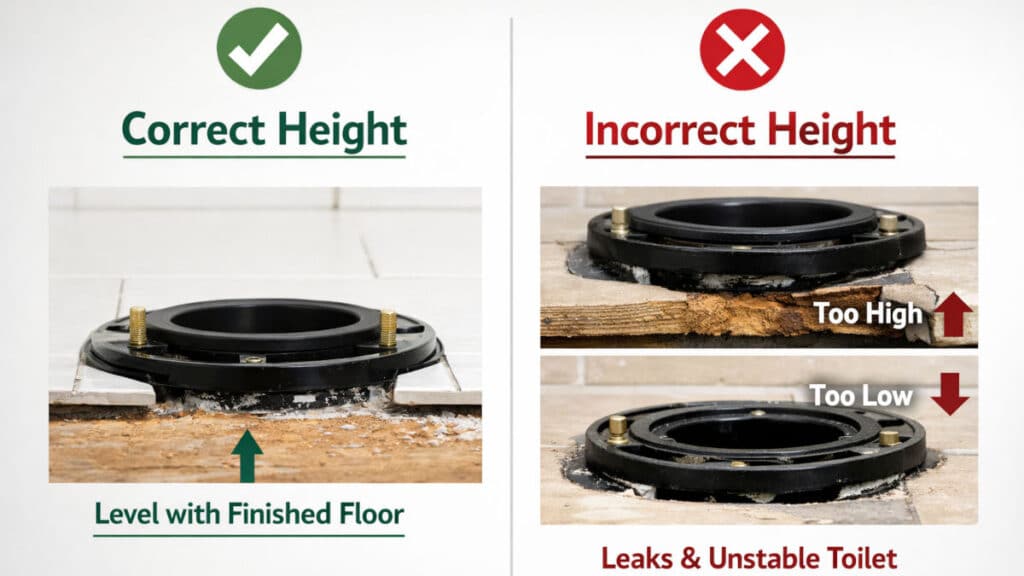 The flange is the fitting at the top of the drain pipe where the toilet mounts. Its job is simple but essential. It holds the toilet in place and compresses the wax ring or other seal to keep water in and sewer gases out. If the flange is damaged or installed at the wrong height, that seal will not hold for long.
Common warning signs include water at the base of the toilet, a toilet that shifts or rocks, repeated wax ring failures, and sewer odors in the bathroom. These symptoms often point to a broken flange, stripped bolt slots, loose fasteners, or a rotted subfloor that no longer supports the assembly.
Flange height is one of the most overlooked parts of the job. In standard U.S. residential installations, the flange should sit on top of the finished floor. If it sits below the tile, vinyl, or other finish flooring, the seal may not compress enough to remain watertight. That is why some toilets leak repeatedly even after a new wax ring is installed.
It also helps to separate flange problems from tank problems. A bad flange can cause leaks at the base and toilet movement, but it does not usually cause the toilet bowl to keep running. Running water is generally caused by a worn flapper, improper chain length, or a failing fill valve. Since the toilet is already being serviced, this is a practical time to inspect those parts as well.
For most homeowners, this is a moderate repair that takes two to four hours. The job becomes more complex if the flange is cast iron, the drain connection is damaged, or the floor around the toilet is soft from long-term moisture.
Required Tools and Materials
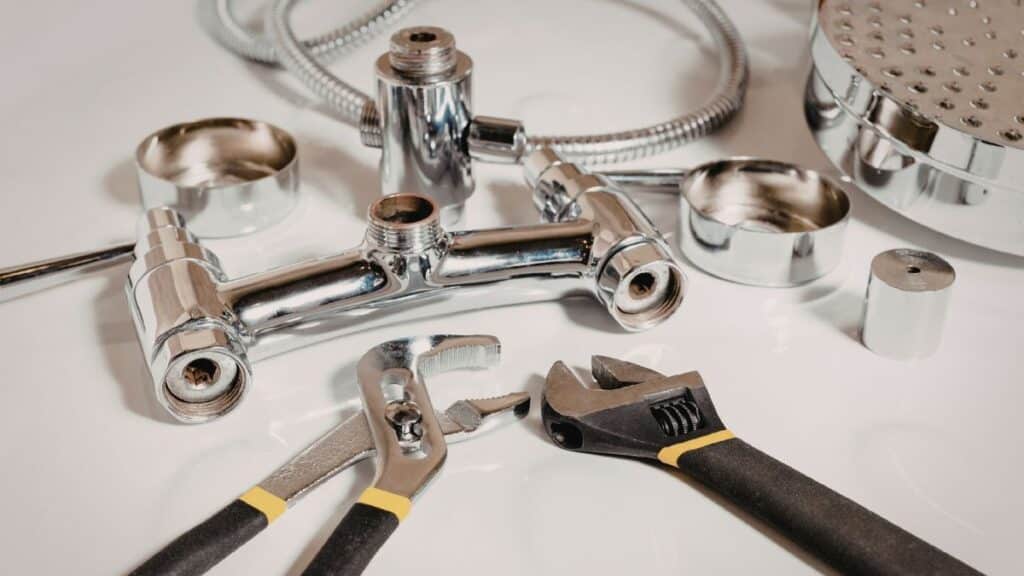 Start with the basic hand tools. You will typically need an adjustable wrench, deep socket or standard socket set, flathead and Phillips screwdrivers, a putty knife, and a level. A sponge, small cup, or wet-dry vacuum is also useful for removing leftover water from the bowl and tank before lifting the toilet.
For repair work, keep a replacement flange or repair ring on hand, along with new closet bolts, corrosion-resistant screws, and a new wax ring or wax-free seal. New hardware matters because old bolts are often corroded or bent, which can make the toilet difficult to set evenly.
If you expect more extensive removal, an oscillating tool or hacksaw may be necessary to cut away a damaged flange. In homes where the flange sits too low, a flange extender kit can help restore the correct height without rebuilding the entire connection.
Plastic shims are useful for stabilizing a toilet on a slightly uneven floor. Silicone caulk is often applied around the base after installation, though many installers leave a small gap at the back so future leaks are visible. Wear gloves and safety glasses throughout the project, especially when handling contaminated parts or cutting old hardware.
Step-by-Step Process
Step 1: Remove the Toilet and Evaluate the Existing Flange
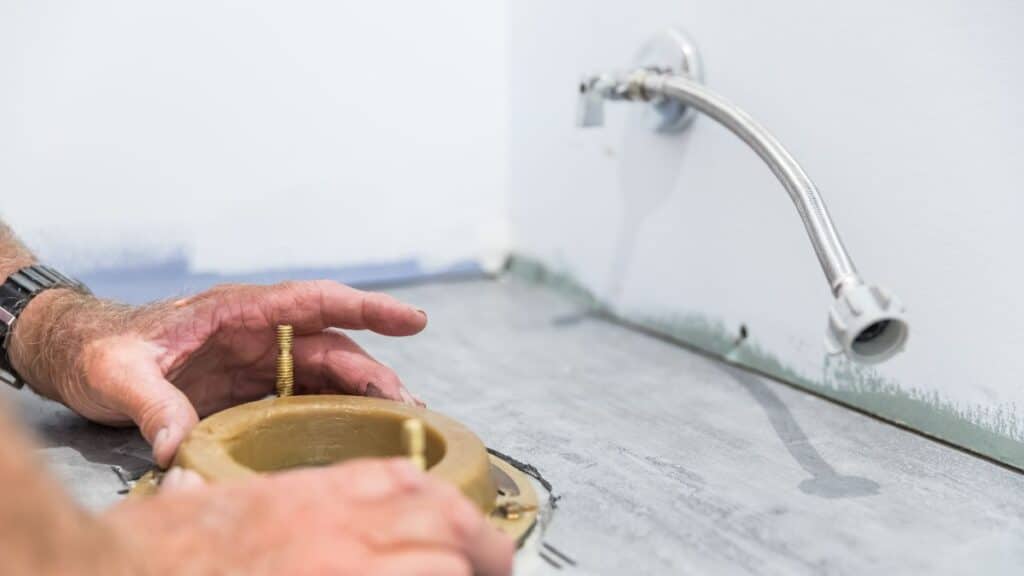 Shut off the water supply valve, usually located behind the toilet near the floor. Flush the toilet and hold the handle down to drain as much water as possible from the tank. Use a sponge or towel to remove the remaining water from both the tank and bowl so you do not spill it while lifting.
Disconnect the supply line, then remove the caps and nuts from the closet bolts at the base of the toilet. Lift the toilet straight up and set it on cardboard, a tray, or an old towel. Toilets are awkward to handle, so clear a path before lifting and get help if needed.
With the toilet removed, scrape away all old wax and inspect the flange closely. Look for cracked plastic, corroded metal, broken bolt slots, loose fasteners, or signs that the flange has separated from the drain pipe. Check whether it is firmly attached to the floor or moves when touched.
Next, inspect the floor around the flange. If the wood is soft, dark, swollen, or crumbling, the subfloor may be rotted. This matters because even a new flange will fail if it is screwed into weak material that cannot hold it securely.
Step 2: Repair or Replace the Flange Assembly
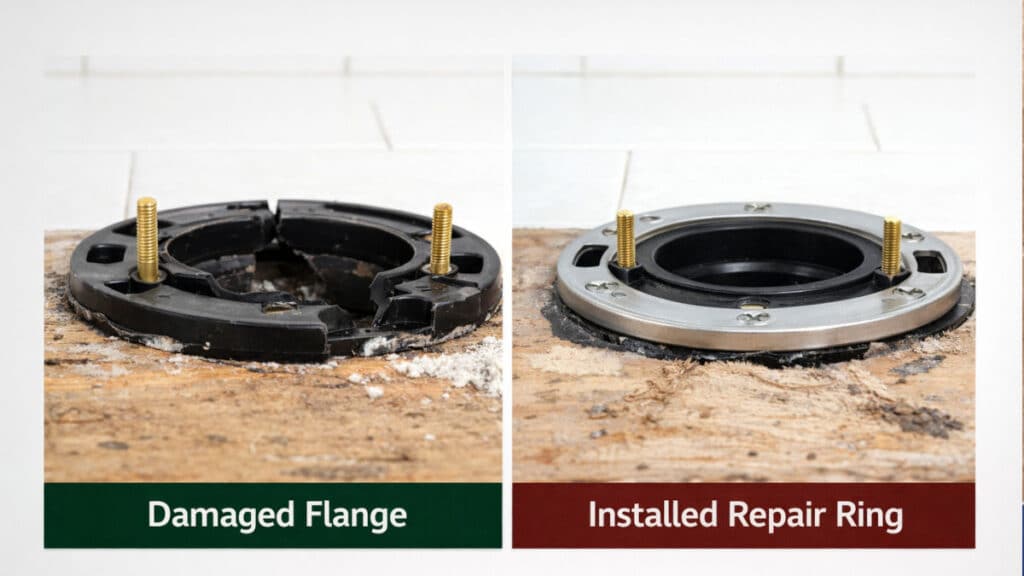 Once the area is clean, decide whether the flange needs reinforcement or full replacement. If the flange body is still sound but the bolt slots are broken or worn, a repair ring is often enough. This type of ring fits over the existing flange and restores the bolt mounting points without removing the pipe connection.
If the flange is cracked through, badly corroded, or no longer attached properly to the drain pipe, replacement is the better option. This is more common in older homes with rusted metal components or in bathrooms where repeated leaks have gone unaddressed for years.
Whichever method you use, anchor the flange securely to the floor with corrosion-resistant screws. This is not optional. A toilet does not stay stable just because it is heavy. It stays stable because the flange is fixed to solid structure below it. If the flange is allowed to float, the toilet will eventually move and break the seal.
Check the finished floor height before moving on. If the flange sits below the surface of the floor, install a flange extender or use an approved solution that restores proper seal height. A common real-world example is a bathroom that was retiled after the original toilet was installed. The flange may end up too low unless it was adjusted during the remodel.
After the flange is repaired or replaced, insert the new closet bolts and align them so they match the mounting holes at the base of the toilet. That alignment will make the reset easier and reduce the chance of disturbing the seal while lowering the toilet.
Step 3: Reset the Toilet and Resolve Any Running Issues
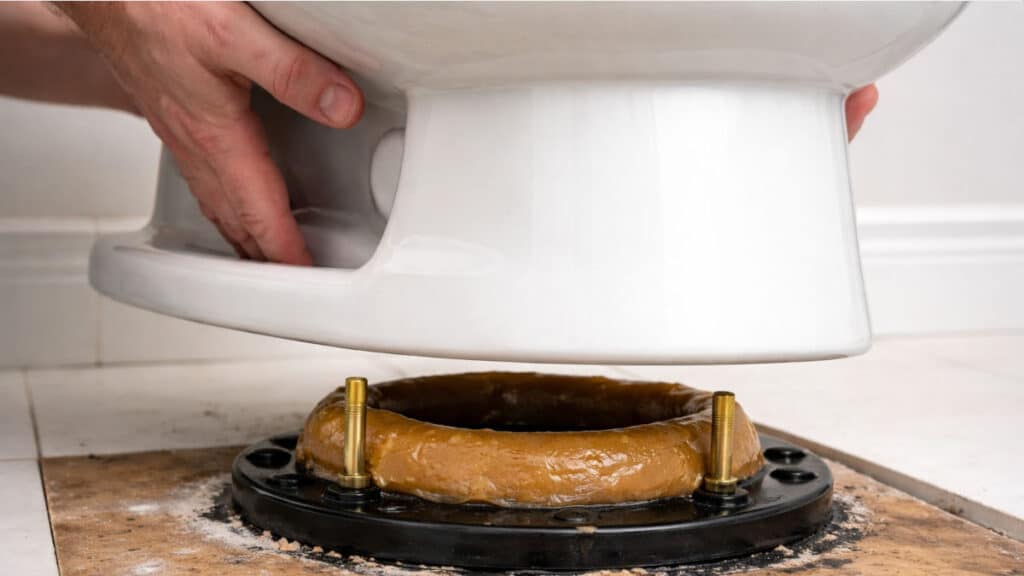 Set a new wax ring or wax-free seal in place according to the product instructions. Then lower the toilet straight down over the closet bolts. Avoid twisting or sliding the bowl once it touches the seal, because that can deform the wax and create a path for leakage.
Press down evenly to seat the toilet. Install washers and nuts, tightening each side a little at a time so the pressure remains balanced. The goal is a secure toilet, not maximum force. Over-tightening can crack the porcelain base or damage the flange you just repaired.
Once the toilet is set, check for movement. If it rocks, place plastic shims at the low points until it sits firmly. Trim the visible ends of the shims after the toilet is stable. This step matters because even slight movement can break the seal over time.
Reconnect the supply line, turn the water back on, and flush several times while checking for leaks at the base and around the supply connection. If everything stays dry, inspect the tank if the toilet bowl keeps running.
Most running toilet problems come from the tank, not the flange. Check whether the flapper seals fully after a flush. If it is stiff, warped, or coated with mineral buildup, replace it. Then inspect the chain. If it is too short, the flapper may not close fully. If it is too long, it can get caught under the flapper. Finally, make sure the fill valve shuts off at the proper water level. These are common, inexpensive fixes that often solve the problem completely.
Mistakes That Commonly Lead to Failure
One of the biggest mistakes is treating every base leak as a wax ring problem. If the flange is broken or the floor is soft, replacing the wax alone will only provide a short-term result. The leak returns because the real cause was never corrected.
Another common error is reinstalling the toilet over a flange that sits below the finished floor without using an extender or another approved correction. That height difference reduces seal compression and makes failure more likely, especially after a few months of normal use.
Homeowners also run into trouble by reusing old hardware or an old wax ring. Wax is a one-time seal. Once compressed and lifted, it should be discarded. Old closet bolts can also make it difficult to align and secure the toilet properly.
Over-tightening is another preventable problem. Many people assume tighter means safer, but porcelain cracks under concentrated pressure. Tighten only until the toilet is stable and the bowl sits firmly without movement.
It is also a mistake to assume that flange work will solve every toilet issue. A flange repair addresses leaks, odors, and movement at the base. If the toilet bowl keeps running, the cause is usually inside the tank and should be diagnosed separately.
Safety Practices and Code Considerations
Turn off the water supply before disconnecting anything, and remove as much water as possible before lifting the toilet. This reduces spill risk and makes the fixture easier to handle. Use gloves because old wax, contaminated water, and the surrounding surfaces can carry waste residue.
Lift carefully. Toilets are compact but heavy, and the shape makes them harder to grip than most household fixtures. If you are working alone, plan the lift and landing area before loosening the toilet.
At a high level, U.S. plumbing standards require the flange to be securely fastened to the structure and to maintain a gas-tight and watertight connection between the toilet and drain system. The flange should also be installed at the correct elevation relative to the finished floor so the seal can perform as intended.
Use materials designed for plumbing repair, such as PVC, ABS, stainless steel repair rings, and approved seals. Avoid makeshift spacers or unapproved patch methods that do not provide a durable mechanical connection.
If the repair involves significant drain modifications, replacement of cast iron components, or structural floor repair, local permit or inspection requirements may apply. Rules vary by jurisdiction, so check your local building department for project-specific requirements. This is especially relevant in older homes where hidden damage is more likely.
Frequently Asked Questions
What does a toilet flange do?
The flange connects the toilet outlet to the drain pipe and anchors the toilet to the floor. It also provides the surface that compresses the wax ring or other seal.
How do I know if the flange is bad?
Common signs include leaks at the toilet base, a toilet that rocks, sewer odors, broken closet bolt slots, or repeated seal failures. In some cases, the flange itself is intact but the surrounding subfloor is too weak to hold it securely.
Can I repair a toilet flange without removing the toilet?
No. The toilet must be removed to inspect the flange, clean away old wax, and complete a proper repair or replacement.
How high should the flange sit above the floor?
It should sit on top of the finished floor or slightly above it. A flange that sits too low often causes sealing problems and recurring leaks.
Why does my toilet bowl keep running after I replaced the wax ring?
The wax ring does not control water inside the tank. If the toilet bowl keeps running, the cause is usually a worn flapper, incorrect chain length, or a fill valve that is not shutting off correctly.
Should I use a wax ring or a wax-free seal?
Wax rings remain the standard choice and work well when the flange height is correct and the toilet is set properly. Wax-free seals can be easier to reposition, but they still depend on correct flange height and careful installation.
How long should a flange repair last?
If the flange is properly secured, the floor structure is sound, and the toilet remains stable, the repair can last for many years. Premature failure usually comes from movement, improper height, or unresolved floor damage.
Can a loose toilet leak even if the flange is not broken?
Yes. Movement can compress and distort the seal over time, which allows water to escape even if the flange itself is not cracked.
Final Advice and When Professional Help Is Necessary
A flange repair is a realistic DIY job when the damage is limited, the floor is solid, and the drain connection is straightforward. Many homeowners can handle toilet removal, repair ring installation, flange extenders, and basic tank component replacement with ordinary tools and careful setup.
Professional help is the better choice when the flange is severely corroded, the drain pipe connection is damaged, or the home has cast iron plumbing that requires cutting and replacement. The same is true when the subfloor is rotted or structurally weak. In that situation, the repair is no longer just plumbing. It becomes a floor restoration issue as well.
You should also call a pro if leaks continue after a correct reset or if the toilet bowl keeps running after replacing standard tank parts. Repeated failures often signal a deeper alignment, pressure, or plumbing system issue that needs more detailed diagnosis.
For informed homeowners, the key is not just knowing how to reset a toilet, but understanding why the toilet failed in the first place. A properly installed toilet repair ring flange, solid floor support, and a correctly adjusted tank work together to keep the toilet stable, leak-free, and functioning as intended.