
Why Dust Control Matters for a Cleaner-Smelling Home

This guide is for homeowners, DIY-inclined sellers, property investors, and contractor-aware readers who want a house that feels cleaner and smells fresher without constant re-cleaning or heavy fragrance. If your home gets dusty quickly or smells stale despite regular cleaning, the two problems are often connected.
Dust isn’t just a cosmetic issue. It affects indoor air quality, traps odors, and shapes how clean a space feels to occupants and buyers. A dusty house tends to smell “used,” even when nothing obvious is wrong.
The practical goal here is straightforward: reduce airborne particles so dust settles more slowly and the house smells clean by default. That requires controlling where dust comes from, removing it correctly, and managing airflow and filtration.
The short answer is simple but specific: stop dust at entry points, clean in the correct order with the right tools, and keep air moving through proper filtration. When dust levels drop, odor problems usually improve at the same time.
Key Basics to Understand Before Reducing Household Dust
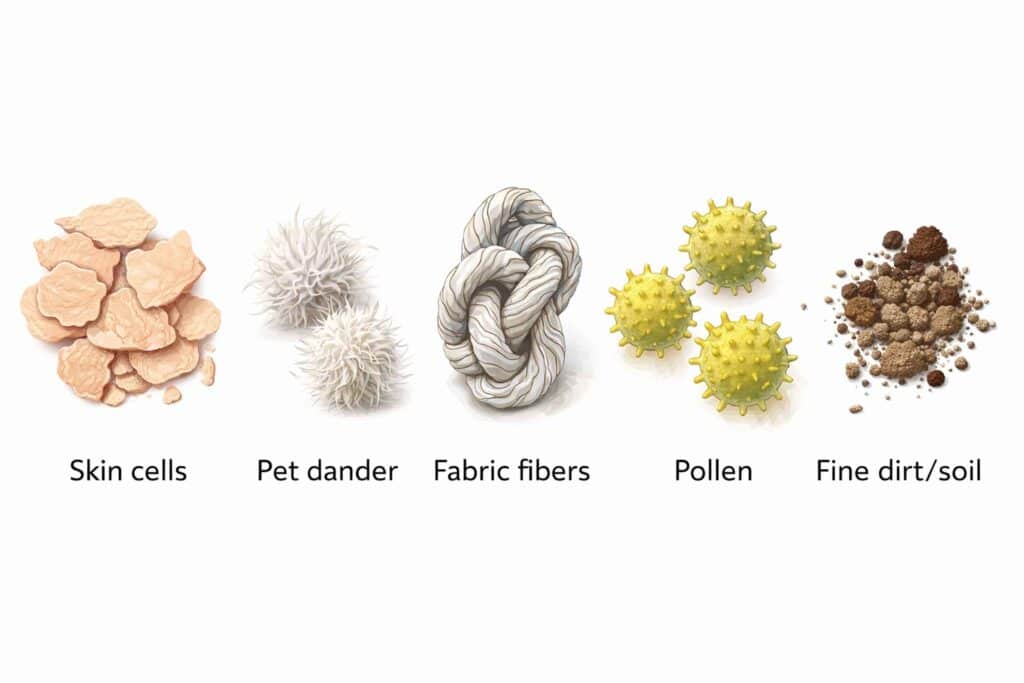
Household dust is a mix of indoor and outdoor material. It commonly includes skin cells, fabric fibers, pet dander, pollen, and fine soil tracked in from outside. Much of it is light enough to stay airborne for long periods before settling.
Dust directly affects how a house smells. As particles collect in carpets, furniture, and soft materials, they absorb odors from cooking, pets, and daily activity. When air moves or humidity changes, those odors are released, creating a stale or “dirty” smell even after cleaning.
Many cleaning routines fail because they move dust instead of removing it. Dry dusting, weak vacuum filtration, or cleaning floors before higher surfaces sends particles back into the air. The result is a house that looks clean briefly but feels dusty again within hours.
Airflow matters just as much as cleaning. HVAC systems circulate air continuously, and without proper filtration and clear return paths, they distribute dust throughout the home. Rooms with poor airflow tend to collect dust faster and smell stale sooner.
Finally, expectations need to be realistic. No home is dust-free. The goal is reduction and control—slowing how quickly dust returns so cleaning lasts longer and indoor air stays fresher with less effort.
Cleaning Tools and Supplies That Actually Reduce Dust
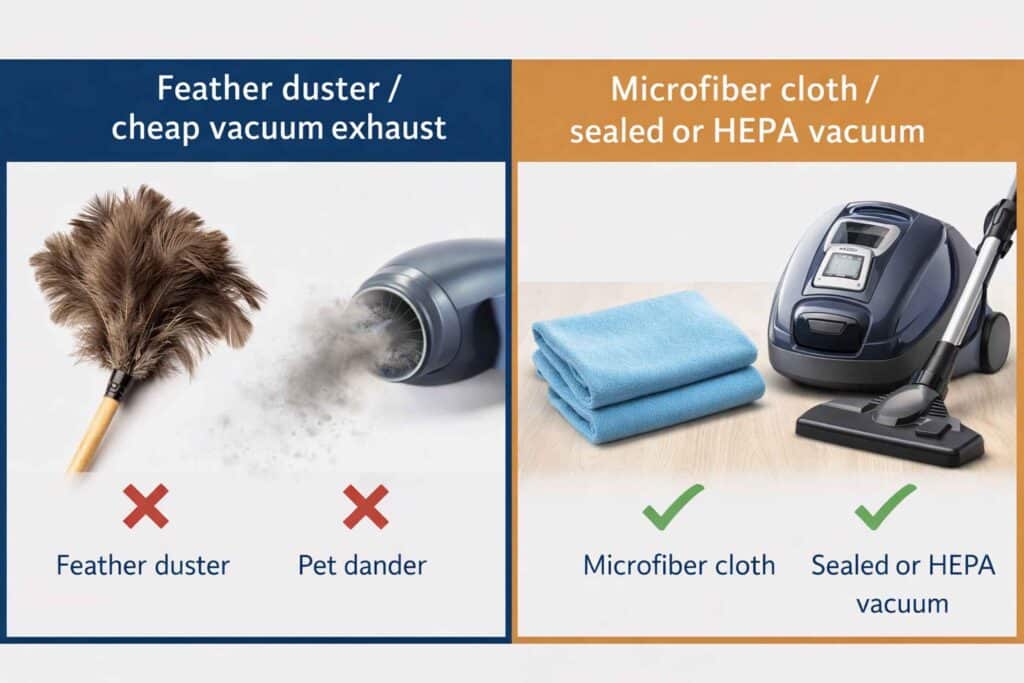
Effective dust control depends more on capture than force. Tools that trap particles work better than those that simply move them around.
A vacuum with good filtration is essential. A sealed system or HEPA-rated vacuum traps fine particles instead of exhausting them back into the room. Vacuums without adequate filtration often worsen dust problems, especially on carpet and upholstery.
Microfiber cloths are the right choice for surface cleaning. Their fiber structure holds dust rather than dispersing it. Used slightly damp, they capture particles instead of lifting them into the air.
Floor-cleaning tools should match the flooring. Carpets need slow, overlapping vacuum passes to pull dust from fibers. Hard floors should always be vacuumed before mopping. Mopping alone leaves fine dust behind, which resurfaces as floors dry.
HVAC air filters are a critical material, not an accessory. Filters must fit correctly and be replaced regularly. A moderately efficient filter changed on schedule is more effective than a high-resistance filter left in too long.
Optional tools have targeted value. Air purifiers help in bedrooms or offices but don’t replace whole-house cleaning. Door mats and shoe trays reduce incoming dust. Neutral odor absorbers can help once dust is under control but should never substitute for removal.
Step-by-Step Process to Make Your House Less Dusty
Reducing dust works best when entry control, cleaning, and airflow improvements happen in sequence. Skipping steps or doing them out of order usually leads to dust returning quickly.
Step 1: Limit Dust Coming Into the House

Most dust enters from outside. Shoes track in soil, pets bring in pollen and dirt, and garages introduce fine debris that spreads easily indoors.
Use a two-mat system at main entrances. Place a coarse mat outside to remove debris and a second mat inside to capture what remains. This alone can significantly reduce interior dust.
Adopt a consistent shoe routine. Even partial shoe removal—leaving work boots or athletic shoes near the door—cuts down on tracked-in dust. For pets, wiping paws during wet or dusty conditions limits debris transfer.
Pay attention to the garage connection. Garages are dusty environments, and airflow between the garage and house allows particles to migrate indoors. Keeping the interior door sealed and closed reduces this transfer.
Reducing what enters the house lowers the baseline dust load, making all other cleaning steps more effective.
Step 2: Remove Built-Up Dust Without Spreading It
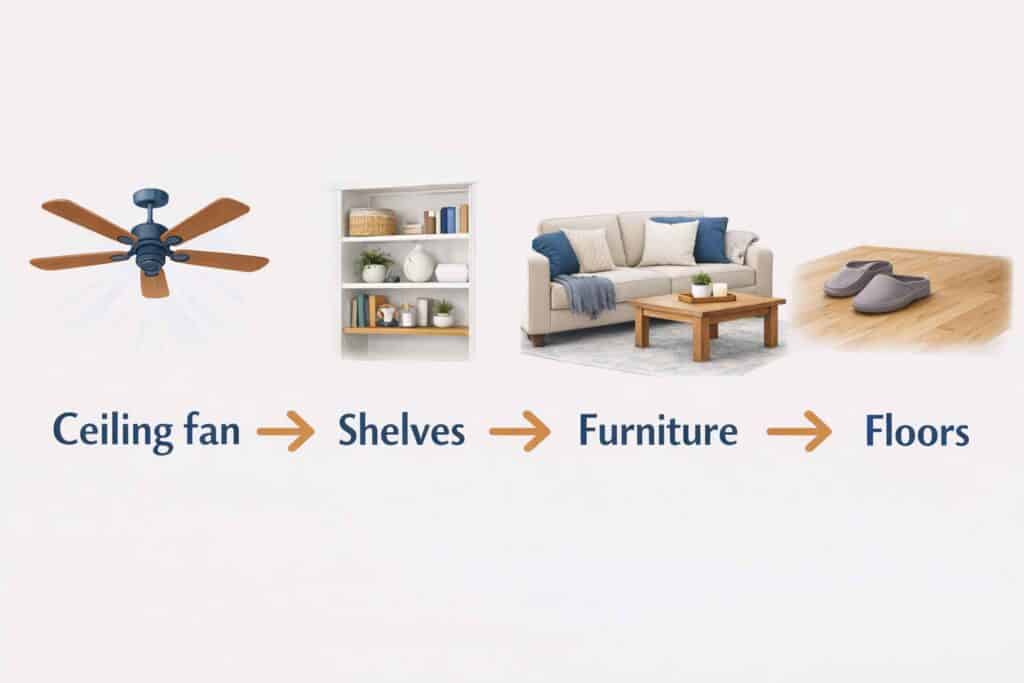
Once entry points are controlled, remove the dust already inside. Order matters because dust settles downward.
Always clean from top to bottom. Start with ceiling fans, light fixtures, shelves, and vents. Dust dislodged here will fall to lower surfaces, which you’ll clean later.
Use slightly damp microfiber cloths for hard surfaces. This captures dust instead of dispersing it. Dry dusting often looks productive but leaves fine particles suspended in the air.
Soft surfaces require patience. Upholstered furniture, curtains, and rugs hold dust deep in fibers. Vacuum slowly, making multiple passes rather than quick swipes. This is where good filtration has the biggest impact.
Clean floors last. Vacuum carpets thoroughly before mopping hard floors. Mopping without vacuuming first spreads fine dust into damp residue, leaving floors dusty again once dry.
This approach removes dust instead of redistributing it, extending the time between cleanings.
Step 3: Improve Air Circulation and Filtration
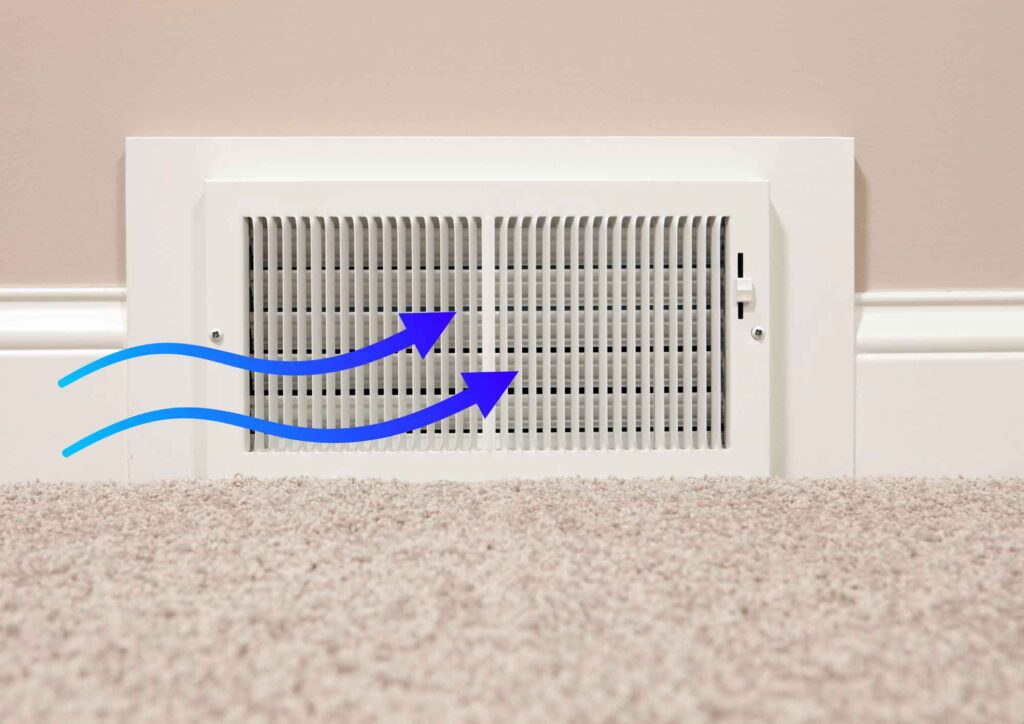
Even a clean house will get dusty quickly if airflow and filtration are poor. This step slows how fast dust settles after cleaning.
Replace HVAC filters consistently. Dirty or ill-fitting filters allow dust to bypass the system and circulate through supply vents. Use a filter rating your system can handle; overly restrictive filters can reduce airflow in some systems.
Run the HVAC fan periodically to circulate air through the filter. This helps reduce stagnant zones where dust accumulates, especially in rarely used rooms.
Keep return vents clear. Furniture or rugs blocking returns disrupt airflow and cause uneven dust buildup. Balanced airflow allows airborne particles to reach the filter instead of settling on surfaces.
Air purifiers can help in specific rooms, but they are supplemental. They improve local air quality but won’t solve whole-house dust problems on their own.
Reducing airborne dust also helps a house smell good fast. Fewer particles means fewer odor carriers moving through the air.
Common Dust-Causing Mistakes That Undermine Cleaning
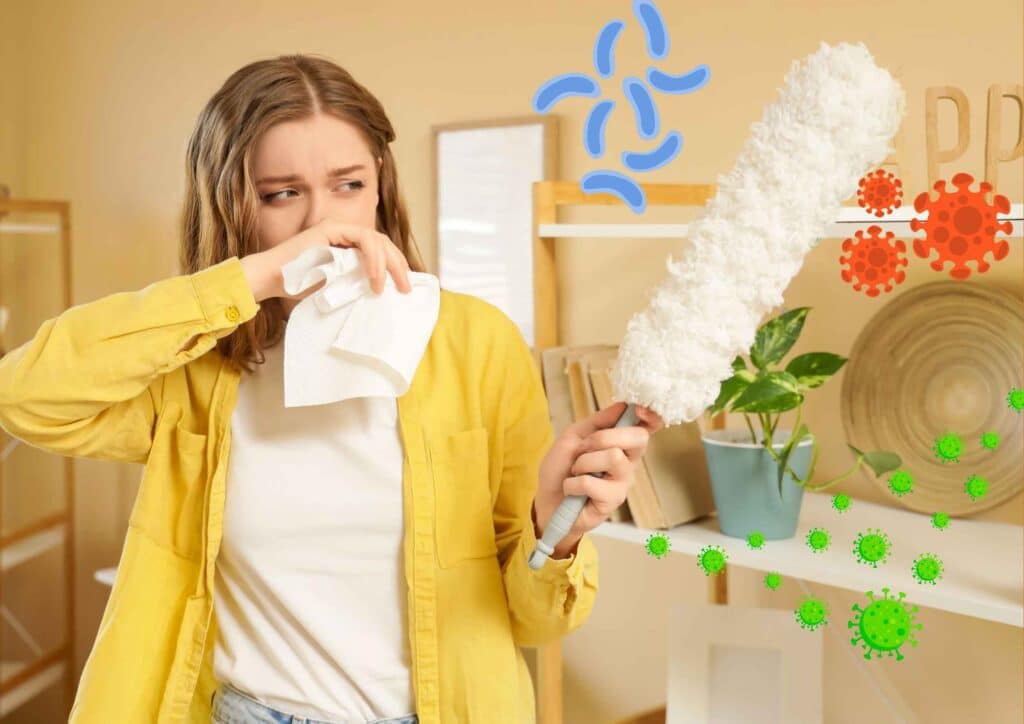
Dry dusting with feather dusters or cloths is a common mistake. These tools lift dust into the air, allowing it to resettle quickly.
Vacuuming without proper filtration is another issue. If dust returns shortly after vacuuming, the machine is likely exhausting fine particles back into the room.
Cleaning in the wrong order wastes effort. Dusting floors before higher surfaces guarantees dust will fall back onto freshly cleaned areas.
Using scented sprays to “freshen” dusty air masks odors instead of removing their cause. Fragrance combined with dust often makes air feel heavier and less clean.
Skipping HVAC filter changes undermines every other step. Consistency matters more than intensity when it comes to dust control.
Safety and Ventilation Considerations to Keep in Mind
Cleaning often involves ladders, electrical fixtures, and mechanical systems. Basic precautions prevent unnecessary risk.
Use stable ladders when cleaning fans or high surfaces and turn off power to ceiling fans and lights before cleaning. Avoid spraying liquids directly into fixtures or vents.
When replacing HVAC filters, power the system off and handle access panels carefully. Filters must be correctly sized to prevent air bypass and system strain.
Ventilate during cleaning. Many cleaners release fumes that linger in enclosed spaces. Briefly opening windows or running exhaust fans improves indoor air quality.
From a building-code perspective, kitchens and bathrooms should have functional exhaust ventilation vented outdoors. Poor ventilation allows dust and moisture to accumulate and contributes to stale air.
If cleaning reveals moisture, mold, or unusual debris such as insulation fibers, stop and reassess. These conditions often require professional evaluation.
Frequently Asked Questions About Household Dust
Why does my house get dusty so fast?
Dust returns quickly when particles are constantly introduced and recirculated. Common causes include tracked-in dirt, pets, poor filtration, blocked return vents, and uneven airflow.
Can dust make my house smell bad?
Yes. Dust absorbs odors and releases them when air moves or humidity changes. Reducing dust often improves smell without adding fragrance.
How often should I dust?
Most homes benefit from light weekly dusting and deeper cleaning every few weeks. When entry control and filtration improve, dust settles more slowly.
Do HVAC filters really help?
Yes, when changed consistently and properly sized. Filters capture airborne particles before they settle throughout the house.
How can I make a house smell good fast if it’s dusty?
Remove airborne dust through vacuuming with good filtration and brief ventilation. Reducing particles improves smell more reliably than fragrance.
Why is one room dustier than others?
Uneven airflow, blocked returns, proximity to entry points, or fabric-heavy furnishings often cause localized dust buildup.
Final Takeaways and When Professional Help Makes Sense
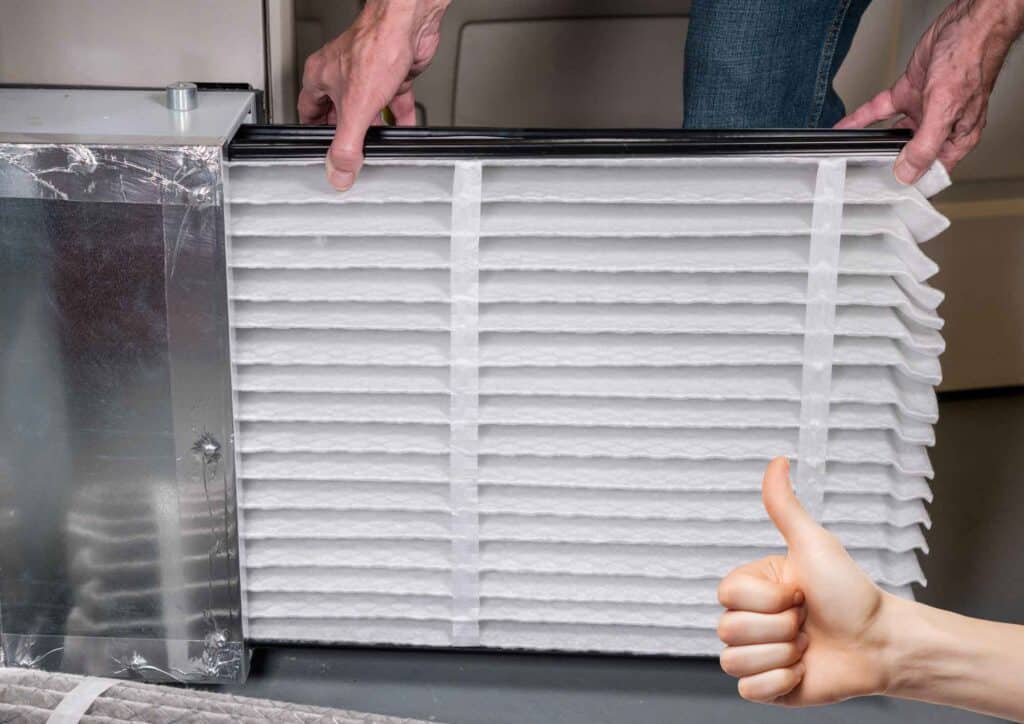
Dust reduction is an ongoing process, not a one-time project. Consistent entry control, correct cleaning order, and regular filter changes deliver the most reliable results.
For sellers and investors, prioritize entryways, main living spaces, and bedrooms. A house that looks clean but feels dusty can leave a negative impression during walk-throughs.
If dust returns within a day or two despite proper cleaning, or if it concentrates near vents or ceilings, the issue may be mechanical or structural rather than housekeeping-related.
Professional help is appropriate when dust problems persist. HVAC contractors can assess airflow, duct condition, and filtration. Insulation or energy professionals can identify gaps that allow attic or crawlspace dust into living areas.
If dust is accompanied by musty odors, visible mold, or health symptoms that worsen indoors, stop DIY efforts and seek professional evaluation. Addressing the root cause protects both the home and the people living in it—and usually resolves dust and odor problems together.
Pingback: How to Make Your House Look Nice Inside: Practical Improvements That Work in Any Home | My Stellar Nest