
Introduction
You turn on two burners to sear dinner, and within minutes the kitchen fills with haze. The smoke lingers. Cabinet doors feel sticky over time. In winter, condensation collects on nearby windows. These are not cosmetic issues, they are signs of inadequate ventilation.
Gas ranges produce grease, heat, water vapor, and combustion byproducts such as nitrogen dioxide and carbon monoxide. Unlike electric cooking, gas adds pollutants directly into the air. A properly sized and correctly installed vent hood removes those contaminants before they circulate through the home.
This guide is for homeowners upgrading from an over-the-range microwave, DIY remodelers replacing an outdated hood, investors improving rental units, and contractor-aware consumers comparing performance specifications. The goal is not to promote a brand, but to help you choose a system that performs properly in a typical U.S. residential kitchen.
Most performance failures are predictable: undersized airflow, reduced duct diameter, long duct runs with multiple elbows, or installing a 900 CFM hood without considering makeup air requirements. The sections below clarify what actually matters.
At-a-Glance Product Comparison
| Product | Category | Type | Airflow | Venting | Filter Type | Best For | Installation Complexity |
|---|---|---|---|---|---|---|---|
| JOCO 30″ Under Cabinet (4-Speed) | Best Overall Choice | Under-cabinet | 900 CFM | Ducted | Permanent metal | Most homeowners | Moderate |
| FIREGAS 30″ Convertible | Most Affordable Option | Under-cabinet | Lower CFM | Ducted or ductless | Charcoal + mesh | Light cooking / rentals | Low |
| 30″ 900 CFM (B0FB3P57XR) | Heavy-Duty Pick | Under-cabinet | 900 CFM | Ducted | Permanent stainless | High-BTU gas ranges | Moderate–High |
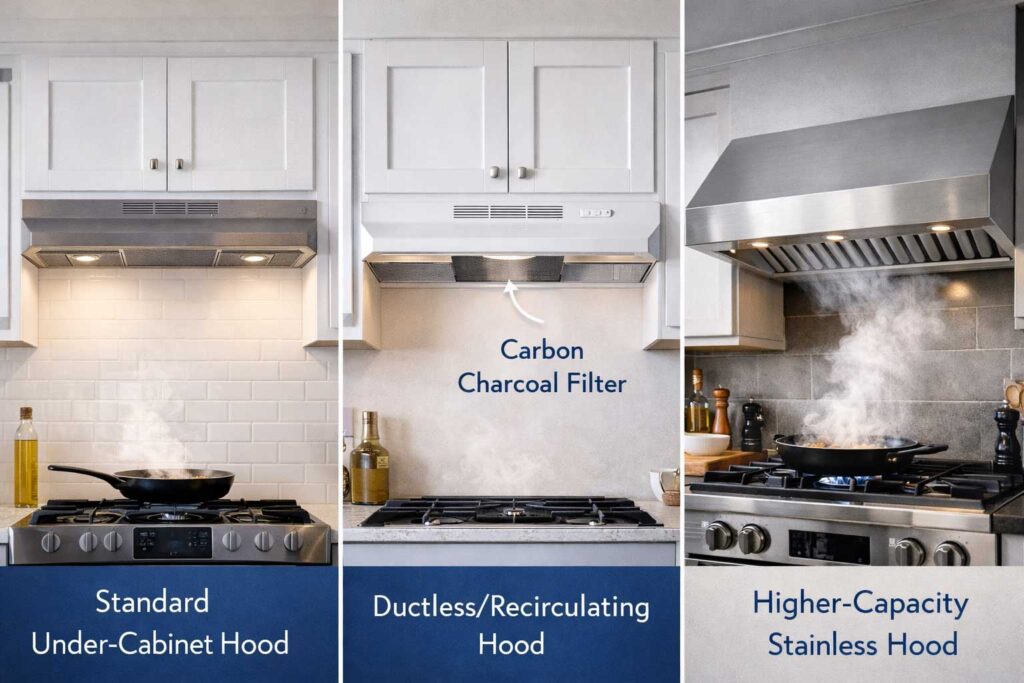
Airflow is only one variable. Filter design, duct size compatibility, and real-world installation conditions significantly affect performance.
Best Overall Choice – JOCO 30″ Under Cabinet Stainless Steel Range Hood (900 CFM, 4-Speed)
Core Specifications
- 900 CFM maximum airflow
- Four-speed control
- Stainless steel construction
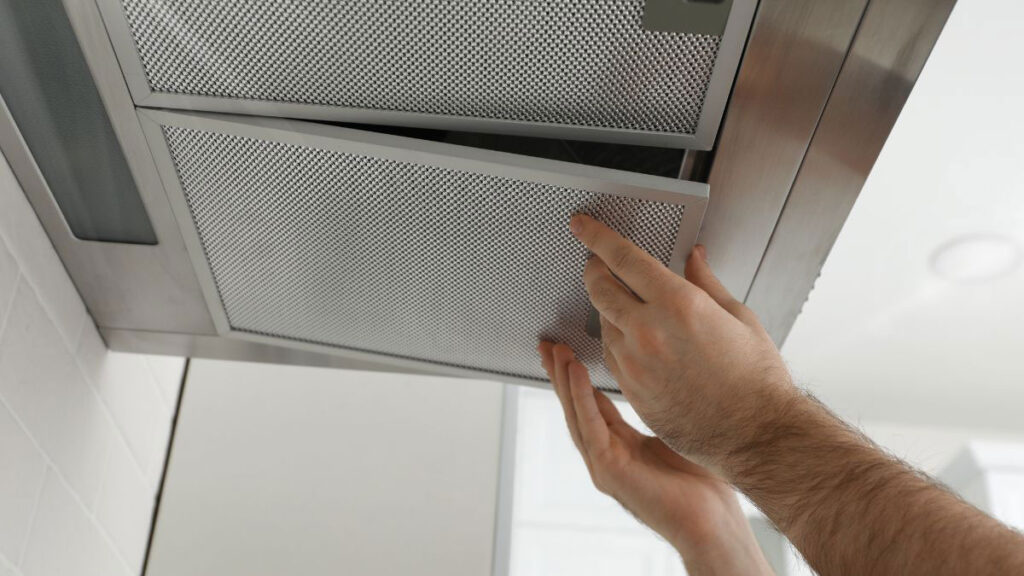
- Permanent metal filters
- Top vent ducted outlet
Many 30″ gas ranges produce between 40,000 and 60,000 total BTUs. A practical guideline is roughly 1 CFM per 100 BTUs, meaning 400–600 CFM handles typical cooking. A 900 CFM unit provides overhead capacity for high-heat cooking or future range upgrades without operating at maximum speed daily.
The four-speed motor matters more than peak CFM. Most cooking—simmering, sautéing—requires moderate airflow. Variable speeds allow lower noise during normal use while preserving high extraction capacity when needed.
Physically, this unit suits standard 30″ cabinet openings common in U.S. kitchens. Permanent metal filters are more durable than lightweight mesh and tolerate frequent cleaning.
Installation quality determines performance. If the manufacturer specifies an 8″ duct and it is reduced to 6″, airflow drops and motor noise increases due to static pressure resistance.
Why This Model Performs Well for Most Homes
This hood balances airflow capacity, adjustability, and durability. It works in single-family homes with exterior duct access and typical ceiling heights (8’–9′). It provides margin without forcing homeowners into commercial-style systems.
Advantages
- Strong airflow reserve
- Adjustable fan speeds
- Durable stainless construction
- Compatible with standard cabinetry
Limitations
- High airflow may trigger makeup air requirements in some jurisdictions
- Performance depends on proper duct sizing
Ideal Use Case
Primary residences where gas cooking is frequent and full ducting to the exterior is available.
Most Affordable Option – FIREGAS 30″ Ductless Convertible Range Hood
Core Specifications
- Convertible (ducted or ductless)
- Lower airflow capacity
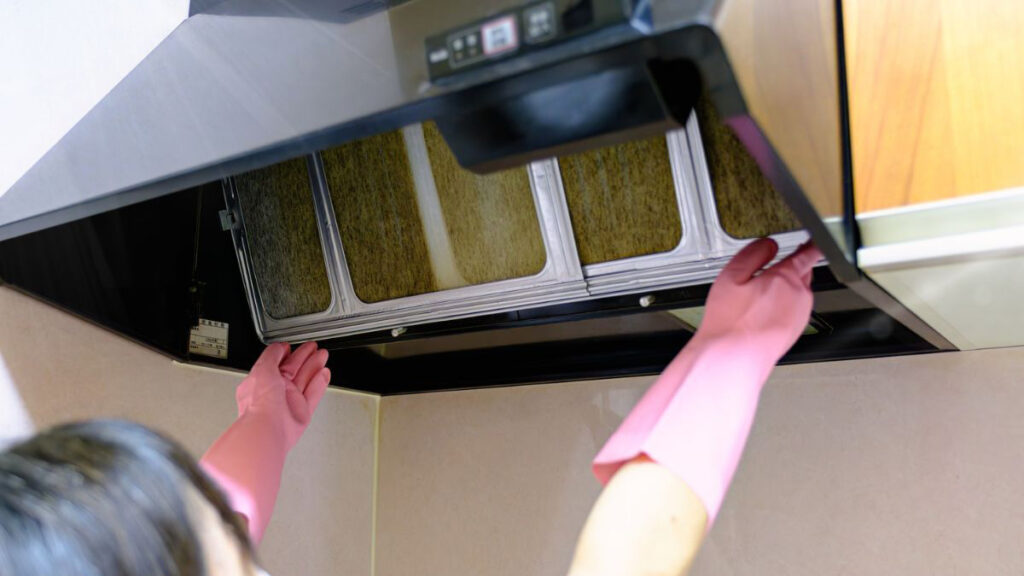
- Charcoal filter compatibility
- 30″ under-cabinet configuration
This unit is appropriate where installation constraints limit ducting options. In condominiums or apartments, exterior penetrations may be restricted by building management or structural limitations.
In ductless mode, charcoal filters reduce odors but do not remove combustion gases or moisture effectively. Recirculating systems filter and return air to the room; they do not exhaust contaminants outdoors.
For households that cook lightly—boiling, reheating, occasional sautéing—this may be sufficient. For frequent high-heat cooking on gas, it will feel underpowered.
Where It Makes Practical Sense
Rental upgrades, budget-conscious remodels, or situations where adding ductwork would require structural modification.
Advantages
- Lower upfront cost
- Easier installation
- Adaptable to restricted layouts
Limitations
- Limited effectiveness for heavy gas cooking
- Charcoal filters require replacement
- Does not remove combustion gases in recirculating mode
Ideal Use Case
Light cooking environments or installations where ducting is not feasible.
Heavy-Duty Pick – 30″ Under Cabinet 900 CFM Range Hood (B0FB3P57XR)
Core Specifications
- 900 CFM airflow
- Under-cabinet installation
- Permanent stainless filters
- Top ducted vent
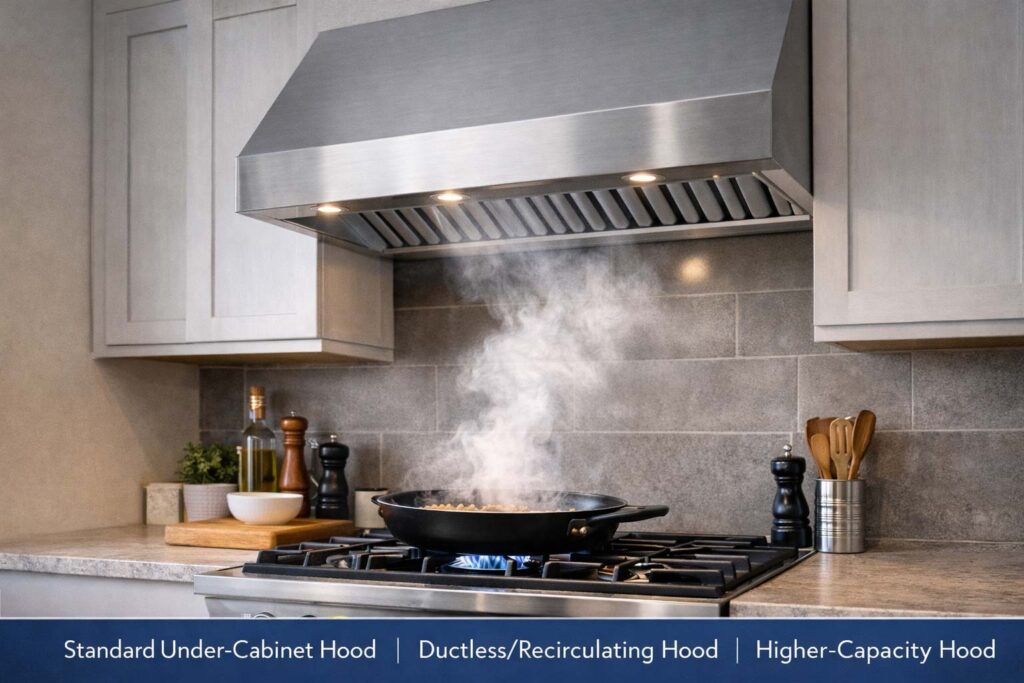
High-output gas ranges, particularly 36″ models, often exceed 70,000 BTUs. At that level, strong airflow improves capture during searing or wok cooking.
Capture efficiency depends not only on CFM but on how quickly the hood can overcome rising thermal plumes. Higher heat produces faster-moving air columns. Additional airflow improves containment.
This category of hood should be evaluated alongside local code. Under the International Residential Code (IRC), many jurisdictions require makeup air systems when kitchen exhaust exceeds 400 CFM. Makeup air introduces replacement air to prevent negative pressure, which can backdraft combustion appliances.
Installing makeup air typically requires professional mechanical evaluation.
Why It Suits High-Output Gas Cooking
This model is appropriate for serious home cooks, luxury remodels, and kitchens with powerful multi-burner gas ranges.
Advantages
- High extraction capacity
- Durable filter construction
- Suitable for heavy grease loads
Limitations
- May require makeup air system
- Proper duct diameter and short duct runs are critical
Ideal Use Case
Homes with high-BTU gas ranges and frequent high-heat cooking.
Evaluation Method and Selection Criteria
Products were evaluated based on airflow relative to gas range output, filter durability, compatibility with common U.S. cabinet dimensions, and installation practicality.
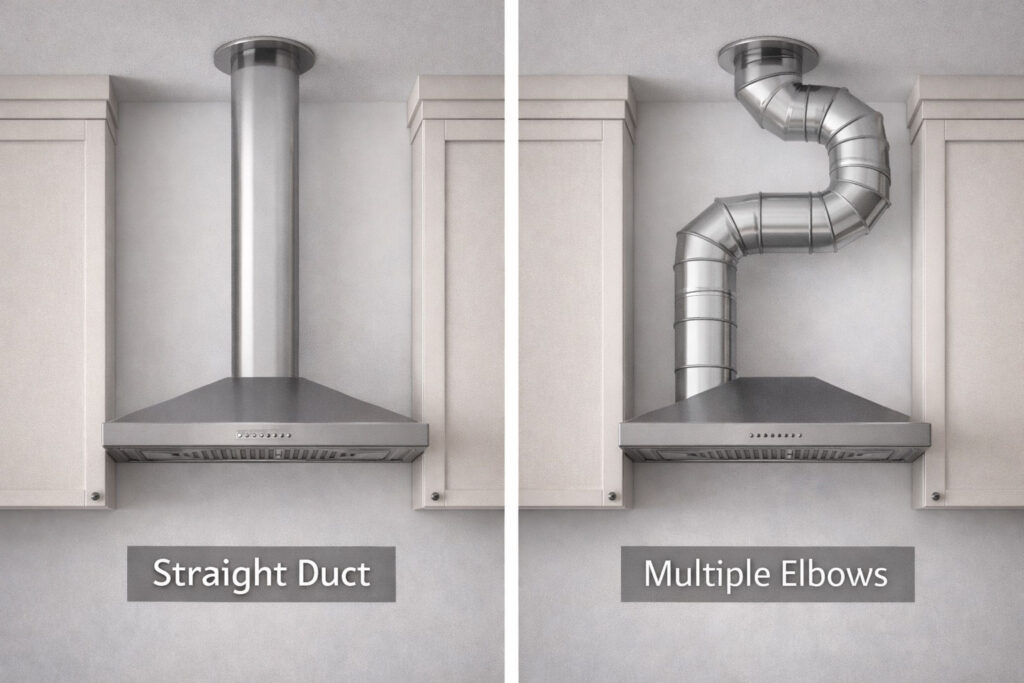
CFM ratings alone do not determine performance. Static pressure losses from long duct runs, multiple elbows, and reduced duct diameter can significantly lower effective airflow. A shorter, straight duct run with proper diameter will outperform a high-CFM unit connected to undersized ductwork.
Capture design also matters. Under-cabinet hoods mounted too high lose containment efficiency. Island installations require greater airflow because there are no adjacent walls to contain rising air.
Units selected here align with typical residential framing and accessible duct routing, not specialized commercial setups.
What to Consider Before Buying
Determining the Right CFM for Your Gas Range
Estimate total BTU output and apply the 1 CFM per 100 BTU guideline as a starting point. For island layouts or open-concept kitchens, plan for additional airflow to compensate for reduced containment.
Avoid oversizing without reviewing code implications. In many jurisdictions, makeup air is required above certain exhaust thresholds.
Ducted Versus Recirculating Systems
Ducted systems exhaust contaminants outdoors. Recirculating systems filter and return air to the room. For gas ranges, ducted ventilation is generally the safer and more effective solution for combustion byproducts and moisture.
Proper Hood Width and Capture Coverage
The hood should match or exceed cooktop width. Depth improves front-burner capture. Shallow decorative units often trade capture area for appearance, which can reduce real-world performance.
Installation Style and Mounting Configuration
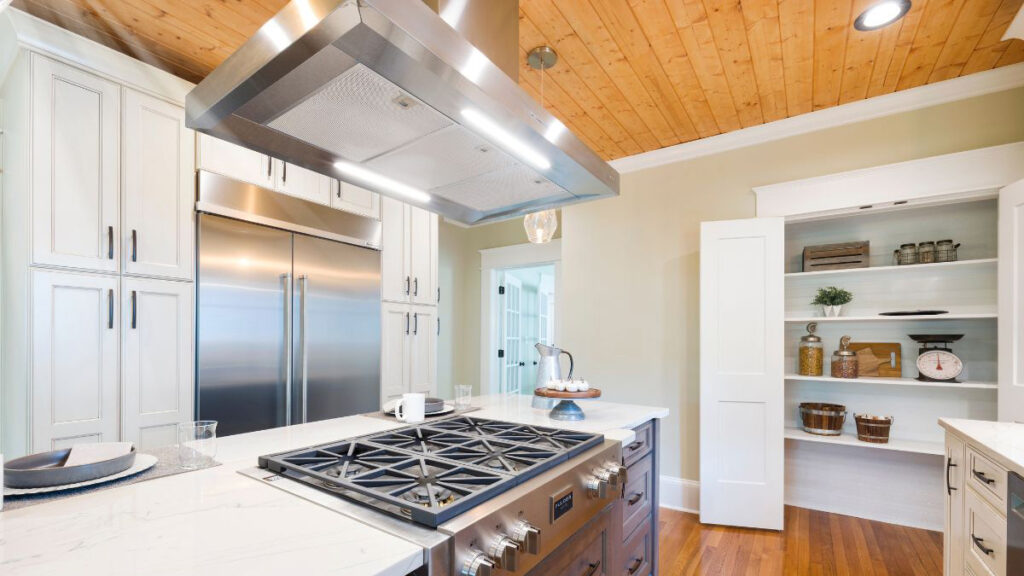
Under-cabinet models suit standard cabinet runs. Island kitchens may require a ceiling mounted kitchen extractor fan or canopy hood. A flush ceiling mounted extractor hood must compensate for greater vertical distance with increased airflow and careful placement.
If your installation requires cutting roof penetrations, modifying framing, or adding makeup air, professional involvement is recommended.
Understanding Noise Ratings
Noise is measured in sones. Lower values indicate quieter operation. Real-world noise depends heavily on duct resistance; restricted ducts often increase sound levels even at moderate speeds.
Duct Design and Installation Best Practices
Use rigid metal ducting. Keep the run as short and straight as possible. Every 90-degree turn increases resistance and reduces effective airflow.
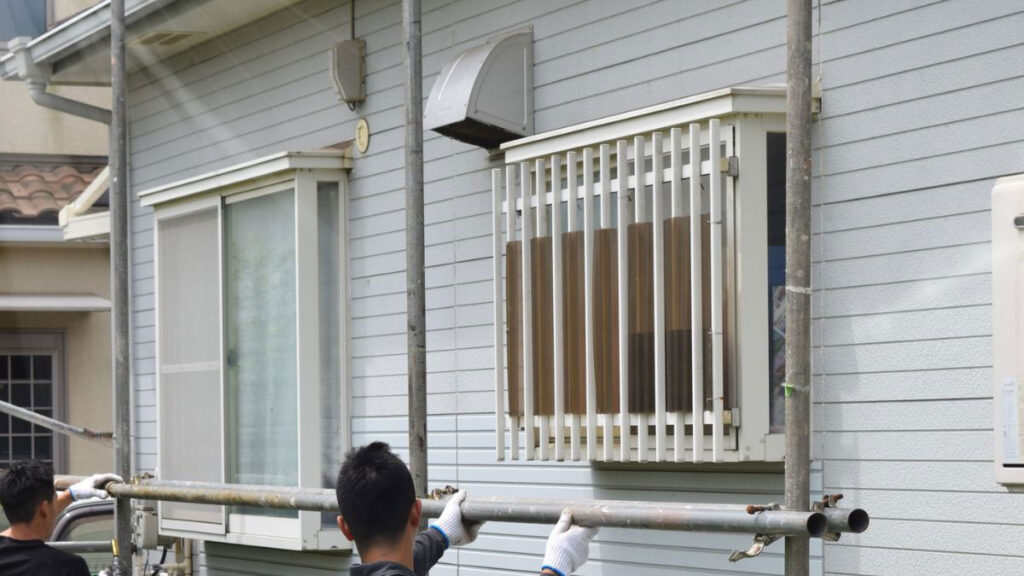
Never vent into an attic or crawlspace. Terminate outdoors with a proper wall cap or roof cap and a backdraft damper. Cutting roof penetrations or drilling through masonry is typically best handled by a professional to ensure correct flashing and waterproofing.
Filter Type and Ongoing Maintenance
Clean metal filters regularly to maintain airflow and reduce fire risk. Replace charcoal filters in ductless systems per manufacturer guidance, especially if odors start to linger after cooking.
Common Questions from Homeowners
What CFM is appropriate for a 30″ gas range?
Generally 400–600 CFM for moderate cooking. Higher-output burners and frequent high-heat cooking may require more.
Do I need makeup air for a 900 CFM hood?
Many jurisdictions require it. Check local building codes before installation, especially in newer or tightly sealed homes.
Is ductless ventilation acceptable for gas?
It may be permitted, but it is less effective for combustion byproducts and moisture because it does not exhaust air outdoors.
How high should a hood be installed?
Typically 24″–30″ above the cooktop, following the manufacturer’s installation instructions for your specific model.
Are ceiling mounted extractor fans effective?
Yes, when properly sized. Greater mounting height increases the capture challenge, so airflow and placement become more important.
Final Assessment and Practical Recommendation
The Best Fit for Most Households
The JOCO 900 CFM under-cabinet hood offers balanced airflow, speed control, and durable filtration for typical gas cooking in homes with exterior duct access.
When a Lower-Cost Model Is Sufficient
The FIREGAS convertible hood can work for light cooking or installations where ducting is not practical. In ductless mode, set expectations realistically: it helps with odors, but does not remove combustion gases the way ducted ventilation does.
When a High-Capacity Unit Is Justified
The 900 CFM heavy-duty model is appropriate for high-BTU ranges and frequent high-heat cooking, provided makeup air and duct design are addressed early in planning.
Installation and Planning Reminders
Ventilation performance depends more on duct design, capture area, and installation quality than on advertised CFM alone. Before purchasing, confirm duct routing, verify diameter compatibility, and review local code requirements regarding makeup air.
A correctly sized and properly installed hood improves air quality, reduces grease buildup, and protects finishes. A powerful hood installed with undersized ducting or excessive bends will not deliver its rated performance.