
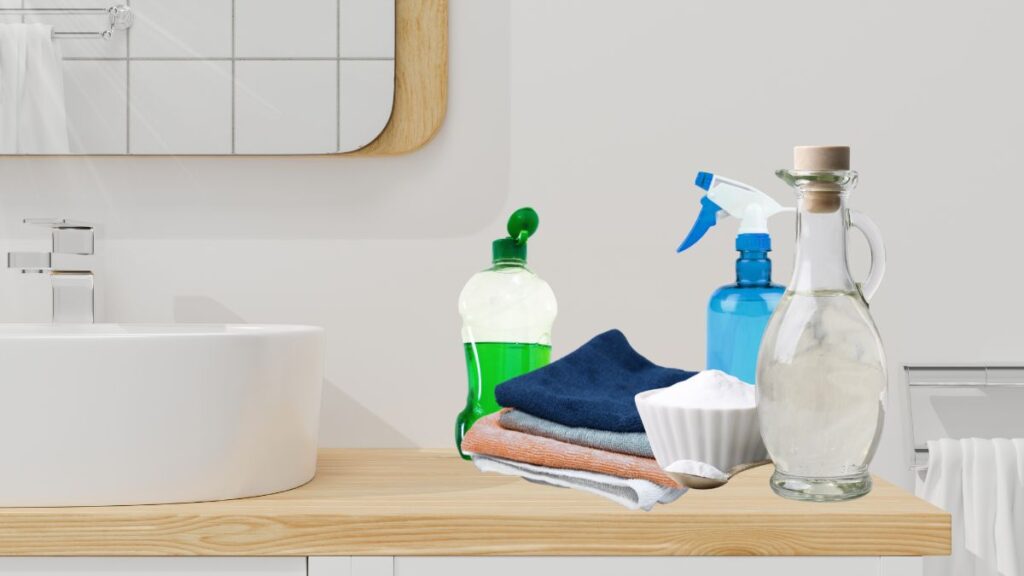
 This guide is intended for homeowners, DIY-inclined readers, property investors, and contractor-aware consumers who want a practical way to maintain a clean bathroom without relying on harsh chemical cleaners.
Many routine bathroom cleaning tasks can be handled effectively with common household products such as white vinegar, baking soda, and mild dish soap. These materials work well for removing soap scum, light mineral deposits, and odors when used correctly and on appropriate surfaces.
The key is understanding what each product actually does. Vinegar dissolves mineral scale left by hard water. Baking soda provides mild abrasion and odor control. Dish soap helps break down oily residue and soap film. Used together in the right situations, they can keep most bathroom surfaces clean with minimal risk to fixtures and finishes.
Important Considerations Before You Begin
Non toxic bathroom cleaning works best for routine maintenance rather than heavy restoration. Vinegar is a mild acid that dissolves calcium deposits from hard water and helps loosen soap scum that builds up on tile and fixtures.
However, vinegar is not appropriate for every surface. Acidic cleaners can damage natural stone such as marble, limestone, and travertine. If a bathroom contains stone countertops or stone tile, those areas should be cleaned with products designed specifically for stone.
It is also important to understand the difference between cleaning and disinfecting. Vinegar removes mineral buildup and surface residue, but it is not a registered disinfectant. For most routine bathroom cleaning tasks this is acceptable, but sanitation needs during illness may require a dedicated disinfectant.
Water quality can affect cleaning results as well. Many homes in the United States have hard water, which leaves mineral deposits around faucets, shower heads, and tile. Vinegar helps dissolve these deposits, although heavy scale may require repeated cleaning.
Finally, cleaning should not be used to mask underlying issues. Persistent mildew may indicate poor ventilation. Mineral buildup that returns quickly may point to hard water conditions. Addressing those causes reduces long-term maintenance.
Materials and Basic Tools for Non Toxic Bathroom Cleaning
White distilled vinegar is the primary cleaning solution used in this method. It helps dissolve mineral deposits and loosen soap residue.
Baking soda provides gentle abrasion that helps remove stains and deodorize surfaces. It is particularly useful for toilet cleaning.
Mild dish soap helps break down oily residue and soap film. When combined with vinegar, it is effective for removing soap scum from shower walls and glass doors.
You will also need spray bottles for applying cleaning solutions to tile and fixtures. Microfiber cloths are useful for wiping surfaces and polishing fixtures without leaving lint behind.
A non scratch scrub brush or sponge helps remove stubborn buildup. A standard toilet brush is sufficient for cleaning the bowl.
For cleaning a shower head with vinegar, a plastic bag and rubber band can be used to soak the fixture. Measuring cups help mix consistent cleaning solutions. Rubber gloves are optional but recommended when cleaning toilets.
Step-by-Step Bathroom Cleaning Process
Step 1: Prepare the Bathroom and Identify Areas That Need Attention
Begin by removing items from the sink counter, tub edge, and shower shelves. This exposes the surfaces where soap scum and mineral deposits typically accumulate.
Turn on the bathroom exhaust fan or open the door to improve airflow. Even mild cleaners benefit from ventilation, especially in smaller bathrooms.
Next, look for common buildup areas. Hard water deposits often form around faucets and shower heads. Soap scum tends to collect on shower walls and glass doors. Toilets frequently develop mineral rings at the water line.
Lightly rinse shower walls or wipe surfaces with a damp cloth. Removing loose debris allows the cleaning solution to work directly on the residue.
Step 2: Apply Vinegar and Baking Soda Cleaning Methods to Each Fixture
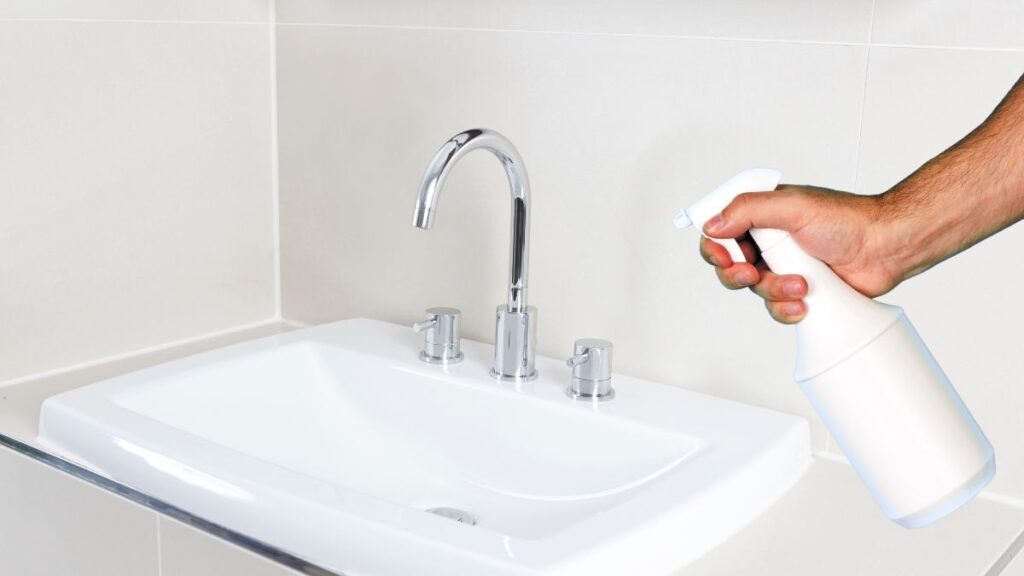
For general bathroom cleaning with vinegar, fill a spray bottle with white vinegar and apply it to sinks, faucets, and tile surfaces. Allow it to sit for several minutes so the acid can dissolve mineral buildup.
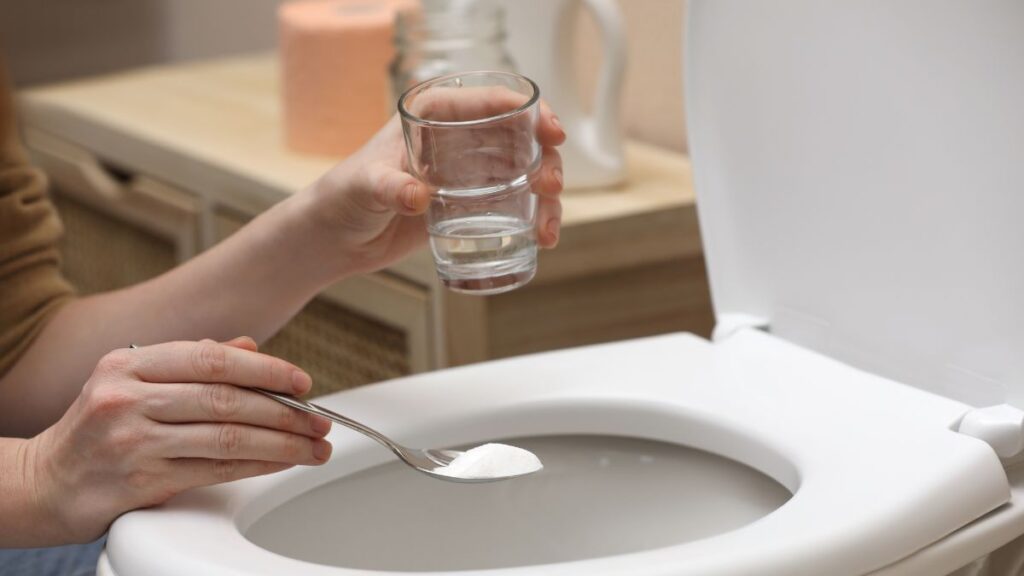
For cleaning the toilet with vinegar, pour approximately one cup of vinegar into the bowl and allow it to sit for ten to fifteen minutes. This helps loosen mineral deposits and stains along the water line.
Next, sprinkle baking soda into the bowl and scrub with a toilet brush. Baking soda provides mild abrasion that helps remove stains without damaging the porcelain surface.
Shower cleaning with vinegar and dish soap works well for removing soap scum from tile and glass doors. A common mixture is equal parts vinegar and dish soap applied with a spray bottle or sponge. The soap breaks down oily residue while the vinegar dissolves mineral scale.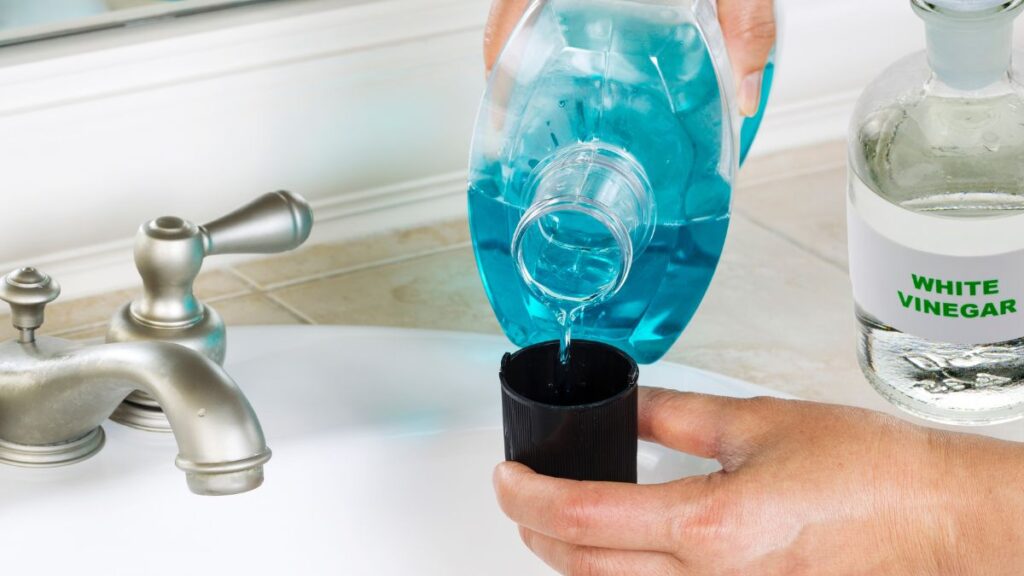
For cleaning a shower head with vinegar, fill a plastic bag with vinegar and place it around the shower head so the spray holes are submerged. Secure the bag with a rubber band and allow it to soak for about thirty minutes. This dissolves mineral buildup inside the spray openings.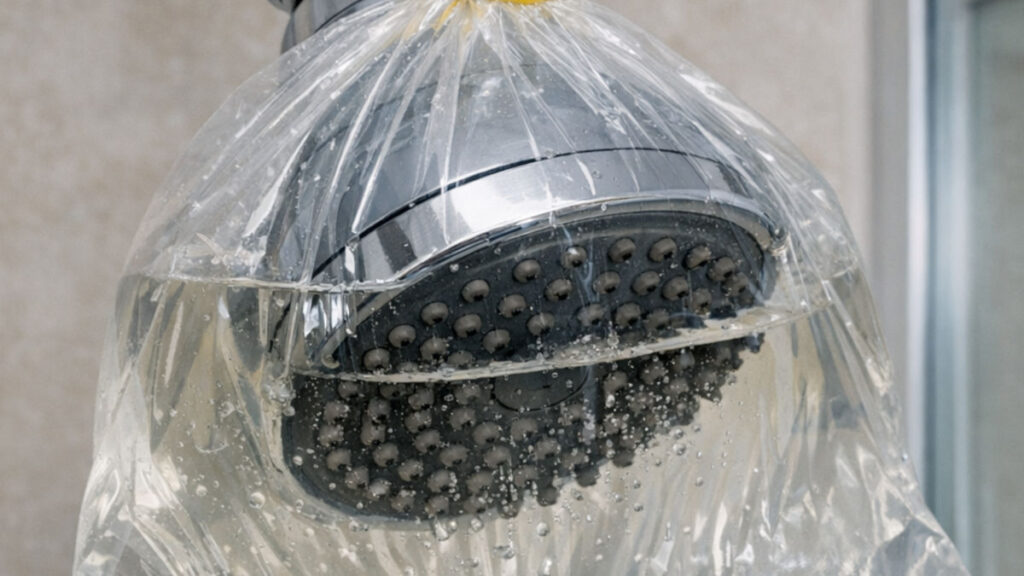
Step 3: Scrub Surfaces, Rinse Thoroughly, and Dry Fixtures
After the cleaning solutions have had time to work, scrub surfaces using a soft brush or non scratch sponge. Focus on areas where buildup is visible, such as grout lines and the bottom of the toilet bowl.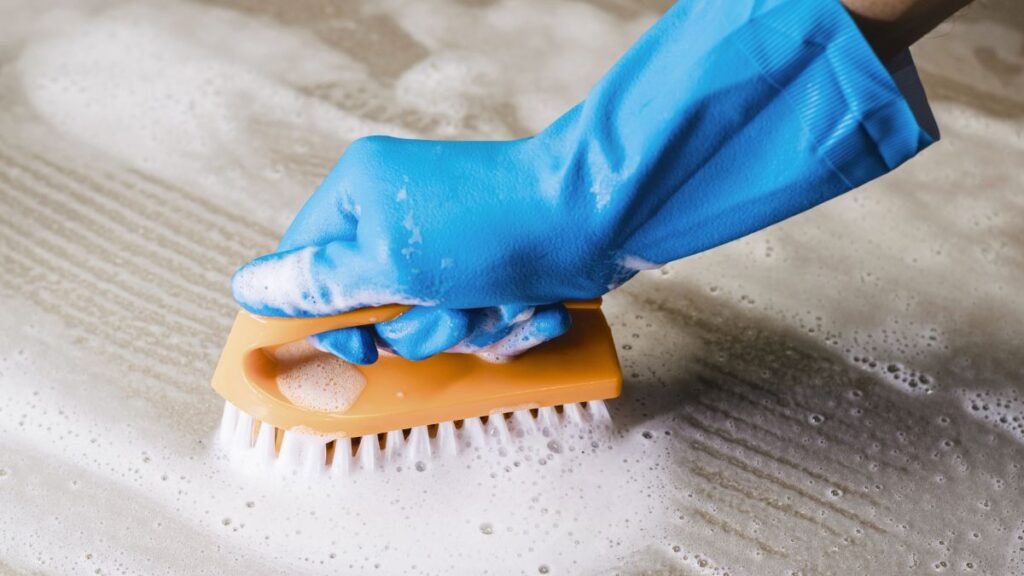
Rinse all surfaces thoroughly with clean water. Residual vinegar or soap can leave streaks if it remains on the surface.
Use microfiber cloths to wipe down faucets, handles, and mirrors. This step removes water spots and leaves metal fixtures with a clean finish.
Flush the toilet to remove the vinegar and baking soda mixture. If stains remain, repeat the process rather than scrubbing aggressively.
Finally, wipe down shower walls and fixtures to remove excess moisture. Dry surfaces accumulate less mineral buildup between cleanings.
Common Bathroom Cleaning Mistakes to Avoid
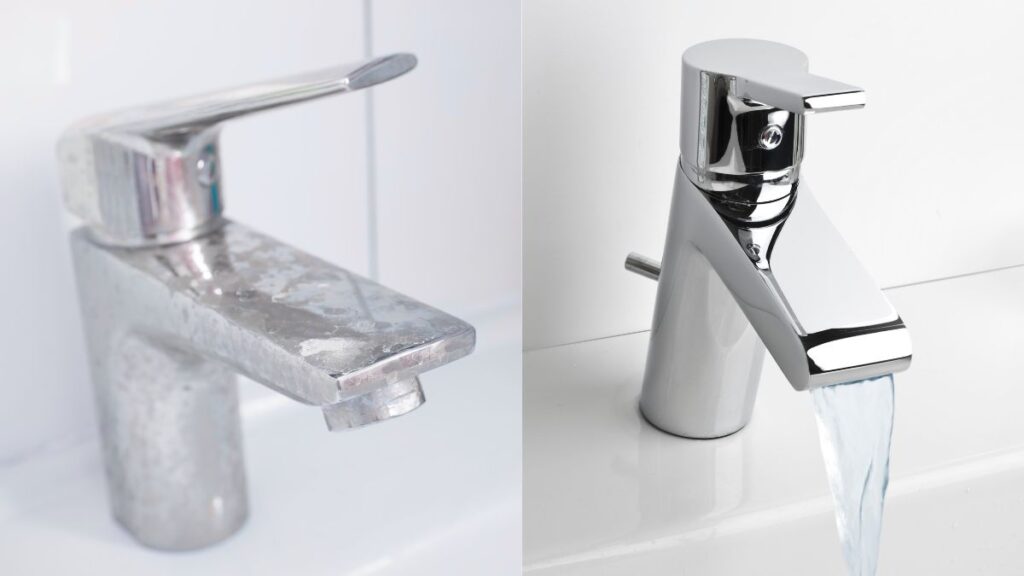
One of the most common mistakes is using vinegar on materials that are sensitive to acid. Natural stone surfaces can become etched or dull when exposed to vinegar.
Another issue is mixing vinegar with other cleaning products. Combining vinegar with bleach can produce chlorine gas, which is hazardous in enclosed spaces.
Leaving vinegar on metal fixtures for extended periods can also cause damage. While short contact times are safe for most finishes, prolonged soaking can dull chrome or damage plating.
Using abrasive scrubbing pads is another frequent problem. Steel wool or aggressive scouring pads can scratch porcelain, fiberglass tubs, and acrylic shower panels.
Homeowners sometimes try to remove mold with vinegar alone. Small surface spots may respond to cleaning, but recurring mold often indicates a ventilation or moisture problem.
Safety Practices and Bathroom Ventilation Considerations
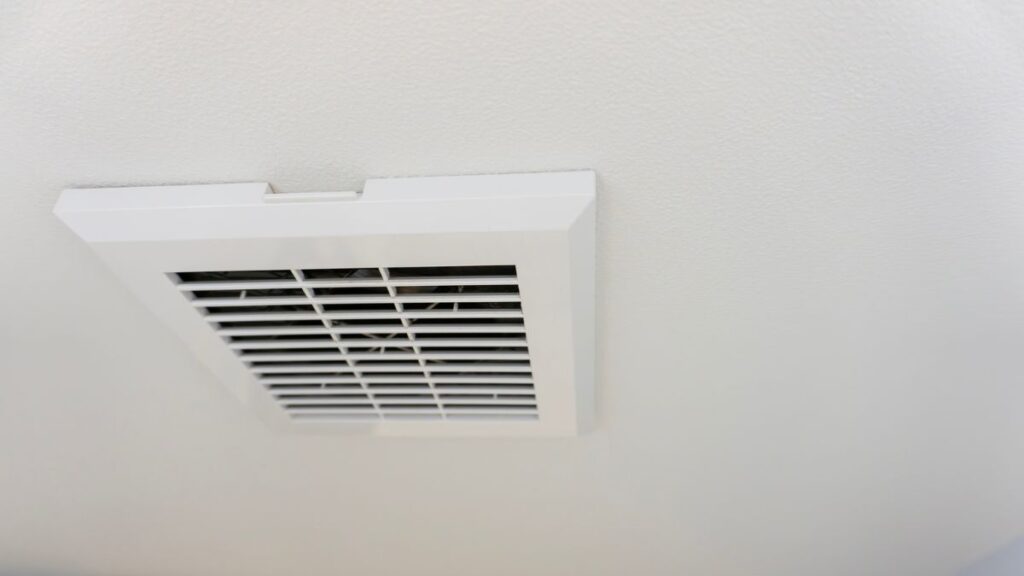
Bathrooms should have proper ventilation to control humidity levels. Most residential building codes require either an operable window or a mechanical exhaust fan that vents outside the home.
If ventilation is inadequate, moisture from showers remains trapped in the room and encourages mold growth. Cleaning alone will not resolve that issue. Installing or repairing an exhaust fan may be necessary.
Electrical safety is also important in bathrooms. Outlets near sinks should be protected by ground fault circuit interrupters. These devices reduce shock risk when electrical appliances are used near water.
Cleaning materials should be stored safely as well. Even common household products such as vinegar and baking soda should be kept out of reach of children and pets.
Finally, watch for signs of persistent moisture problems. Peeling paint, loose tile, or damp drywall may indicate plumbing leaks or hidden water intrusion.
Frequently Asked Questions About Non Toxic Bathroom Cleaning
Is vinegar safe for all bathroom surfaces?
Vinegar is safe for many surfaces including ceramic tile, porcelain fixtures, and glass. It should not be used on natural stone such as marble or limestone because the acid can damage the surface.
How often should you clean a bathroom with vinegar?
Most bathrooms benefit from weekly cleaning of sinks, toilets, and shower surfaces. Routine maintenance prevents heavy mineral buildup and soap scum from accumulating.
Does baking soda remove toilet stains?
Baking soda helps remove light stains because it acts as a mild abrasive. It works best when vinegar is used first to loosen mineral deposits.
What mixture works best for shower cleaning with vinegar and dish soap?
Many homeowners use a mixture of equal parts vinegar and dish soap. The soap breaks down oily residue while the vinegar dissolves mineral deposits.
How long should a shower head soak in vinegar?
About thirty minutes is usually enough to dissolve mineral deposits inside the spray holes. Heavier buildup may require a second treatment.
Can vinegar remove hard water stains in the bathroom?
Yes. Vinegar is effective at dissolving calcium deposits caused by hard water. Heavy mineral buildup may require repeated applications.
Is vinegar enough to disinfect a bathroom?
Vinegar is primarily a cleaner and mineral remover. It does not replace disinfectants when sanitation is required, such as during illness.
Practical Maintenance Tips and When Professional Help May Be Necessary
Routine maintenance reduces the need for aggressive cleaning. Wiping down shower walls after use limits soap scum and mineral deposits.
Running the bathroom exhaust fan during and after showers helps control humidity and prevent mildew growth. Many fans should run for at least twenty minutes after bathing.
If mineral buildup appears quickly after cleaning, the home may have hard water. Installing a water softener can significantly reduce scale on fixtures.
Professional help may be necessary when cleaning does not solve the problem. Persistent mold, deteriorating grout, or leaking fixtures often indicate moisture issues that require repair.
Cleaning methods maintain surfaces but cannot correct plumbing leaks, ventilation failures, or structural moisture problems. Identifying those issues early helps prevent larger and more expensive bathroom repairs.
Pingback: Cleaning The Shower With Baking Soda And Vinegar: Step-by-Step Bathroom Maintenance Guide
Pingback: Cleaning The Toilet With Vinegar And Baking Soda: A Practical Bathroom Maintenance Guide