
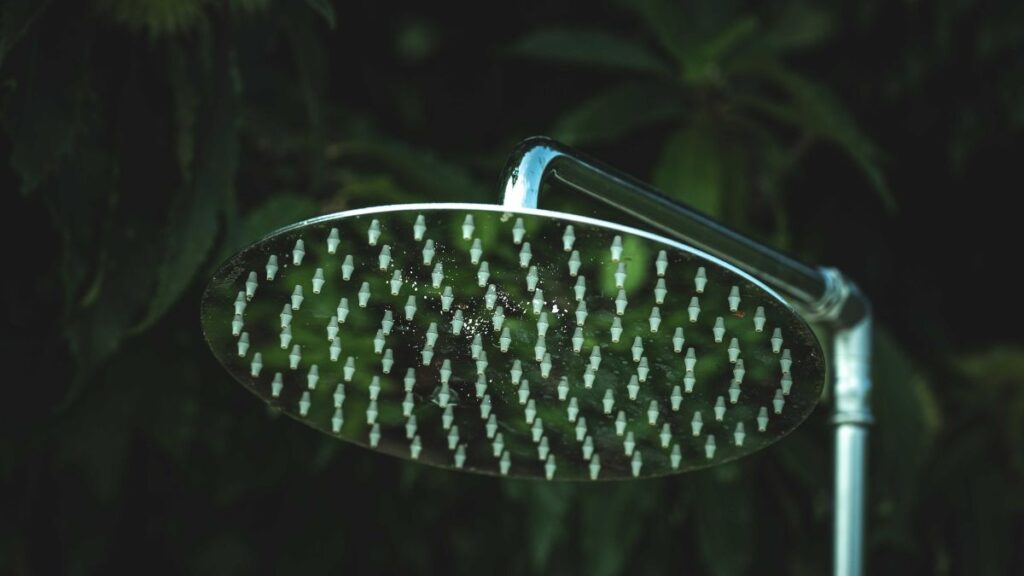
 Mineral buildup is one of the most common reasons a shower gradually loses pressure or begins spraying unevenly. Over time, dissolved minerals in water leave deposits inside the shower head and around the spray nozzles. These deposits restrict water flow and create irregular spray patterns that make showers less comfortable and less efficient.
This guide is designed for homeowners, DIY-inclined property owners, and rental property managers who want a practical way to restore shower performance without replacing the fixture. Cleaning a shower head with vinegar is a simple maintenance method that dissolves mineral buildup and clears clogged spray openings.
The quick answer is straightforward. Soaking the shower head in white vinegar for about 30 to 60 minutes typically dissolves mineral deposits and restores normal water flow. However, doing the job properly requires a few precautions, the right tools, and an understanding of when cleaning will solve the problem and when a plumbing issue may require professional attention.
Key Things to Understand Before Cleaning a Shower Head
Most shower head clogs are caused by minerals in the water supply. Calcium and magnesium naturally occur in groundwater throughout many regions of the United States. When hot water passes through the shower head and evaporates after use, these minerals remain behind and slowly accumulate inside the fixture.
One of the first signs of buildup is an uneven spray pattern. Some nozzles may spray normally while others produce thin streams or stop flowing entirely. In other situations, homeowners assume the plumbing pressure has dropped when the real issue is simply mineral deposits restricting the spray openings.
Many modern shower heads use flexible rubber or silicone nozzles designed to resist mineral buildup. When deposits form, these nozzles can often be cleared by rubbing them after soaking. Older fixtures with metal spray openings may require brushing to remove hardened scale.
Another area where buildup occurs is the internal screen filter. Many shower heads include a small mesh screen at the threaded connection. This screen traps debris and sediment from the plumbing system. Mineral deposits collecting on this screen can significantly reduce water flow even if the exterior nozzles appear clean.
It is also important to recognize when the shower head is not the real problem. If water pressure throughout the house is low, the issue may involve supply valves, sediment in pipes, or a failing pressure regulator. Cleaning the shower head will not resolve these system-level problems.
Tools and Supplies You’ll Need
The main cleaning ingredient is ordinary white distilled vinegar. Its mild acidity dissolves calcium and lime deposits that build up inside plumbing fixtures. Vinegar is widely used for household descaling because it works effectively without damaging most metal and plastic surfaces when used for short periods.
You will also need a plastic bag or small container to hold the vinegar during the soaking process. The plastic bag method works well when the shower head cannot be easily removed from the shower arm.
Rubber bands or zip ties are helpful for securing the bag so the spray openings remain submerged. A soft toothbrush or nylon cleaning brush is useful for gently removing loosened deposits after soaking.
Baking soda can assist with related bathroom cleaning tasks. It provides mild abrasion for removing stubborn residue from shower surfaces. It is also commonly used during toilet cleaning baking soda methods when combined with vinegar to loosen mineral rings.
A spray bottle can be used to mix solutions for shower cleaning with vinegar or shower cleaning with vinegar and Dawn dish soap. This mixture is often effective for breaking down soap scum and body oils that accumulate on tile, glass doors, and acrylic surrounds.
If the shower head needs to be removed, an adjustable wrench may help loosen the connection. Wrapping a towel around the fixture before using the wrench prevents scratching the finish.
Step-by-Step Process for Cleaning a Shower Head
Step 1: Inspect and Prepare the Shower Head
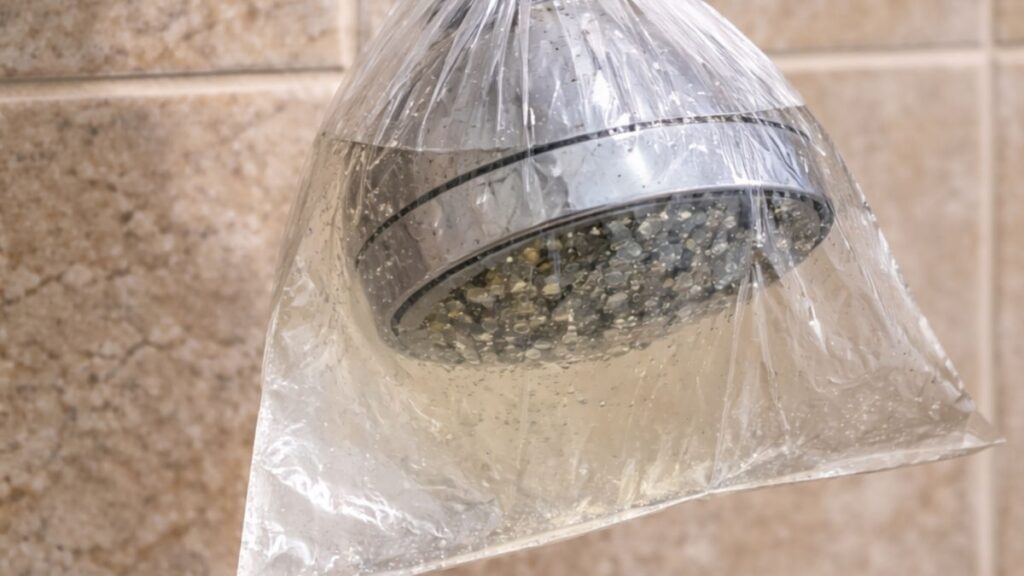
Start by examining the shower head for visible mineral deposits. White or chalky buildup around the spray openings usually indicates calcium scale from hard water. You may also notice deposits around the threaded connection where the fixture attaches to the shower arm.
Next, decide whether the shower head should remain attached or be removed for cleaning. Many fixtures can be unscrewed by hand. If the connection is tight, use an adjustable wrench with a towel wrapped around the fixture to protect the finish.
If the shower head remains attached, fill a plastic bag with white vinegar and place it over the fixture. Secure the bag with a rubber band so the spray openings are fully submerged. This allows the vinegar to reach the internal mineral buildup.
If the shower head is removable, place it in a container filled with vinegar so the entire fixture is submerged. This method allows the vinegar to contact the internal screen and other areas where deposits often accumulate.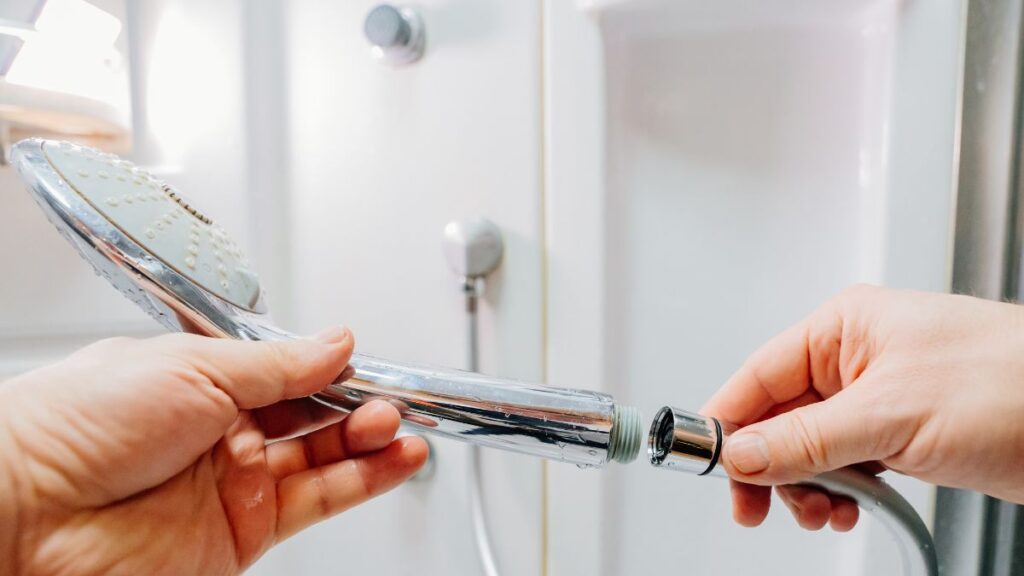
Allow the shower head to soak for approximately 30 to 60 minutes. Heavier mineral buildup may require the full hour. Avoid leaving chrome or plated fixtures in vinegar overnight because prolonged exposure can dull the finish.
Step 2: Remove Mineral Buildup and Restore Spray Flow
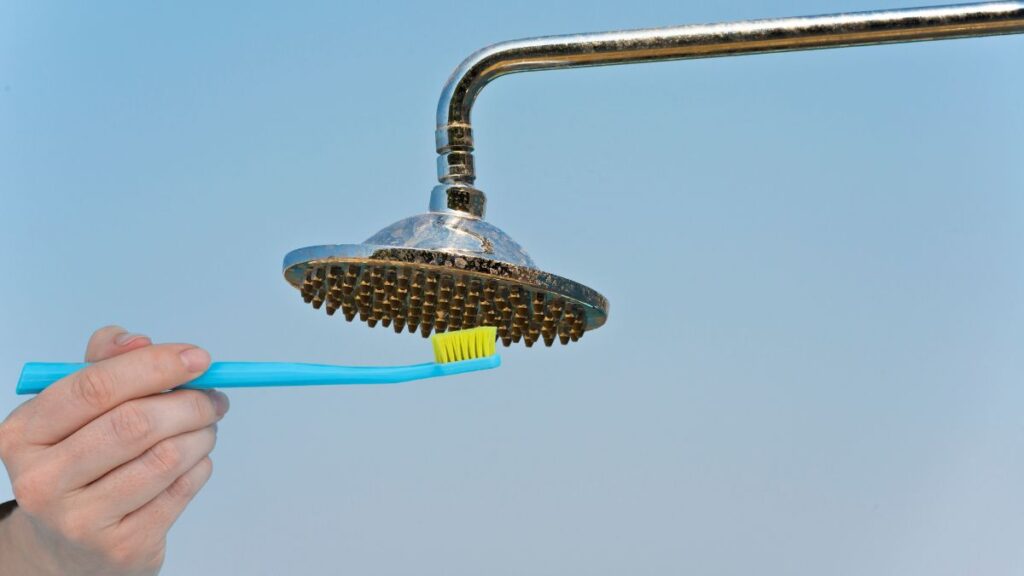
After soaking, remove the shower head from the vinegar solution and inspect the spray openings. Most mineral deposits will have softened during the soak. Rub the rubber spray tips with your fingers to dislodge loosened particles.
Use a soft toothbrush to gently scrub the spray openings and surrounding surfaces. This step helps remove mineral flakes that remain trapped inside the nozzles. Avoid using metal tools such as needles or pins, which can damage the spray openings and affect the spray pattern.
If the shower head was removed, inspect the internal screen filter at the connection point. This small mesh screen can collect sediment from the plumbing system. Rinse the screen under running water and brush away any remaining debris.
Reinstall the shower head and turn on the water for about one minute. Running water flushes out loosened mineral particles and helps restore the normal spray pattern. In many cases, homeowners notice immediate improvement in water flow after this step.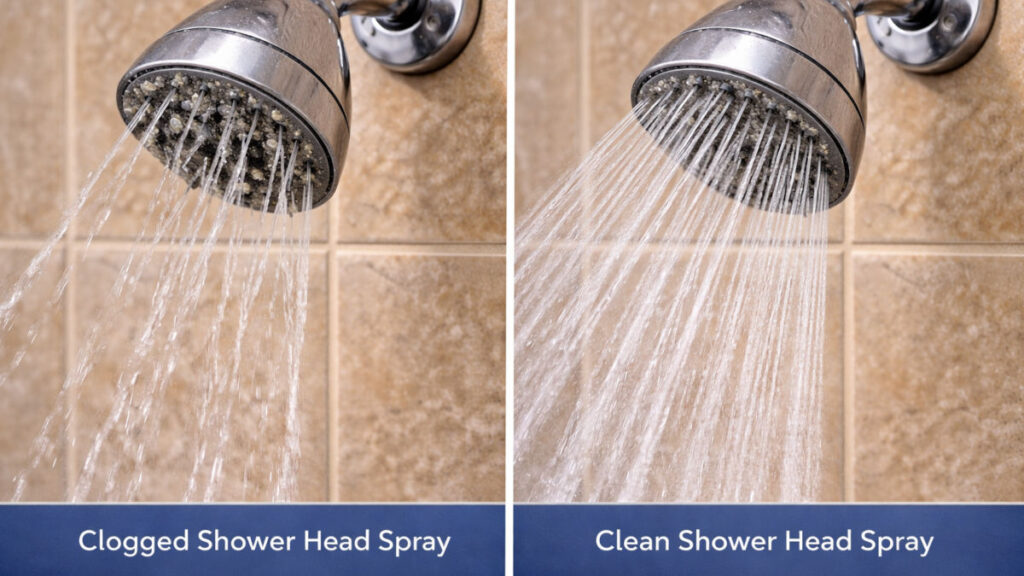
If buildup remains, repeat the soaking process or apply a mild paste of baking soda and water to stubborn deposits. The gentle abrasion can help remove remaining mineral film without damaging the fixture.
Step 3: Clean the Surrounding Shower Surfaces and Bathroom Fixtures
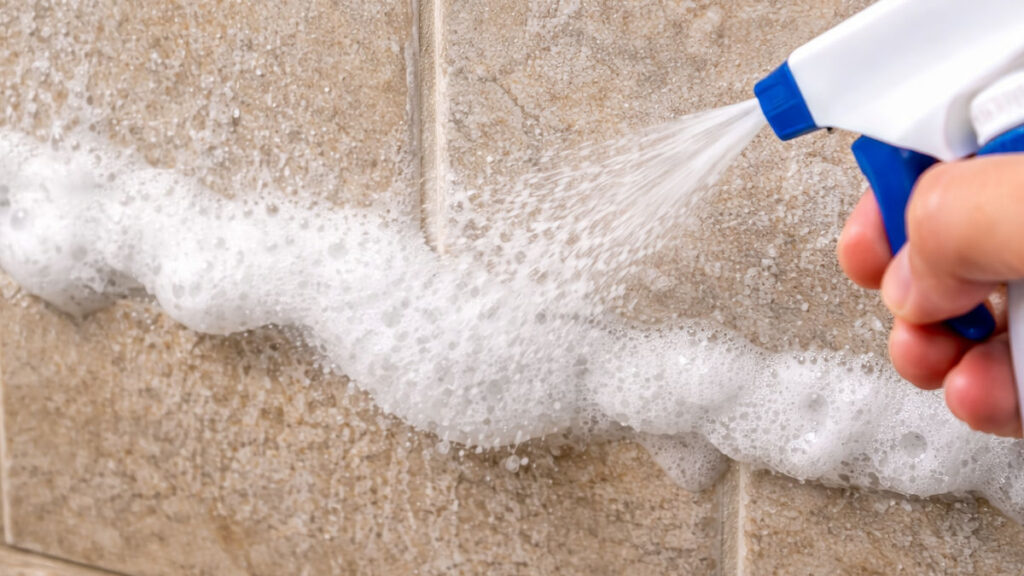
While the shower head is soaking, it is a good opportunity to clean other areas of the shower that commonly collect soap scum and mineral residue. Vinegar works well for removing hard water stains from ceramic tile, fiberglass, and glass shower doors.
For basic cleaning the shower with vinegar, mix equal parts vinegar and warm water in a spray bottle. Spray the solution on tile and glass surfaces, allow it to sit for several minutes, then wipe with a sponge or microfiber cloth.
For heavier soap buildup, many homeowners use shower cleaning with vinegar and Dawn dish soap. The vinegar dissolves mineral deposits while the dish soap breaks down oils and soap residue. This combination is commonly used for cleaning glass shower doors.
Baking soda can also assist with stubborn grime. When cleaning the shower with baking soda and vinegar, sprinkle baking soda on the surface and apply vinegar. The bubbling reaction helps loosen residue that can then be scrubbed away.
The same approach works for cleaning the toilet with vinegar. Pour vinegar into the toilet bowl and allow it to sit briefly before scrubbing. For tougher stains, cleaning the toilet with vinegar and baking soda can help loosen mineral rings along the bowl.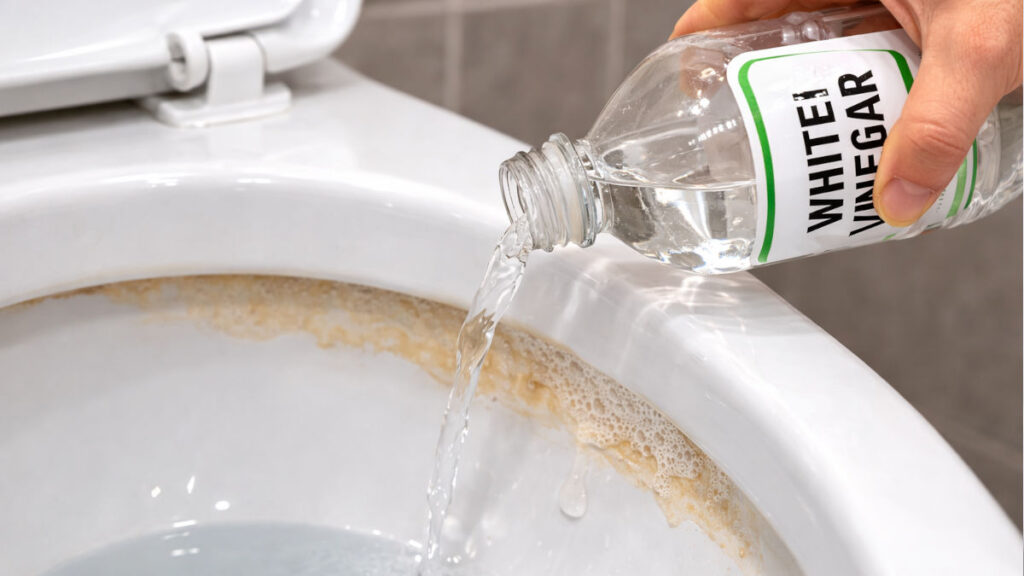
Common Shower Head Cleaning Mistakes to Avoid
One of the most frequent mistakes is leaving the shower head in vinegar for too long. While vinegar effectively dissolves mineral deposits, extended soaking can dull chrome finishes or weaken rubber seals.
Another mistake is using sharp tools to clear clogged spray openings. Many shower heads rely on flexible rubber nozzles that are designed to release mineral buildup when rubbed. Piercing these openings with metal tools can permanently damage the nozzle.
Mixing vinegar with bleach or other chemical cleaners is another serious error. This combination can release chlorine gas, which is dangerous in enclosed spaces such as bathrooms.
Homeowners also sometimes assume every pressure problem is caused by mineral buildup. If cleaning does not improve the shower flow, the issue may involve clogged plumbing lines, a malfunctioning pressure regulator, or a partially closed supply valve.
Finally, avoid using vinegar on natural stone surfaces such as marble, limestone, or travertine. The acid can etch these materials and cause permanent surface damage.
Safety Practices and Plumbing Considerations
Although vinegar is a mild household acid, cleaning products should still be used with basic safety precautions. Vinegar fumes can become irritating in small bathrooms with limited ventilation. Running the exhaust fan or opening a window helps maintain fresh air during cleaning.
Cleaning solutions can also create slip hazards inside the shower. Soap and vinegar mixtures used during shower cleaning may leave the floor slippery. Rinse surfaces thoroughly and wipe the shower floor dry after cleaning.
When removing and reinstalling a shower head, avoid overtightening the connection. Excessive force can damage the fixture threads or crack the shower arm pipe. Applying PTFE thread tape to the connection can help prevent leaks during reinstallation.
Homeowners should also be aware that federal regulations limit most shower heads in the United States to a maximum flow rate of 2.5 gallons per minute. Some fixtures carry EPA WaterSense certification and operate at 2.0 gallons per minute or less.
Cleaning the shower head should not involve removing the internal flow restrictor. These components ensure the fixture meets water efficiency standards and maintains proper pressure balance within the plumbing system.
Frequently Asked Questions About Shower Head and Bathroom Cleaning
How long should a shower head soak in vinegar?
Most mineral deposits soften within 30 to 60 minutes of soaking in vinegar. Very heavy buildup may require a second cleaning cycle. Longer soaking periods are usually unnecessary and may affect the fixture finish.
Can vinegar damage a shower head or bathroom fixtures?
Vinegar is generally safe for metal and plastic fixtures when used for short cleaning periods. However, prolonged soaking can dull some finishes, and vinegar should never be used on natural stone surfaces.
Will cleaning the shower head improve water pressure?
If mineral buildup is blocking the spray openings, cleaning the shower head can restore normal water flow. If pressure remains low after cleaning, the cause may lie elsewhere in the plumbing system.
How often should a shower head be cleaned?
Homes with moderate to hard water typically benefit from cleaning the shower head every three to six months. Regular maintenance prevents heavy scale buildup and helps maintain consistent water flow.
What should you do if vinegar does not remove mineral buildup?
If repeated soaking does not clear the blockage, the fixture may be heavily scaled internally or damaged. In such cases, replacing the shower head is often more practical. If pressure problems persist after replacement, a plumber should inspect the plumbing system.
Maintenance Tips and Signs It’s Time to Call a Professional
Routine cleaning helps prevent mineral buildup from affecting shower performance. A periodic vinegar soak every few months can keep spray openings clear and extend the lifespan of the fixture.
However, some conditions indicate a larger plumbing issue. If water pressure is low throughout the house or remains weak after cleaning the shower head, the problem may involve sediment buildup in supply lines or a malfunctioning pressure regulator.
Leaks at the shower arm connection are another situation where professional repair may be necessary. Water escaping behind the wall can lead to structural damage and mold if left unresolved.
In rental properties, maintaining functional plumbing fixtures is often required to meet habitability standards. Addressing mineral buildup early helps maintain reliable water flow and prevents unnecessary fixture replacement.
Cleaning a shower head with vinegar is a simple maintenance task, but understanding how mineral buildup forms and how to remove it properly allows homeowners to maintain consistent shower performance and avoid larger plumbing issues.