
 Introduction: Who This Guide Is For and What You Can Expect
 Introduction: Who This Guide Is For and What You Can Expect
This guide is for homeowners, DIY-inclined renters, landlords, and contractor-aware consumers maintaining electric smooth-top ranges in U.S. kitchens. If you are dealing with dark, baked-on grease that will not wipe off, the objective is straightforward: remove the buildup without scratching or weakening the ceramic glass surface.
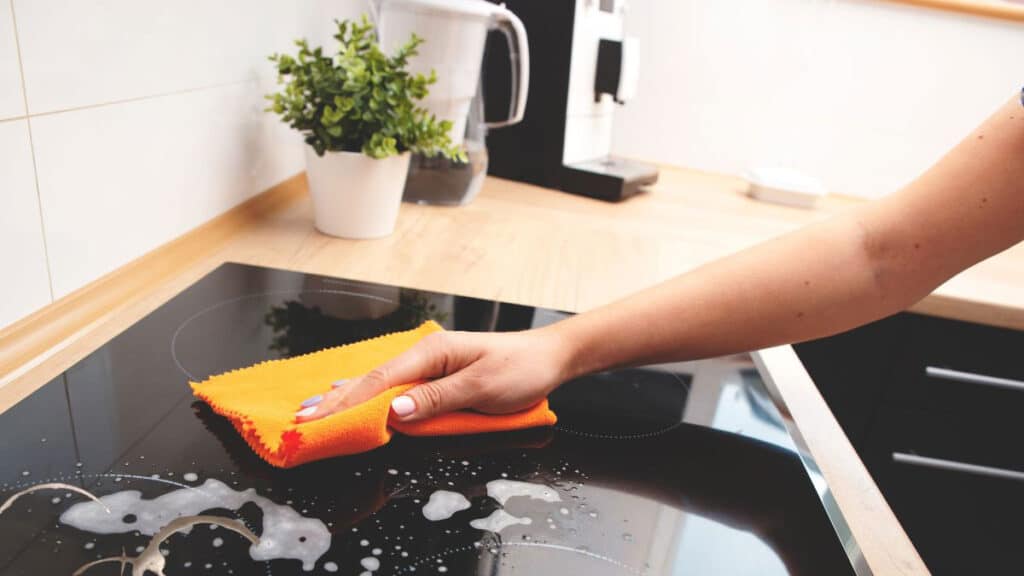
The practical solution is methodical. Let the cooktop cool completely, apply a ceramic-safe stove top cleaner for electric stove surfaces, allow adequate dwell time, loosen residue with a non-scratch scrubber for glass top stove use, and use a scraper only when necessary. Most burnt-on grease can be removed safely with the right tools and controlled technique.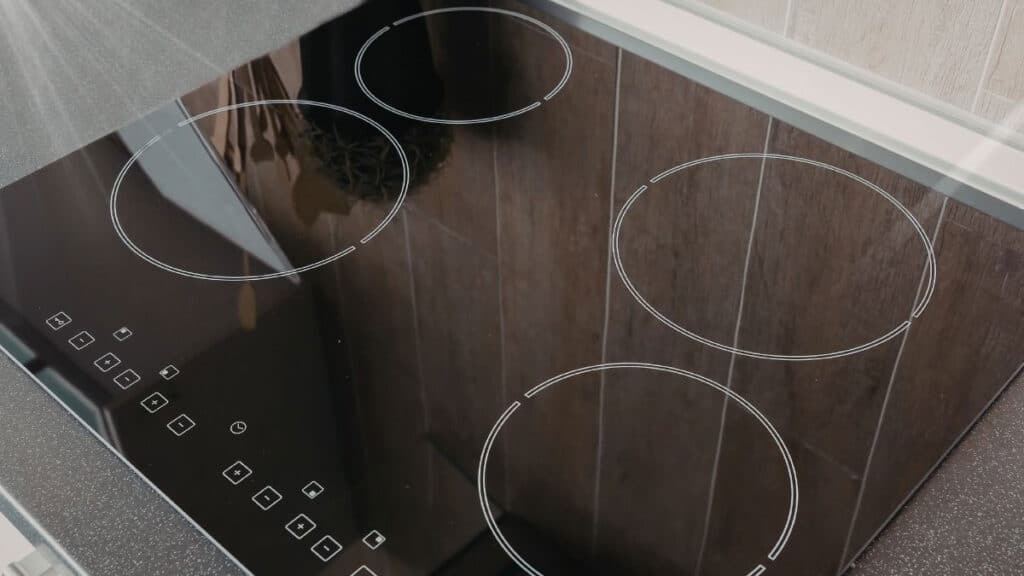
What You Should Understand Before Cleaning a Glass Top Stove
Glass top stoves are made from ceramic glass engineered to tolerate rapid heating and cooling. While heat-resistant, the surface is vulnerable to scratching and impact damage. Cleaning methods must account for that balance.
Burnt-on grease forms when cooking oils repeatedly overheat and polymerize. The residue hardens and bonds tightly to the surface. Ordinary wiping will not remove it because the grease has chemically changed under heat.
Before starting, determine whether you are dealing with residue or permanent etching. Residue often appears raised or uneven and may feel slightly rough. Etching looks cloudy but feels smooth because the surface itself has been altered. Etching cannot be cleaned away.
Review your manufacturer’s care instructions. Many warranties require approved cleaning products and tools. Using oven cleaner, abrasive powders, or aggressive pads can cause permanent damage and may void coverage.
Finally, always begin with a completely cool surface. Cleaning a warm cooktop causes products to evaporate too quickly and reduces their ability to soften hardened grease.
Tools and Materials for Safe, Effective Grease Removal
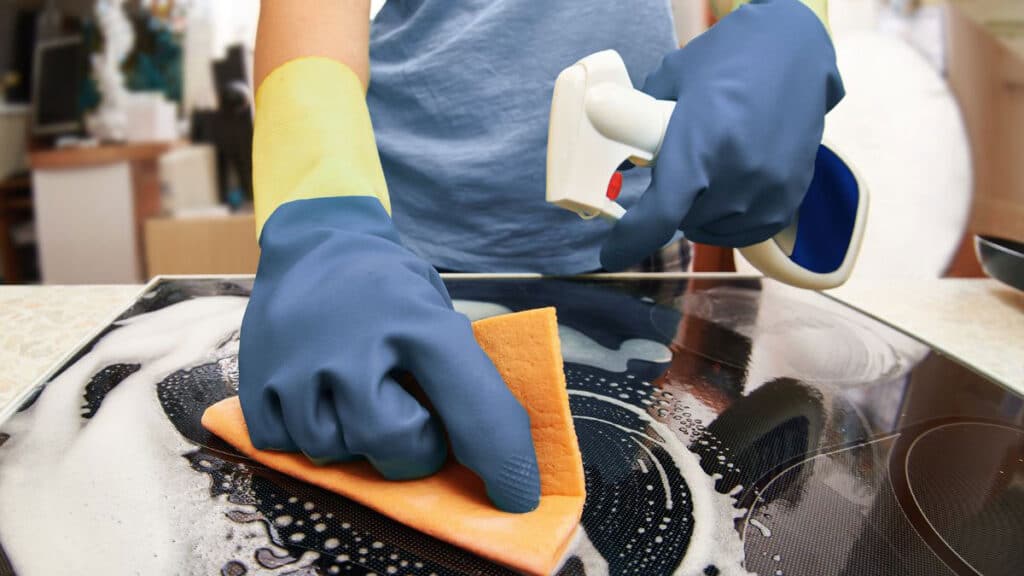
Using the correct materials prevents surface damage and improves results. Choose products specifically labeled for ceramic-glass cooktops.
- A stove top cleaner for electric stove surfaces
- The best grease cleaner for stove top use that is non-abrasive
- A non-scratch scrubber for glass top stove cleaning
- A cooktop-rated single-edge razor scraper
- Microfiber cloths
- Paper towels
- White vinegar for final streak removal
- Gloves if desired
Avoid steel wool, heavy-duty scouring pads, or powdered abrasives unless the packaging clearly states ceramic-glass safety.
If future prevention is a concern, protective cooking pads for glass top stoves can help reduce staining. Only use them according to manufacturer instructions and never on active heating elements unless specifically rated for high heat.
Step-by-Step Process to Remove Burnt-On Grease
Step 1: Prepare the Surface and Apply Cleaner
Confirm the stove is off and fully cool. Even mild warmth reduces cleaner effectiveness.
Wipe away loose crumbs and debris with a dry microfiber cloth. Apply a thin layer of ceramic-glass cleaner directly over burnt areas. Avoid oversaturating seams near control panels.
Allow the cleaner to sit for the time recommended on the label. This dwell period is essential. The cleaner must soften the hardened grease before you attempt removal.
Step 2: Loosen Residue Without Damaging the Surface
Using a non-scratch scrubber for glass top stove cleaning, work the treated area in small circular motions. Apply moderate pressure only. Excess force increases the risk of micro-scratches without improving results.
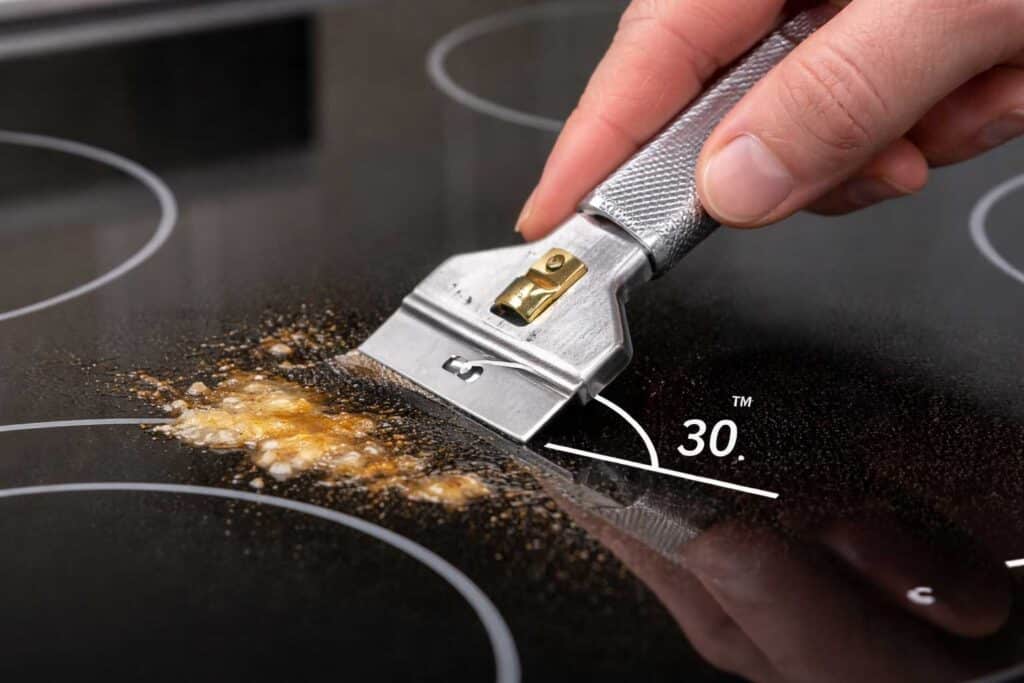
For stubborn deposits, use a cooktop scraper. Hold the blade at a shallow angle, approximately 30 degrees to the surface. Slide it forward carefully to lift residue. The blade should glide along the glass rather than dig into it.
Wipe the surface clean and inspect. If buildup remains, repeat the application and scrubbing process instead of increasing pressure.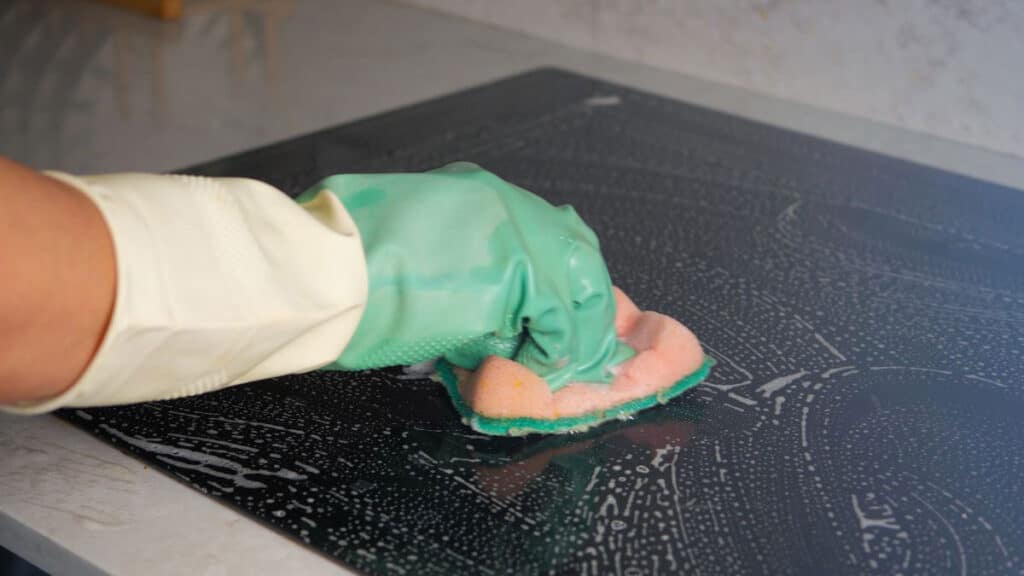
Step 3: Finish, Inspect, and Protect the Surface
After removing grease, wipe the entire cooktop with a damp microfiber cloth. Follow with a dry cloth to prevent streaks.
If a light haze remains, apply a small amount of cleaner and buff gently. A light vinegar wipe can improve clarity but should not replace a dedicated grease cleaner.
Once the surface is clean and cool, consider preventive measures. Protective cooking pads for glass top stoves may reduce future staining, but confirm compatibility with your appliance before use.
Common Cleaning Errors That Cause Damage
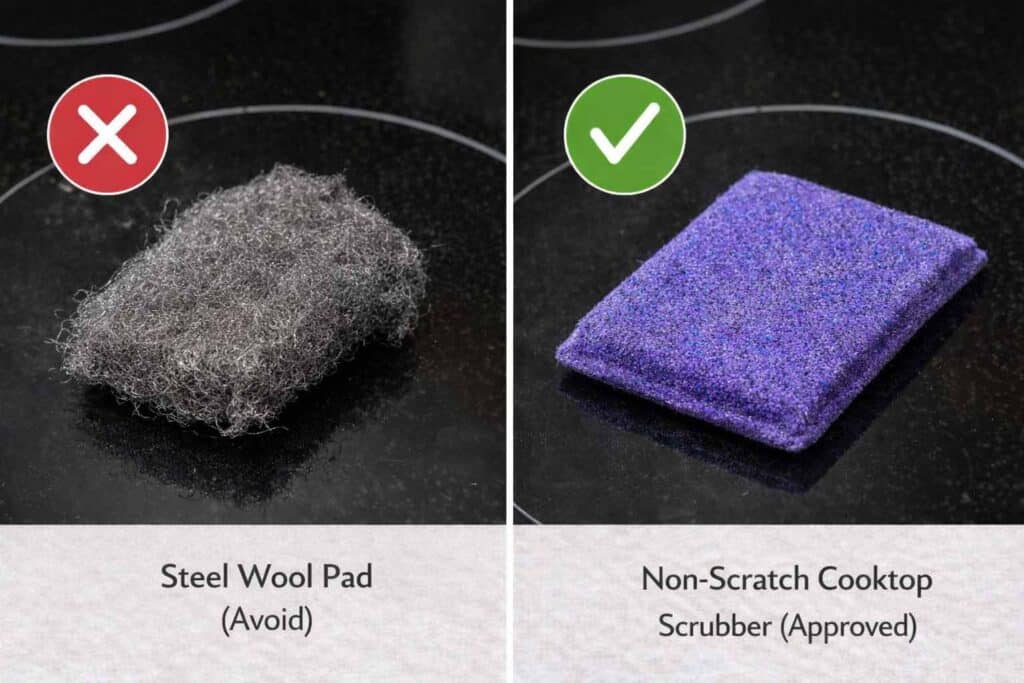
Using abrasive tools is the most common mistake. Steel wool and aggressive pads create scratches that dull the finish and allow grease to accumulate more easily over time.
Cleaning while the surface is warm reduces cleaner effectiveness and can leave streaks. Always wait until the cooktop is fully cool.
Applying oven cleaner or harsh degreasers designed for enamel interiors can chemically damage ceramic glass. These products are not interchangeable.
Holding a scraper at too steep an angle increases the risk of gouging. A shallow, controlled angle is critical for safe use.
Using protective cooking pads improperly can trap heat and create fire hazards if they are not rated for high-temperature operation.
Safety and Compliance Considerations for U.S. Homes
Ensure the appliance is powered off before cleaning. Most electric ranges operate on 240 volts. While you are not accessing internal wiring, avoid introducing liquid near control panels or seams.
Do not saturate the edges of the cooktop. Excess moisture can seep into internal components and lead to electrical malfunction.
Use only products labeled safe for ceramic-glass cooktops to maintain manufacturer warranty compliance.
If the glass surface is cracked, discontinue use immediately. Cracks can expand with heat and may expose energized components beneath. Replacement is required in these cases.
Provide adequate ventilation when using cleaning chemicals to maintain indoor air quality.
Frequently Asked Questions About Cleaning Burnt Grease
How do you remove heavy burnt grease from a glass top stove?
Apply a ceramic-safe cleaner, allow proper dwell time, scrub with a non-scratch pad, and use a shallow-angle scraper for persistent spots. Repetition is safer than increasing pressure.
What is the best grease cleaner for stove top surfaces?
Choose a product specifically labeled for ceramic-glass cooktops. These cleaners soften polymerized oils without abrasive grit.
Can baking soda and vinegar be used?
Baking soda can assist with light lifting action if used gently. Vinegar helps remove streaks but is not strong enough alone for heavy burnt grease.
What scrubber is safe for a glass top stove?
Use only pads labeled non-scratch and safe for ceramic glass. Avoid general-purpose scouring pads unless packaging confirms compatibility.
Can burnt-on grease permanently damage the cooktop?
Yes. Repeated overheating of spills can cause surface etching. Once etched, the damage cannot be removed through cleaning.
Final Guidance: Maintenance and When to Seek Service
Routine maintenance prevents heavy buildup. Wipe spills after the surface cools and perform deeper cleaning as needed.
If you notice cracks, deep scratches, electrical irregularities, or signs of liquid intrusion, contact a qualified appliance technician. Structural or electrical issues fall outside routine cleaning.
In rental or investment properties, document surface condition before and after deep cleaning to avoid disputes over damage.
Burnt-on grease can usually be removed with proper tools and technique. The key is patience, controlled pressure, and adherence to manufacturer guidance.