
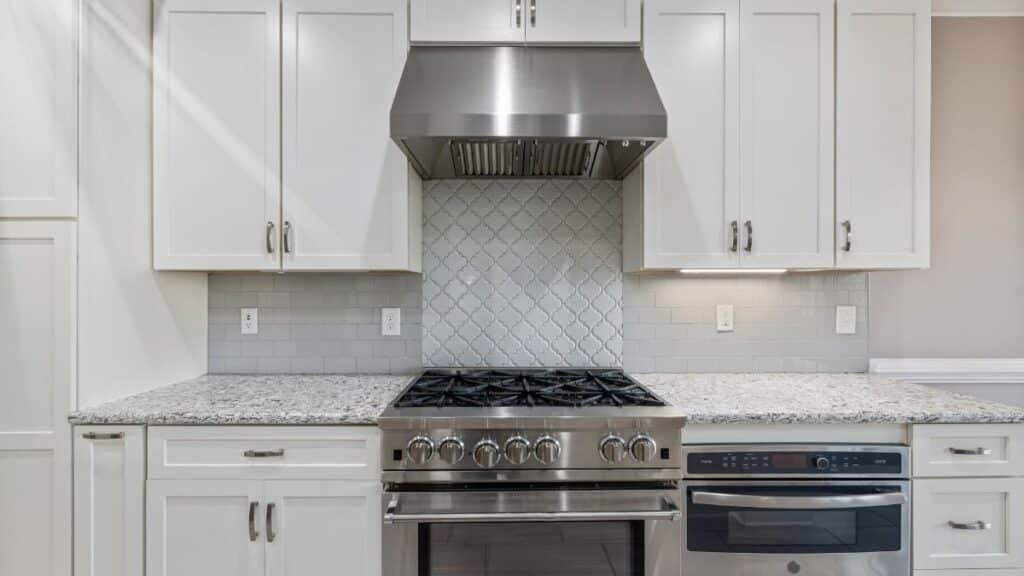
If you have ever seared steak on a high-output gas burner and watched smoke roll past the front edge of your hood, you have seen the limits of undersized ventilation. Gas stoves produce grease vapor, moisture, and combustion byproducts that should be exhausted outdoors. A ducted range hood is not just about odor control. It is part of the home’s air management system.
Homeowners often upgrade to higher BTU gas ranges without reassessing ventilation. Investors renovating kitchens may replace cabinets and appliances but reuse restrictive ductwork. The result is poor capture, greasy surfaces, and lingering smoke.
Choosing the best ducted range hood for a gas stove requires more than comparing CFM numbers. Airflow must match burner output, and the duct system must support that airflow. This guide evaluates three duct-capable wall-mount hoods and explains how system design determines real-world performance.
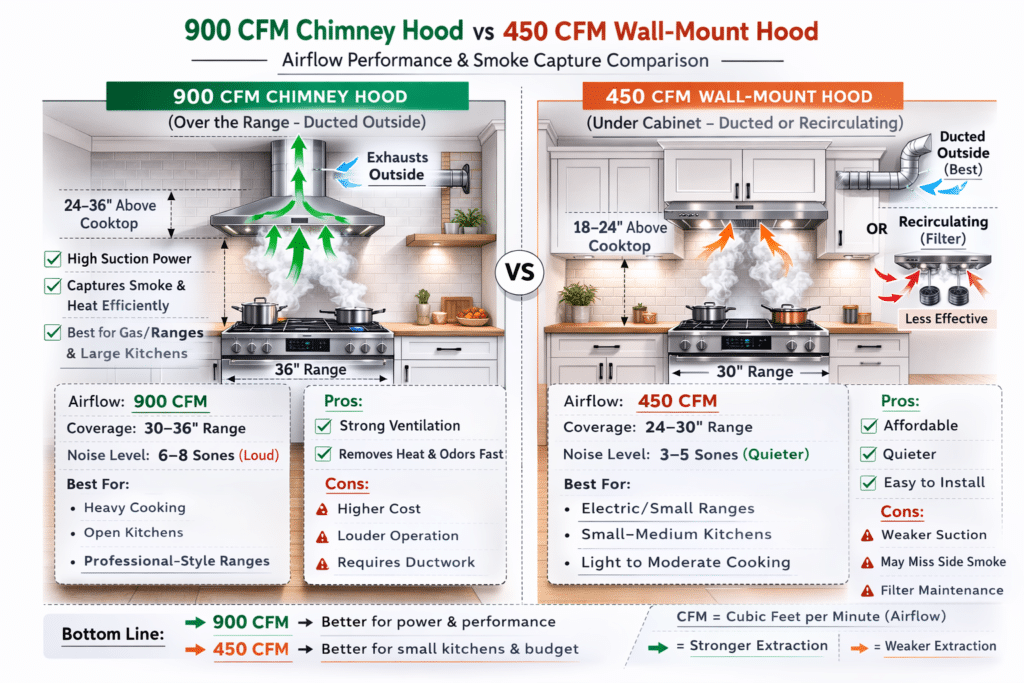
Side-by-Side Comparison of Top Ducted Range Hoods
| Model | Rated Airflow | Mount Type | Ducted Capable | Recommended BTU Range | Typical Duct Size* | Performance Tier |
|---|---|---|---|---|---|---|
| VIKIO HOME 30″ | 900 CFM | Wall Mount | Yes | 60,000–80,000 BTU | 6–8 inch** | Best Overall |
| Zomagas 30″ | 450 CFM | Wall Mount | Yes | Up to ~50,000 BTU | 6 inch | Best Budget |
| FIREGAS 30″ | 450 CFM | Wall Mount | Yes | Up to ~50,000 BTU | 6 inch | Feature-Forward |
* Always verify manufacturer specifications.
** Higher CFM units typically perform better with larger diameter ducting when permitted by the manufacturer.
This table focuses on airflow relative to gas burner output. Cosmetic features were not weighted heavily because capture performance is the primary function of a ducted hood.
Best Overall Choice – VIKIO HOME 30″ 900 CFM Wall Mount Hood
Product Overview and Ideal Use Case
The VIKIO HOME 900 CFM hood is the most appropriate option in this group for mid to higher output 30 inch gas ranges. If your cooktop includes 18,000 to 20,000 BTU burners and you routinely cook on multiple burners at once, this airflow level provides needed margin.
It is best suited for primary kitchens where cooking frequency and heat levels are higher than average.
Technical Specifications
- 900 CFM maximum airflow
- Wall-mounted stainless steel chimney design
- Multiple fan speeds
- Washable stainless steel filters
- Convertible for exterior ducting
Real-World Ventilation Performance
A baseline calculation is approximately 100 CFM per 10,000 BTU of total burner output. A 70,000 BTU cooktop therefore calls for roughly 700 CFM. This unit exceeds that threshold.
However, airflow ratings are measured under controlled conditions. In a home, static pressure from duct length and elbows reduces actual airflow. Each 90 degree elbow can add resistance equivalent to several feet of straight duct. A long attic run with multiple turns can reduce effective CFM significantly.
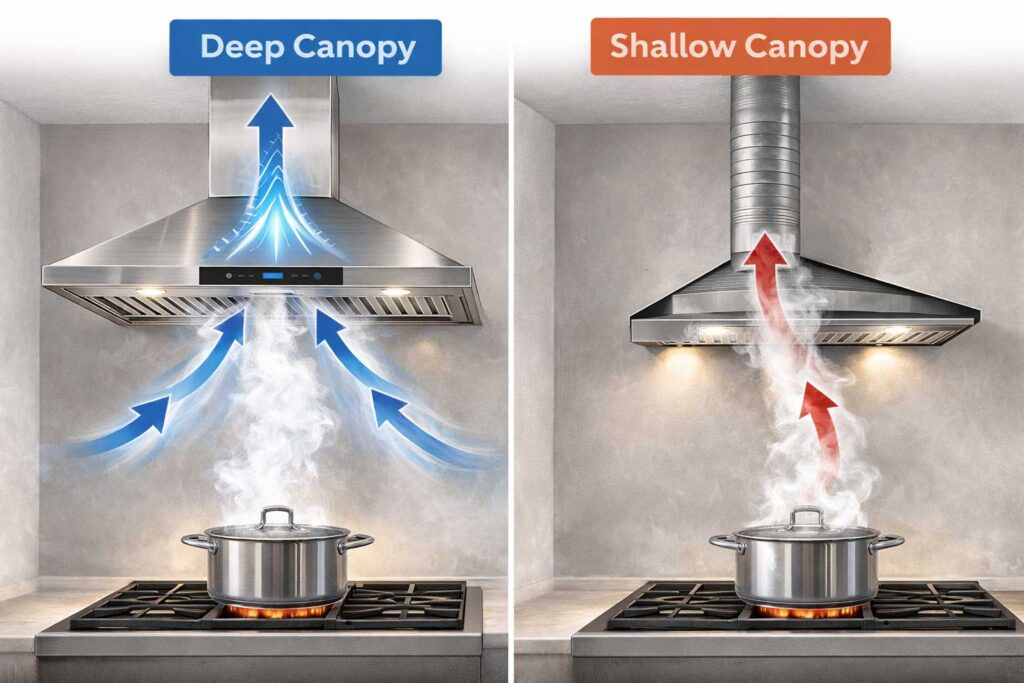
Canopy depth also affects capture. Smoke rises in a thermal plume. A deeper hood extends further over the front burners, increasing the chance that rising smoke enters the capture zone instead of spilling into the room.
Installation Requirements and Considerations
This hood must be anchored directly into wall framing. Chimney-style units are heavier and impose more load than basic under-cabinet hoods.
Because it is rated at 900 CFM, makeup air requirements must be evaluated. Many jurisdictions adopt provisions requiring makeup air systems for hoods over 400 CFM. In tight homes, running a high-CFM hood without makeup air can depressurize the house and backdraft gas appliances.
This level of installation complexity often exceeds basic DIY scope. Short, straight wall penetrations may be manageable for experienced homeowners. Roof penetrations, electrical circuit additions, and makeup air integration are better handled by licensed professionals.
Best Budget-Friendly Option – Zomagas 30″ 450 CFM Wall Mount Hood
Product Overview and Intended Applications
The Zomagas 450 CFM hood is designed for moderate cooking loads. It is appropriate for gas ranges with lower total BTU output and households that do not routinely cook at high heat on multiple burners.
It is a practical fit for rental units, secondary kitchens, or cost-controlled remodels.
Technical Specifications
- 450 CFM airflow
- Stainless steel body
- Three-speed fan control
- Washable metal filters
- Convertible to ducted configuration
Practical Performance Expectations
At 450 CFM, this hood can handle simmering, light sautéing, and standard meal preparation. It may struggle when three high-output burners operate simultaneously or during heavy frying.
Capture performance also depends on mounting height and duct layout. Installing the hood too high above the cooktop reduces effectiveness. Keeping the installation within manufacturer-recommended height improves capture.
If paired with a short, straight 6 inch duct run through an exterior wall, performance will be more consistent than with a long attic run.
Installation Notes for Standard Kitchens
This type of installation is often within DIY capability when the duct exits directly through the rear wall. The key requirements are proper wall cap termination, sealed joints, and rigid metal duct.
Venting into an attic or concealed cavity is not acceptable. Moisture and grease accumulation in enclosed spaces can cause structural damage and code violations.
Best Feature-Forward Option – FIREGAS 30″ 450 CFM Wall Mount Hood
Product Overview and User Profile
The FIREGAS 450 CFM hood provides similar airflow capacity to the Zomagas model but includes upgraded touch and gesture controls. It appeals to buyers who value convenience features while maintaining moderate ventilation capacity.
It is not a higher-powered unit. Its distinction lies in interface and user interaction.
Technical Specifications
- 450 CFM airflow
- Gesture and touch controls
- LED lighting
- Stainless steel construction
- Convertible for exterior ducting
Ventilation Capability in Everyday Use
From a mechanical standpoint, its airflow limitations mirror other 450 CFM units. It is appropriate for cooktops under approximately 50,000 BTU and moderate cooking styles.
Upgraded controls may reduce contact with greasy surfaces, which can simplify cleaning. However, they do not increase capture efficiency.
Mounting and Ducting Considerations
Installation requirements match other wall-mount hoods in this airflow class. Secure framing attachment and correct duct sizing remain essential.
Operating this hood in recirculating mode over a gas stove does not remove combustion gases. For indoor air quality, exterior ducting should be the default approach whenever possible.
How These Range Hoods Were Evaluated
Evaluation focused on airflow relative to burner output, ducted capability, and compatibility with common residential layouts.
Selection prioritized ventilation performance over cosmetic design and smart features. A hood’s primary job is to capture and exhaust airborne contaminants.
We also considered system compatibility. Many existing homes have 6 inch ducting. Installing a higher CFM hood without verifying duct capacity often leads to reduced airflow and increased noise due to higher static pressure.
Products were not evaluated on brand reputation alone but on how realistically they match gas stove ventilation demands.
Buying Guide: Selecting the Right Ducted Range Hood for a Gas Stove
Determining the Right CFM for Your Gas Range
Add the BTU ratings of all burners. Divide the total by 10,000 to estimate minimum CFM needs. Adjust upward if you frequently cook with high heat or use multiple burners at once.
Higher CFM is not automatically better. If the duct system cannot support the airflow, performance gains are limited.
Duct Diameter, Length, and Layout
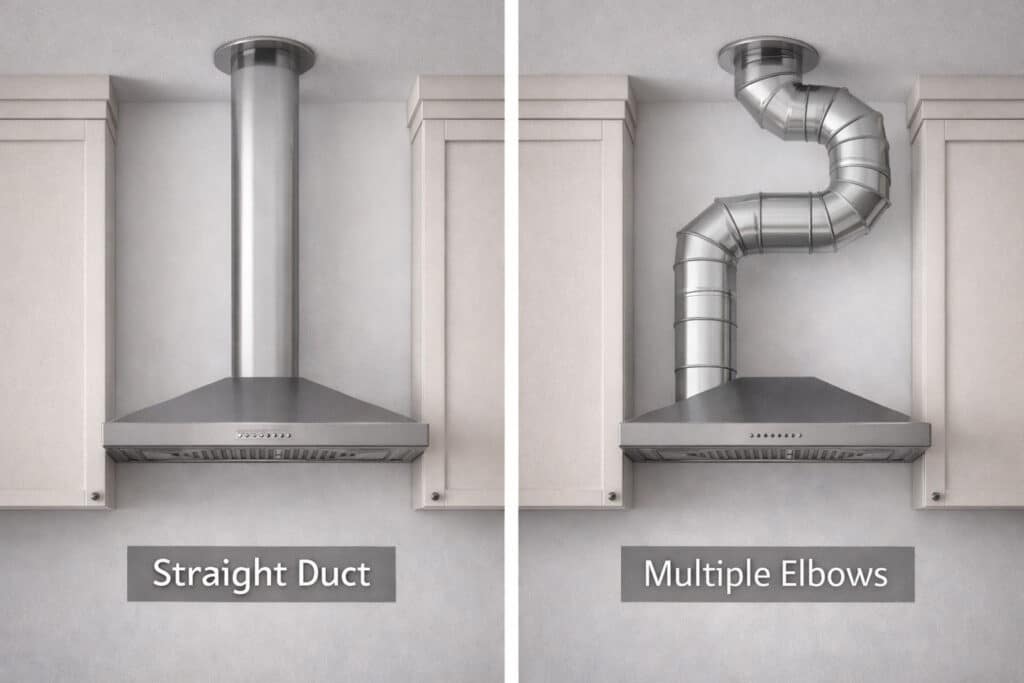
Follow manufacturer duct diameter requirements. Reducing duct size increases resistance and decreases effective airflow.
Each elbow adds equivalent length to the run. Two 90 degree turns can significantly reduce performance compared to a straight horizontal exit. Keep runs short and direct.
Use smooth, rigid metal duct. Flexible duct creates turbulence and higher resistance, reducing actual airflow.
Wall Mount vs Under Cabinet Configurations
Wall-mount chimney hoods typically offer greater canopy depth, improving capture over front burners. Under-cabinet models are easier to retrofit but may have shallower profiles.
Low-profile designs may look streamlined but can reduce capture effectiveness if depth is limited.
Understanding Noise Ratings
Noise ratings, often expressed in sones, increase as airflow increases. Proper duct sizing and reduced resistance allow the blower to operate more efficiently and often more quietly.
Choosing a lower CFM hood solely to reduce sound can result in inadequate ventilation.
Filter Types and Long-Term Maintenance

Washable stainless steel filters are appropriate for ducted gas installations. Regular cleaning maintains airflow and reduces fire risk.
Grease buildup inside the hood or duct not only reduces efficiency but also increases ignition risk.
What to Expect When Installing Ductwork
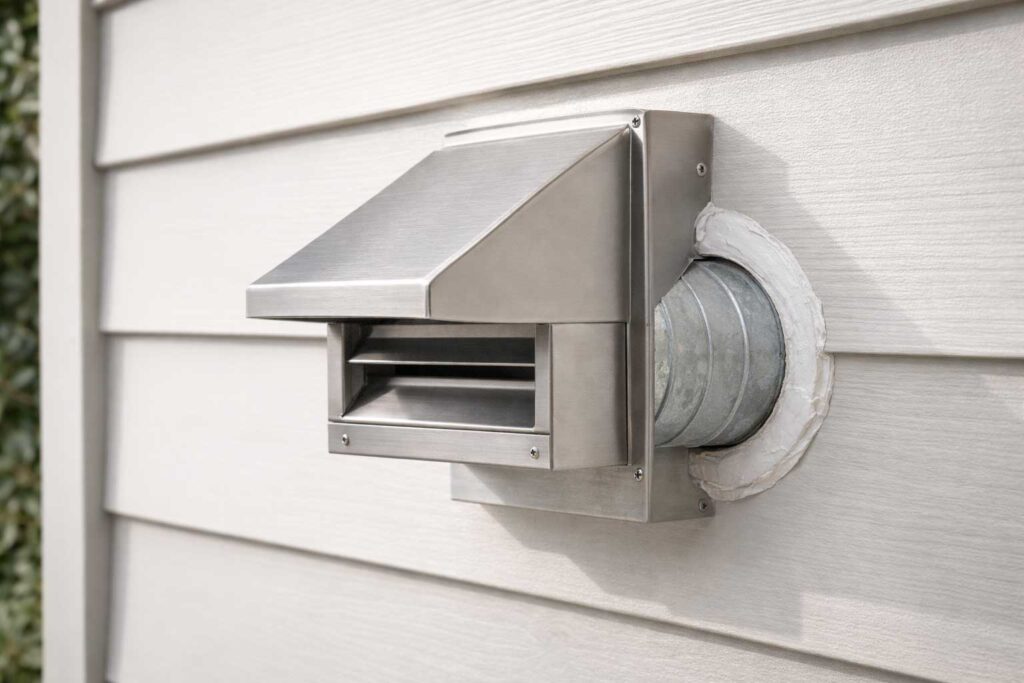
Installing new ductwork can range from a few hundred dollars for a direct wall penetration to several thousand dollars for complex roof routing.
Cost drivers include roof flashing, attic access, drywall repair, cabinet modification, and adding a dedicated electrical circuit if required.
Simple wall-through installations may be suitable for experienced DIY homeowners. Multi-story duct routing, structural modifications, or makeup air integration typically warrant professional involvement.
Makeup Air and Home Pressure Balance
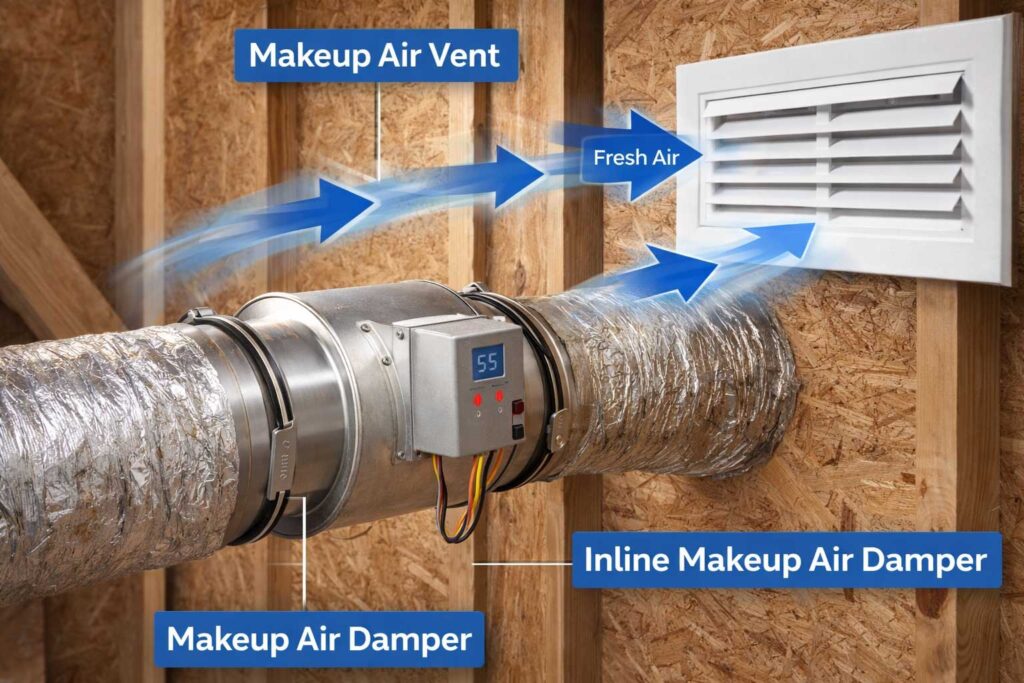
Hoods rated above 400 CFM often trigger makeup air requirements under adopted residential codes. These systems introduce controlled outside air when the hood operates.
Ignoring this requirement can cause depressurization and backdrafting of combustion appliances. Compliance is not only about passing inspection but maintaining safe operation.
Frequently Asked Questions About Ducted Range Hoods
What CFM do I need for a 30 inch gas stove?
Most 30 inch gas ranges between 50,000 and 70,000 BTU perform best with 600 to 900 CFM when paired with appropriate ducting.
Is higher CFM always better?
No. Airflow must match both burner output and duct capacity. Oversizing without proper duct design does not guarantee improved performance.
Can I use an existing 6 inch duct for a 900 CFM hood?
Possibly, but airflow may be reduced if the duct run is long or includes multiple elbows. Verify manufacturer requirements before installation.
Are ducted hoods better than ductless for gas stoves?
Yes. Ducted systems exhaust combustion gases and moisture outdoors. Ductless systems primarily filter grease and odors.
How much does installing ductwork for a range hood cost?
Costs depend on routing complexity, roof or wall penetration, and electrical upgrades. Expect several hundred dollars for simple installations and significantly more for complex configurations.
Final Recommendations and Key Takeaways
Among these three models, the VIKIO HOME 900 CFM hood provides the most appropriate airflow for mid to higher BTU 30 inch gas ranges.
The Zomagas 450 CFM model is suitable for moderate cooking demands and budget-focused projects. The FIREGAS 450 CFM unit offers improved interface features but similar airflow capacity.
The most important takeaway is that ventilation performance depends less on the advertised CFM and more on the resistance of the duct system it connects to. Proper duct diameter, minimal turns, secure mounting, and compliance with makeup air requirements determine whether a ducted range hood performs as intended.