

Granite countertops are durable, but they are not maintenance-free. Many cleaning problems begin when granite is treated like a non-porous surface. In reality, granite is a natural stone with microscopic pores that can absorb liquids if the surface is not properly sealed and maintained.
The best way to clean granite countertops is consistent, gentle care that matches how the material behaves. Harsh cleaners and aggressive scrubbing often cause more long-term damage than neglect. Understanding what granite tolerates—and where its limits are—helps homeowners avoid stains, dulling, and premature restoration costs.
Understanding Granite Countertops Before You Clean
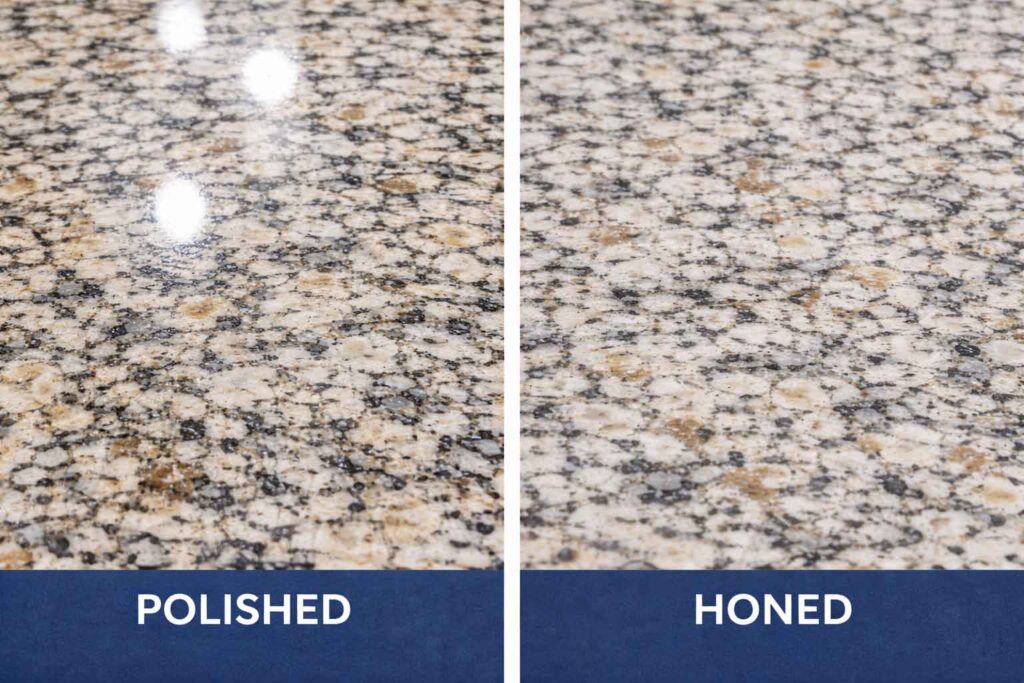
Granite is an igneous stone formed under extreme heat and pressure. While it is dense and durable, it is not impermeable. Even polished granite contains pores that can absorb oils, water, and acidic liquids if spills are left in place.
Surface finish plays a major role in maintenance. Polished granite resists absorption better than honed or leathered finishes, but it can still stain. Honed surfaces show darkening and etching more quickly, especially in high-use areas. A common example is a honed kitchen island that develops darker patches near the sink or prep area despite regular cleaning.
Granite should not be cleaned like quartz or laminate. Quartz is engineered and non-porous. Laminate has a plastic wear layer. Granite behaves more like concrete—strong and long-lasting, but sensitive to the wrong chemicals.
What’s the Best Way to Clean Granite Countertops Daily
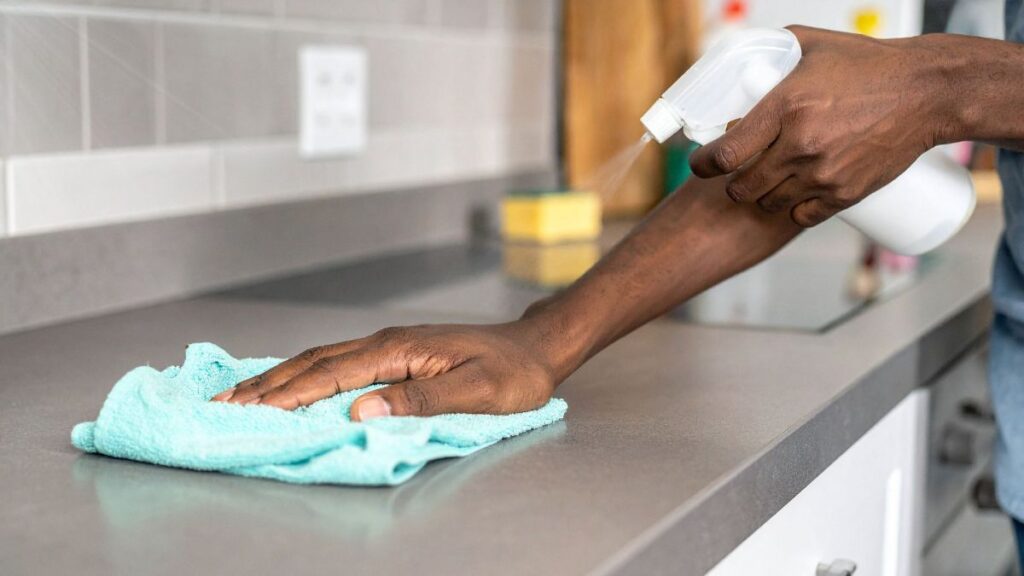
Daily cleaning should remove debris and residue without degrading the sealer. Start by wiping crumbs and grit with a dry or slightly damp microfiber cloth. Fine grit acts like sandpaper when dragged across the surface, slowly dulling the finish in busy prep zones.
For routine cleaning, warm water with a small amount of pH-neutral dish soap is usually sufficient. This removes food residue without attacking the stone or its protective sealer. Follow with a clean, damp wipe to remove soap residue, then dry the surface to reduce water spotting.
When countertops feel greasy—especially near cooktops—a granite-safe or stone-labeled cleaner is appropriate. These products are designed to break down oils without leaving residues that attract dust. A surface that feels sticky after cleaning is often coated with leftover cleaner, not dirt.
Disinfecting should be situational, not automatic. Granite does not require daily disinfection unless there has been raw meat contact or illness exposure. Routine use of disinfecting sprays or wipes shortens sealer life and increases long-term maintenance needs.
What’s Best to Clean Granite Countertops Without Damaging the Surface
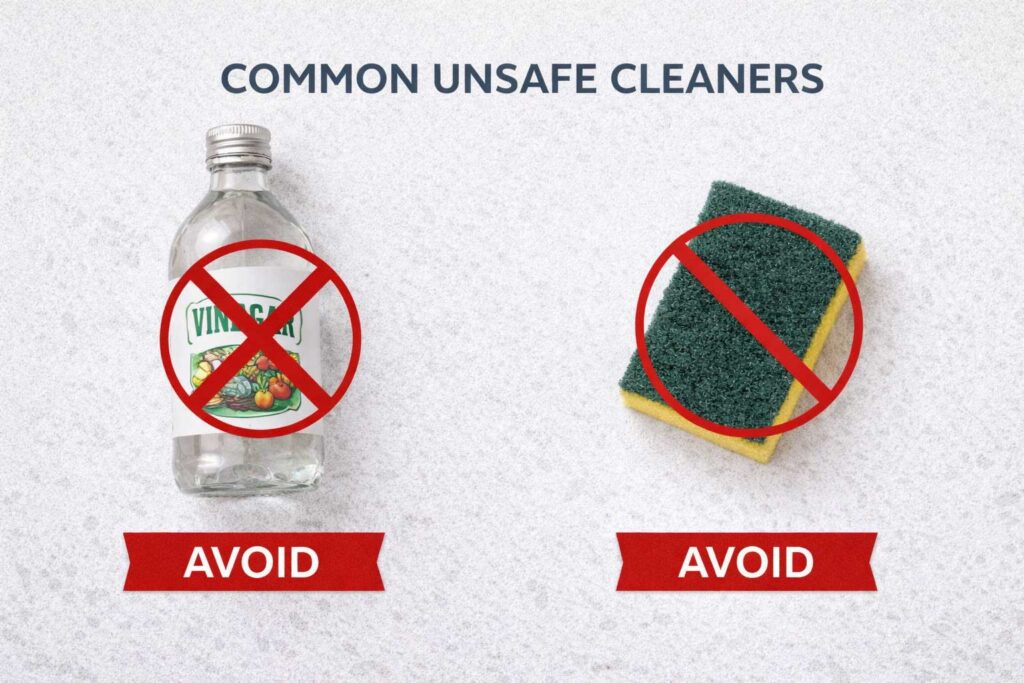
Granite tolerates neutral cleaners, not acids or strong alkalines. Vinegar, lemon juice, and many bathroom sprays gradually etch the surface, even when damage is not immediately visible. Repeated exposure leads to dulling and uneven sheen.
Household ammonia and bleach are also problematic. While they may not cause instant damage, frequent use degrades sealers and makes granite more vulnerable to staining. This often leads homeowners to believe their granite is “defective” when the issue is product choice.
Granite worktop cleaner and polish can improve appearance, but polish is cosmetic. It does not clean deeply or protect the stone. Overuse creates buildup that attracts fingerprints and dust, making countertops harder to keep clean.
Use microfiber cloths or soft cotton towels. Avoid scouring pads, powdered cleaners, or any product labeled “scrub.”
Deep Cleaning Granite Countertops the Right Way
Granite only needs deep cleaning when residue builds up beyond what routine wiping removes. This typically occurs near ranges, sinks, and prep areas where grease and cooking oils accumulate.
Begin with a stone-safe cleaner rather than water alone. Allow the cleaner to dwell briefly so it can break down oils instead of spreading them. Wiping too quickly often leaves residue behind.
If grease remains after cleaning, repeat the process rather than scrubbing harder. Aggressive scrubbing pushes residue into the stone’s pores and can dull the finish. If repeated gentle cleaning does not improve the surface, the issue may be worn sealer rather than dirt.
Hard water spots should be treated with stone-safe descaling products. Vinegar should not be used, as it dissolves minerals by etching the stone itself.
Can You Get Stains Out of Granite?
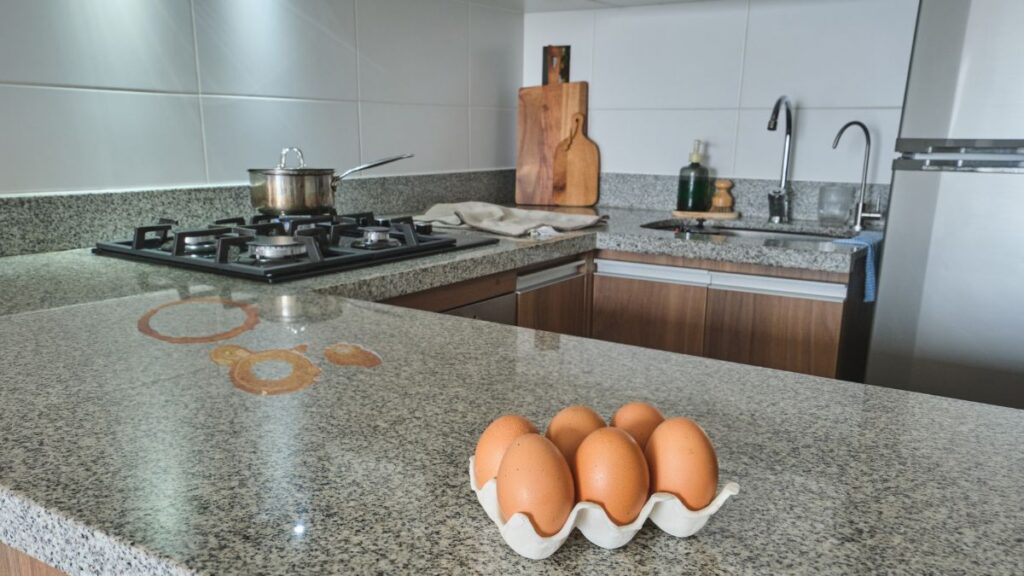
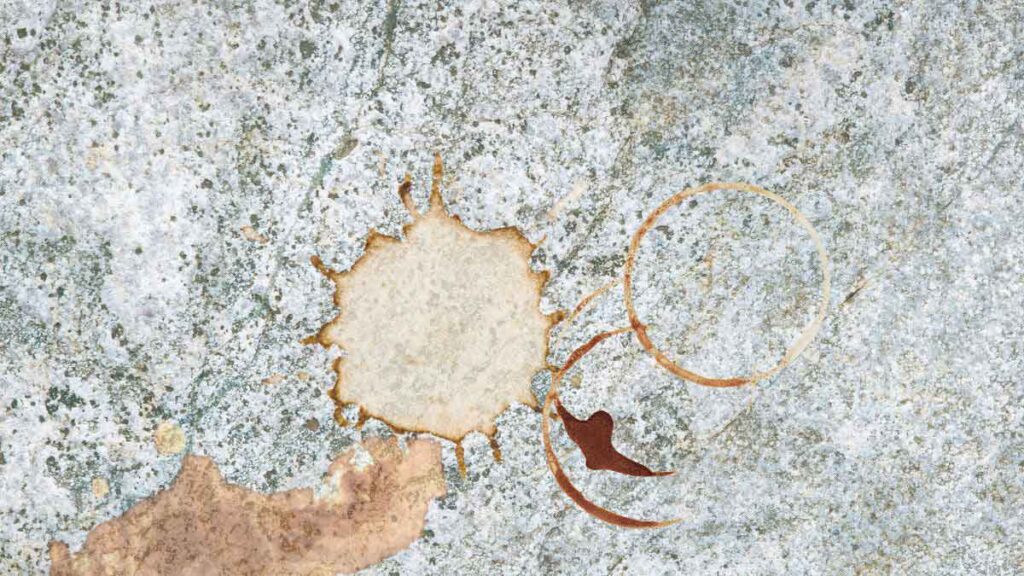
Not all discoloration is a stain. Many homeowners confuse surface residue or moisture darkening with true staining. A true granite stain penetrates the stone and does not wipe away.
Oil-based stains from cooking oils are the most common in kitchens. Organic stains from wine, coffee, or food dyes are also frequent. Water-related darkening is often caused by trapped moisture or mineral deposits and may fade temporarily before returning.
Timing matters. The longer a spill sits, the deeper it penetrates. Early response significantly improves the chances of successful removal.
How to Remove Stains From Granite Countertops
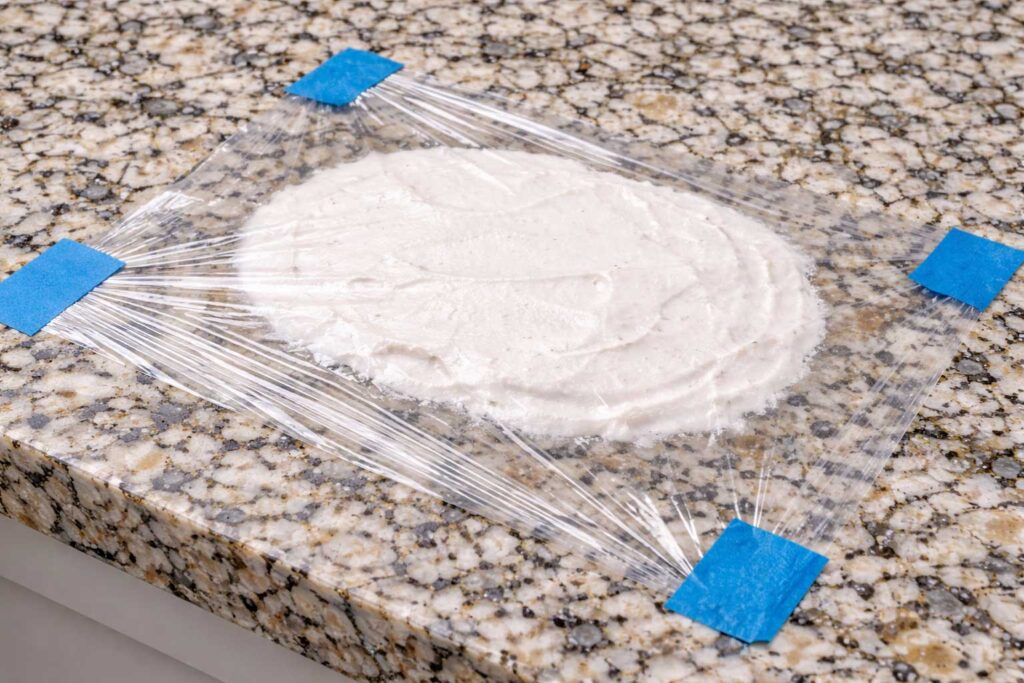
Granite stains are removed by drawing them out of the stone, not by scrubbing the surface. This is why poultices are commonly used.
A poultice is an absorbent paste combined with a compatible cleaning agent. As it dries, it pulls the stain from the stone’s pores. Different stains require different approaches, and results are gradual rather than immediate.
Scrubbing aggressively often worsens staining or damages the finish. If a stain shows little improvement after multiple properly applied poultice attempts, it is likely too deep for DIY treatment. At that point, professional stone restoration is the appropriate next step.
Granite Countertop Maintenance Sealing Explained
Sealing granite does not make it stain-proof. It slows absorption, giving homeowners time to clean spills before they penetrate the stone.
Sealants wear down gradually due to heat, cleaning products, and daily use. There is no permanent sealer for residential granite, despite marketing claims.
A simple water test helps determine whether sealing is needed. If water darkens the stone within a few minutes, the sealer is no longer effective.
Ignoring sealing leads to recurring stains that routine cleaning cannot resolve.
Best Way to Seal Granite Countertops
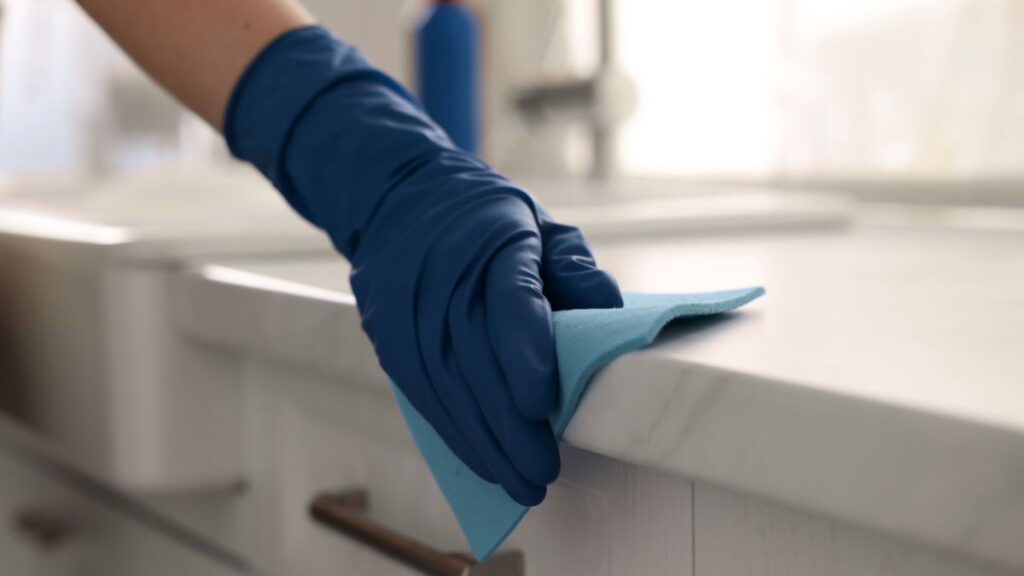
Most granite countertops in U.S. homes need sealing every one to three years, depending on stone density and kitchen use. High-traffic kitchens often require more frequent attention.
The surface must be thoroughly clean and completely dry before sealing. Applying sealer over moisture traps dark patches beneath the surface, creating blotchy discoloration.
Over-application is a common DIY mistake. Excess sealer left on the surface dries into haze rather than protection. If haze or blotching appears after sealing and does not buff out, professional correction is usually required.
How Cleaning Habits Affect Granite Sealer Performance
Harsh cleaners strip sealers faster than normal wear. This shortens resealing intervals and increases long-term maintenance costs.
Improper daily cleaning is a primary reason homeowners believe granite is high maintenance. In most cases, the issue is repeated exposure to the wrong products rather than the stone itself.
Gentle, consistent cleaning extends sealer life and keeps maintenance predictable—especially important for rental properties and resale-focused homes.
Long-Term Granite Countertop Maintenance for Homeowners and Investors
Daily maintenance involves wiping spills promptly and avoiding harmful cleaners. Weekly care focuses on gently cleaning high-use areas before residue accumulates.
Annual maintenance should include checking sealer performance and addressing stains early. Delayed response often turns minor issues into restoration projects.
For rental properties, written care instructions reduce tenant-caused damage. Most granite failures in rentals result from improper cleaning products, not normal wear.
Properly maintained granite retains visual appeal and supports resale value far better than neglected stone.
Frequently Asked Questions About Cleaning Granite Countertops
Is vinegar ever safe on granite?
No. Even diluted vinegar gradually etches and dulls the surface.
Can disinfecting wipes be used?
Occasional use is acceptable, but daily use degrades sealers.
Do granite countertops need polishing?
Polishing is optional and cosmetic. It does not replace sealing.
How long should granite last?
With proper maintenance, granite countertops can last the life of the home.

Conclusion
The best way to clean granite countertops is informed, consistent care that respects how natural stone behaves. Most damage occurs when well-intentioned cleaning relies on the wrong products or excessive force.
When cleaning, sealing, and stain response are handled correctly—and when homeowners recognize when to stop DIY and escalate—granite remains durable, sanitary, and visually stable for decades without unnecessary expense.