
Understanding the True Cost of a Complete Kitchen Remodel
Homeowners often begin estimating the cost to completely remodel a kitchen by searching for an average number. The problem is not that averages are wrong, but that they hide the decisions that actually determine final cost. Two kitchens of the same size can vary by tens of thousands of dollars based on layout changes, system upgrades, and the condition of the home behind the walls.
A full kitchen remodel is less about finishes and more about coordination. Cabinets, appliances, lighting, plumbing, ventilation, and structural elements must work together under current building codes. Once demolition begins, prior shortcuts or outdated systems are often exposed, and those conditions influence cost more than surface selections ever will.
This article explains what a complete kitchen remodel includes, how U.S. cost ranges are formed, and how to interpret those numbers for real homes. It also clarifies when a kitchen facelift is a practical solution—and when it becomes a false economy.
What “Completely Remodeling a Kitchen” Actually Involves
Defining a Full Kitchen Remodel
A full kitchen remodel typically involves removing existing cabinets and appliances, updating electrical and plumbing systems, installing new cabinetry and countertops, replacing flooring, upgrading lighting, and repairing walls and ceilings. Layout changes are common, even when the room footprint stays the same.
The defining factor is system exposure. Once walls and floors are opened, current electrical, plumbing, and safety codes usually apply. This is why full remodels often require permits and inspections, regardless of whether the changes appear cosmetic.
How a Kitchen Facelift Differs
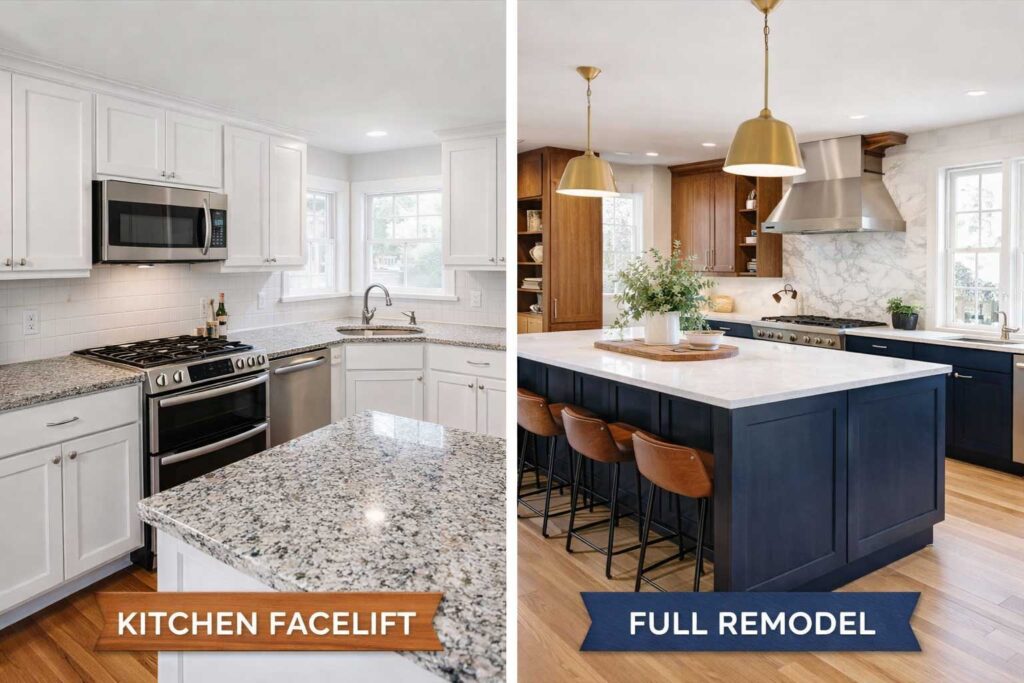
A kitchen facelift improves appearance without altering the underlying structure or systems. Cabinet refacing or repainting, countertop replacement, appliance upgrades, backsplashes, and fixtures are typical components.
Facelifts cost less because they avoid demolition and code-driven upgrades. However, they preserve existing limitations. Poor lighting layouts, inadequate outlets, or inefficient workflows remain unchanged, which can limit long-term satisfaction and resale appeal.
Average Full Kitchen Remodel Cost in the United States
National Cost Ranges and What They Reflect
The average full kitchen remodel cost in the U.S. generally ranges from $30,000 to $80,000, with wide variation based on region, kitchen size, and scope. Smaller kitchens in lower-cost areas may fall below this range, while large or complex remodels in urban markets frequently exceed it.
Cost-per-square-foot estimates, typically $150 to $400 per square foot, provide context but not precision. These figures assume standard conditions. Structural changes, electrical upgrades, or premium materials push costs beyond average benchmarks quickly.
Cost Expectations by Remodel Tier
A budget remodel prioritizes function over customization. Stock cabinets, standard appliances, entry-level countertops, and minimal layout changes are typical. Costs often range from $30,000 to $45,000.
A mid-range remodel balances durability, aesthetics, and usability. Semi-custom cabinets, quartz or granite countertops, upgraded lighting, improved flooring, and selective layout adjustments are common. Budgets typically fall between $45,000 and $70,000.
A high-end remodel emphasizes customization and performance. Custom cabinetry, professional-grade appliances, natural stone surfaces, structural changes, and extensive electrical work are standard. Costs often exceed $75,000 and rise with complexity.
Average Cost of a Kitchen Facelift and Its Limitations
What a Facelift Typically Includes
A kitchen facelift usually includes cabinet refacing or repainting, new countertops, appliance replacement, backsplash installation, and cosmetic lighting updates. Plumbing and electrical systems remain largely unchanged.
Because demolition is limited, labor costs are lower and timelines shorter, often a few weeks rather than several months.
When a Facelift Makes Sense—and When It Does Not
The average cost of kitchen facelift projects typically ranges from $10,000 to $25,000. This approach works well when the layout functions properly, storage is adequate, and electrical and plumbing systems meet current needs.
Facelifts lose value when they conceal underlying problems. For example, refacing cabinets while retaining outdated wiring or insufficient outlets may improve appearance but require reopening walls later. In those cases, the initial savings can be erased by future corrective work.
Where the Money Goes in a Full Kitchen Remodel
Cabinets as a Structural and Cost Anchor
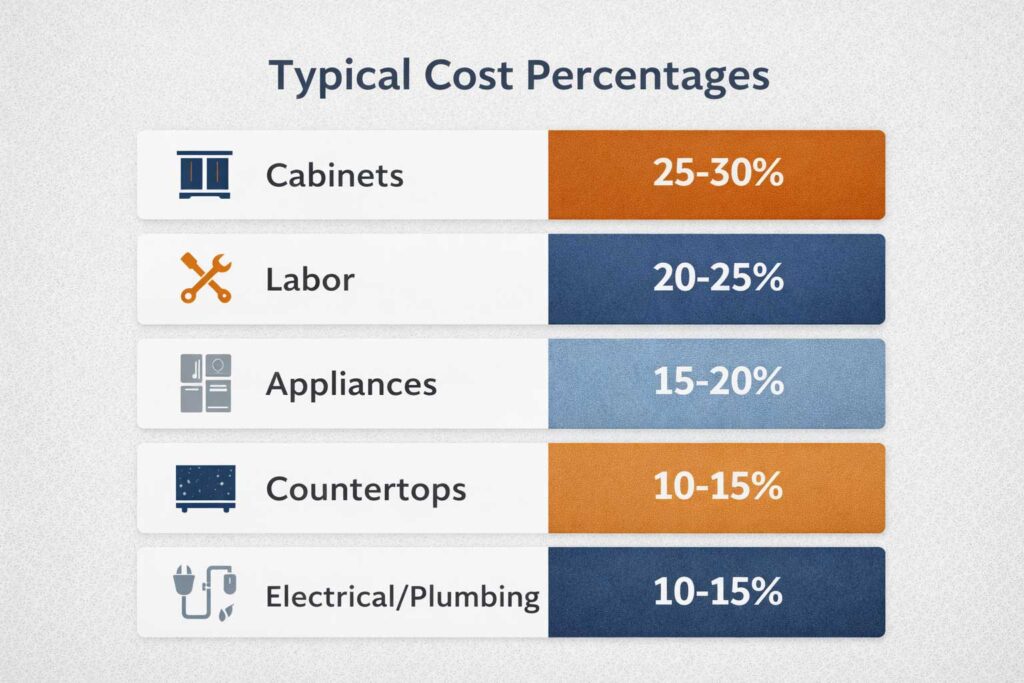
Cabinetry often represents 25–35% of total remodel cost. Stock cabinets limit sizing flexibility, which can affect storage and layout efficiency. Semi-custom cabinets offer better fit and finish with moderate cost increases. Custom cabinets provide full design control but require higher budgets.
Refacing is viable only when cabinet boxes are structurally sound and well-positioned. Otherwise, replacement is often more cost-effective long term.
Countertops and Installation Variables
Countertop pricing depends on material and installation complexity. Laminate is inexpensive but less durable. Quartz and granite balance performance and cost. Heavier natural stone may require cabinet or floor reinforcement, increasing labor costs.
Edge profiles, sink cutouts, and cooktop openings also affect installation costs.
Appliances and Supporting Infrastructure
Standard appliances are widely available and relatively affordable. Professional-grade or built-in appliances increase costs beyond purchase price. Electrical capacity, gas supply, and ventilation often need upgrades to support them safely and legally.
Flooring and Subfloor Reality
Flooring choices affect both material and labor costs. Tile and hardwood are durable but installation-intensive. Luxury vinyl plank offers durability with lower labor demands.
Subfloor repairs are common once existing flooring is removed, especially in older homes where moisture or past leaks have weakened materials.
Plumbing Changes and Their Ripple Effects
Replacing fixtures is relatively straightforward. Relocating sinks, dishwashers, or gas appliances is not. These changes often require opening floors or walls and updating venting to meet code.
Even a “small” move, like shifting a sink base cabinet, can create additional labor if drain or vent lines need to be re-routed to maintain proper slope and function.
Electrical and Lighting Requirements
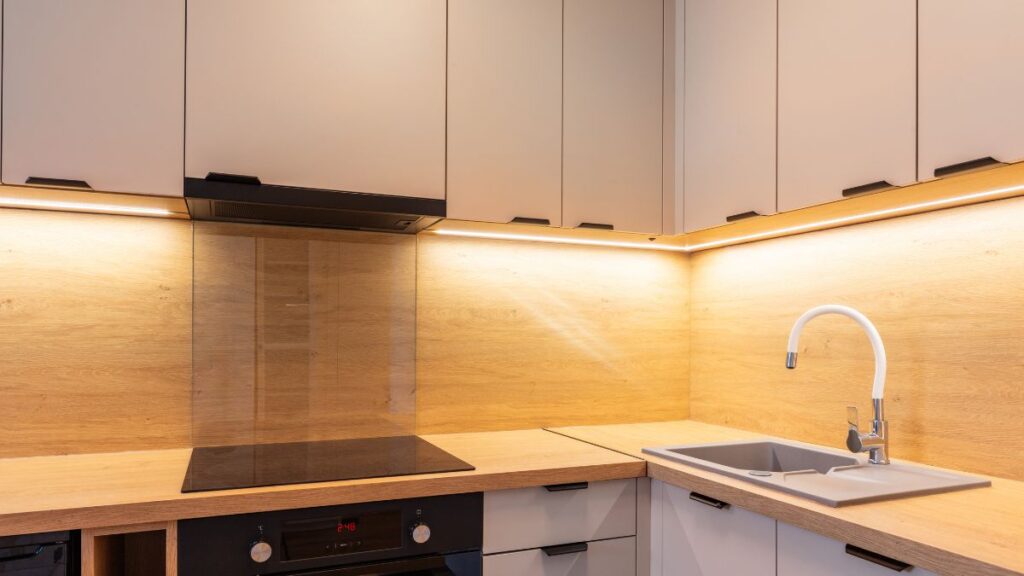
Modern kitchens require more circuits, outlets, and lighting than older designs. GFCI and AFCI protection, appliance circuits, and layered lighting are standard expectations and common cost drivers.
In practical terms, that often means adding dedicated circuits for appliances, upgrading countertop outlets, and correcting outdated wiring that may not safely support today’s loads.
Wall, Ceiling, and Finish Restoration
Cabinet removal frequently reveals damaged drywall or uneven surfaces. Repair, paint, backsplash installation, and trim work should be budgeted as integral parts of the remodel, not afterthoughts.
Labor, Oversight, and Coordination
Labor typically accounts for 40–50% of total cost. This includes licensed trades, scheduling, inspections, and general contractor oversight.
Regional labor rates significantly influence total price, and complexity increases coordination time. A remodel that overlaps multiple trades in a tight timeline tends to cost more than one with simpler sequencing.
Key Factors That Influence Final Remodel Cost
Kitchen size, layout complexity, structural modifications, permit requirements, geographic location, and home age all affect cost. Larger kitchens require more materials and longer installation time, while complex layouts increase labor due to more cuts, corners, and fitting work.
Structural changes—such as removing a wall for an open concept—add engineering considerations, new supports, and inspections. Permits and inspection timelines also affect overall project cost, especially if changes trigger code upgrades.
Older homes are particularly susceptible to budget increases once outdated systems are exposed. When electrical panels, wiring methods, plumbing, or ventilation do not meet current standards, updating them can become a necessary part of finishing the remodel safely.
DIY vs Professional Work: Where Cost Savings End
Demolition, painting, and basic installations can reduce costs when done correctly. DIY savings are most reliable when tasks are low-risk, do not affect code compliance, and do not require specialized tools or inspections.
Electrical, plumbing, gas, and structural work should be handled by licensed professionals. These systems affect safety and must meet code. A mistake behind a finished wall can be costly to correct because repairs often require removing finished surfaces.
Improper DIY work can lead to failed inspections, rework, and delays. Correcting mistakes after cabinets and countertops are installed often costs more than hiring a professional initially.
Kitchen Remodel Cost and Return on Investment
Mid-range remodels often deliver the strongest return because they align with buyer expectations without exceeding neighborhood value limits. In many markets, buyers will pay for a kitchen that feels updated and functional, but they may not pay proportionally more for premium materials and highly customized features.
High-end upgrades can improve daily living, but resale value is constrained by comparable home sales and appraisal realities. If nearby homes do not support the higher price, the market may not reward the additional spend.
For investors, ROI depends on exit strategy. Rental properties benefit from durability, ease of maintenance, and readily available replacement parts. Resale-focused projects should match local buyer preferences and avoid over-improving beyond what the neighborhood typically supports.
Budgeting Errors That Increase Total Cost
Many cost overruns happen before construction begins—when the scope is unclear, allowances are unrealistic, or contingencies are skipped. Underestimating labor is especially common because materials are visible and easy to price, while trade work and coordination are not.
Skipping contingency funds often turns normal discoveries into budget emergencies. In an older home, hidden issues like damaged subflooring, outdated wiring, or plumbing leaks are predictable risks once demolition starts.
Choosing finishes without considering durability can also increase total cost. A cheaper surface that stains, chips, or fails early can cost more over time than a mid-tier option that performs consistently.
Skipping permits to save money can create inspection issues, insurance complications, and resale problems later.
Building a Realistic Kitchen Remodel Budget
Start by prioritizing function: storage, lighting, workflow, and safe electrical capacity. These elements shape how the kitchen performs every day and are expensive to fix after finishes are installed.
Include a contingency of 10–20% for full remodels, and consider a larger buffer for older homes. The goal is to avoid rushed decisions when surprises appear.
When reviewing bids, compare scope—not just the bottom-line number. A low bid can hide missing line items or unrealistic allowances that later become extra charges.
Example Cost Scenarios by Kitchen Size
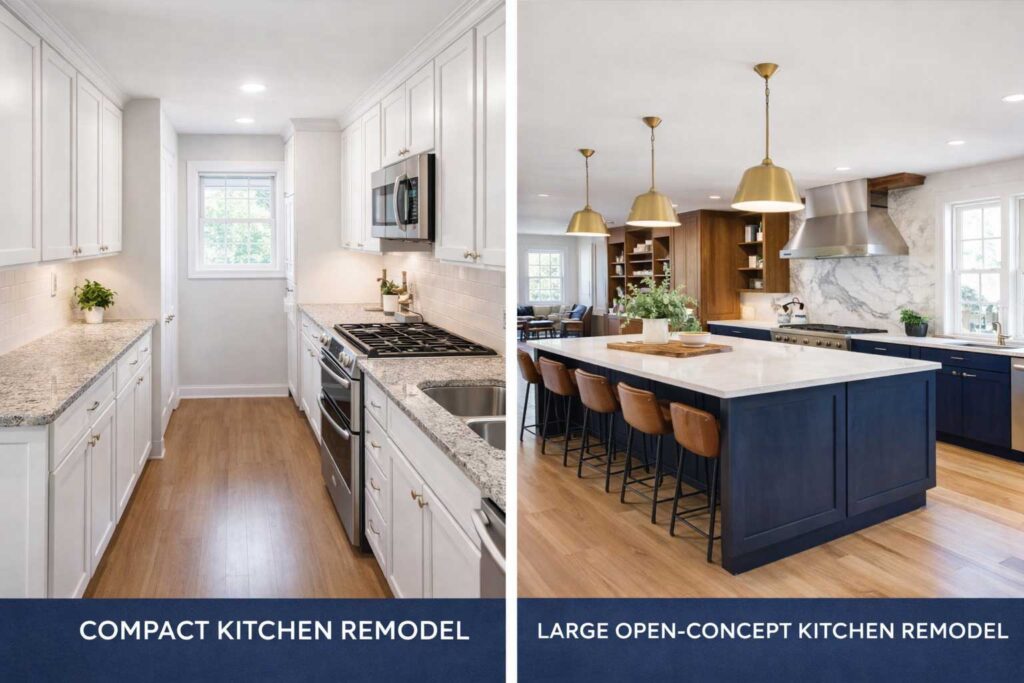
Small Kitchen Remodel
A small kitchen with minimal layout changes often costs $30,000–$45,000. Budgets at this level usually prioritize practical cabinet storage, durable counters, updated lighting, and code-compliant outlets and circuits.
Medium Kitchen Remodel
A mid-sized kitchen with upgraded finishes and partial layout changes commonly falls between $45,000 and $70,000.
Large or Open-Concept Kitchen Remodel
Large kitchens involving structural work frequently exceed $75,000, particularly when premium materials are used.
Choosing Between a Full Remodel and a Facelift
A facelift is appropriate when the layout works and systems are in good condition. It is a practical choice when the goal is cosmetic improvement without disruption.
A full remodel is the better choice when safety, efficiency, or long-term value is compromised.
Common Planning Questions Answered in Context
Most full kitchen remodels take 8–16 weeks. Budgets under $25,000 generally require limited scope. Moving plumbing almost always increases cost. Remodeling before selling makes sense when improvements align with local market expectations.
Final Planning Takeaways

The cost to completely remodel a kitchen reflects decisions about scope, systems, and long-term priorities. Understanding how costs are built helps avoid false savings and supports better planning.
Clear priorities, realistic budgets, and an honest assessment of existing conditions lead to better outcomes and fewer regrets.