

If you’ve noticed cracks in your walls, uneven floors, or doors that won’t close properly, your foundation could be the culprit. These issues may signal that your home is settling, sinking, or shifting. While some homeowners might consider DIY foundation repair, it’s important to understand when jacking up a house is a feasible solution and when professional help is necessary. This guide outlines the process of jacking up a house to repair its foundation, providing practical steps and key considerations for informed decision-making.
Essential Information to Know Before You Start
Before embarking on a foundation repair project, it’s crucial to evaluate the extent of the problem. Common signs of foundation issues include cracks in walls, uneven floors, and misaligned doors or windows. If these symptoms are present, your foundation may be sinking or shifting due to factors like expansive soil or poor drainage.
Assess whether the damage is localized or widespread. Minor shifts can sometimes be repaired by homeowners, but for larger, more significant issues, it’s advisable to call in a professional. Major foundation damage—such as large cracks or extensive sinking—often points to underlying problems, like soil instability, that require expert intervention.
Costs: Foundation repair costs can vary widely. Minor repairs typically cost between $1,000 and $3,000, while more comprehensive repairs—such as installing piers or stabilizing the foundation—can range from $10,000 to $15,000. Before starting any repair work, it’s essential to get an inspection to determine the necessary repairs and their associated costs.
Required Tools and Materials for the Job

If you choose to take on the repair yourself, having the right tools and materials is essential. Here’s a breakdown of what you’ll need:
- Tools:
- Hydraulic jacks or floor jacks: Used to lift the house evenly and with controlled pressure.
- Screw jacks: Allow for finer control when leveling the foundation.
- Leveling tools: A laser level or carpenter’s level ensures accurate lifting and leveling.
- Shims and temporary support beams: These are necessary for stabilizing the house while you work.
- Impact wrench: Required for securing piers or reinforcement materials.
- Materials:
- Concrete blocks or steel piers: These provide long-term support once the house is lifted.
- Reinforcement materials: Depending on the damage, you may need steel beams, mortar, or grout for filling cracks.
- Drainage systems: Installing a proper drainage system under the house can prevent future water-related issues.
- Safety Gear:
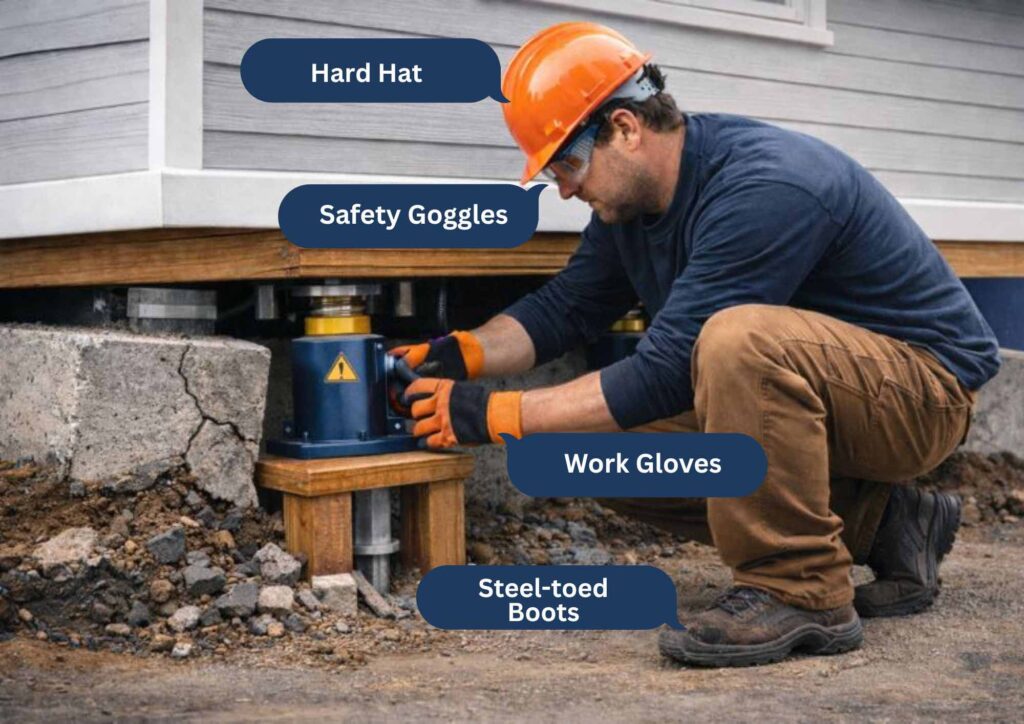
- Personal protective equipment (PPE): Hard hats, gloves, steel-toed boots, and safety goggles are necessary for personal safety during the repair process.
A Detailed Guide to the Repair Process
Step 1: Prepare the Area
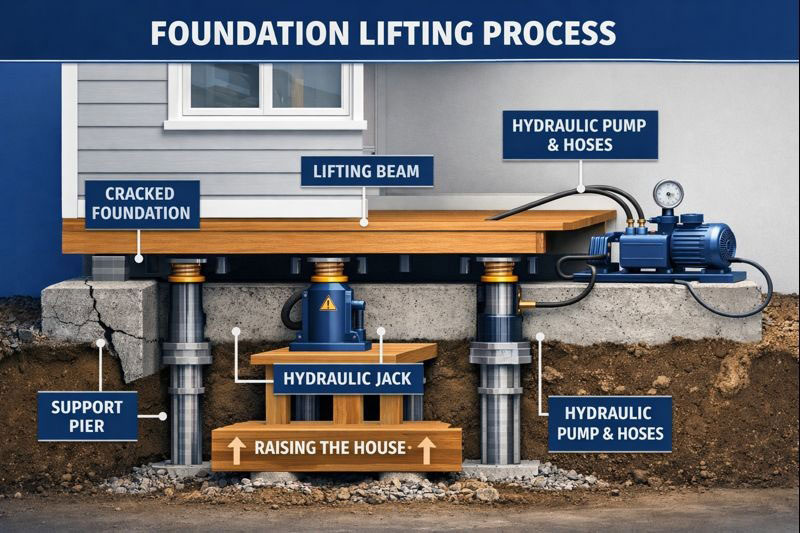
Clear the work area of obstacles and debris, ensuring there’s enough space for your tools and equipment. Inspect the foundation for cracks or signs of significant damage, marking areas that need immediate attention. If the surrounding soil is unstable or waterlogged, address drainage issues first to prevent further damage.
Install temporary support beams or shims under the house to help stabilize it while you perform the repair. These will also help prevent the house from shifting during the jacking process.
Step 2: Lifting the House
Place the jacks evenly along the foundation, ensuring the weight is distributed. Lifting the house should be done gradually to prevent damage. Start by slowly raising the house, no more than 1/8 inch at a time, and use a level throughout the process to check alignment. This ensures the house lifts evenly, reducing the risk of cracks or instability.
As you lift, keep the load balanced across the foundation to avoid shifting or further damage. If the house lifts unevenly, stop the process and adjust the jacks as needed to level it out.
Step 3: Foundation Repair
Once the house is raised, reinforce the foundation by installing concrete blocks or steel piers. If cracks are present in the foundation, fill them with a suitable filler or grout to prevent water intrusion. Reinforce the foundation to ensure stability after the repair.
Once the foundation is secure, slowly lower the house back onto the new supports. Make sure the house is level and properly aligned before finalizing the adjustment.
Common Errors to Avoid During Foundation Repair
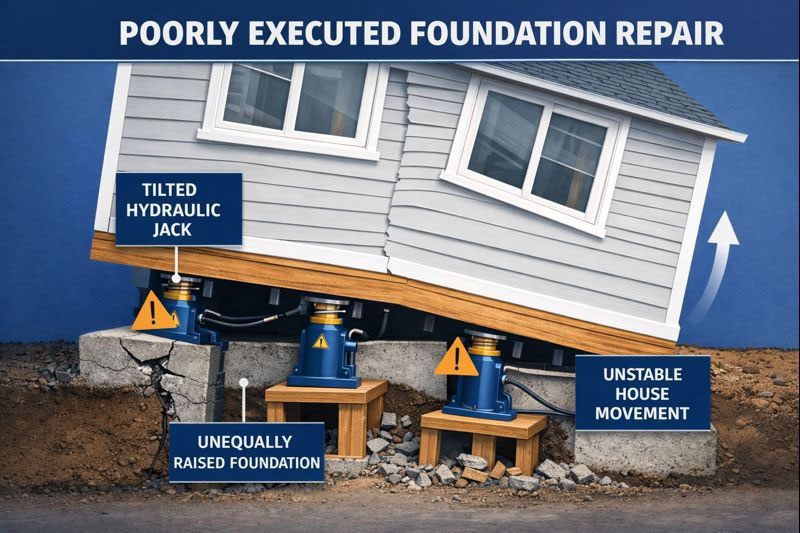
- Lifting Too Quickly or Unevenly: If the house is lifted too fast or unevenly, it can lead to structural damage. Take care to lift the house gradually and check for evenness at each step.
- Skipping Temporary Support Beams: Failing to install temporary support beams before starting can cause the house to shift or collapse while you’re lifting it.
- Neglecting Soil Conditions: Always check the soil’s stability before beginning repairs. Expansive or poorly compacted soil can undermine the repair if left unaddressed.
- Ignoring Permits and Codes: Some foundation repairs require permits or compliance with local building codes. Failing to adhere to these regulations can lead to fines or issues when selling the property.
Safety Guidelines and Compliance Considerations
- Building Codes and Permits: Before starting the repair, check local regulations to determine whether you need a permit. These codes often specify the type of repairs allowed and the materials required. Not adhering to these codes can lead to legal or financial complications.
- Weight Limitations: Always ensure that the jacks and equipment you use are rated for the weight of your house. Overloading the equipment can cause accidents or failure during the process.
- Safety Gear: Wearing PPE—such as hard hats, gloves, steel-toed boots, and goggles—is essential to protect yourself from falling debris or shifting materials.
- Pier Installation Standards: Some local codes may set specific requirements for the depth and type of piers used to reinforce the foundation. Be sure to consult these regulations to ensure proper installation.
Frequently Asked Questions (FAQs)
- What causes a house to sink, and how can it be repaired? A house can sink due to unstable soil, poor drainage, or natural settling. Foundation jacking, along with the installation of piers or concrete blocks, is typically used to stabilize the house.
- How much does it cost to jack up a house for foundation repair? Costs vary depending on the extent of the damage. Minor repairs typically range from $1,000 to $3,000, while more complex repairs can cost up to $10,000 or more.
- Can I jack up a house myself, or should I hire a professional? DIY repairs are possible for minor issues, but for significant foundation damage, soil instability, or complex foundation types, it’s best to consult a professional.
- How long does it take to jack up a house to repair the foundation? The process can take anywhere from a few days to a week, depending on the severity of the damage and the methods used.
Final Advice: When to Seek Professional Help
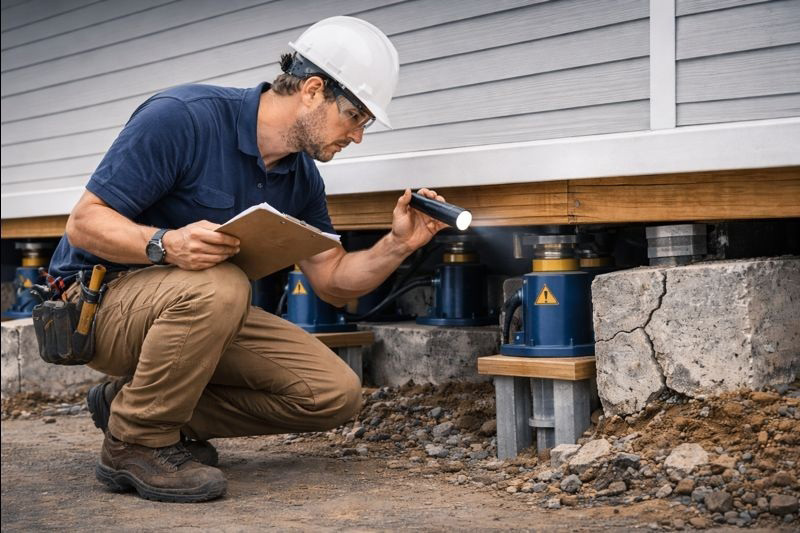
If the foundation issues are severe—such as large cracks, significant settling, or structural instability—professional help is essential. While DIY repairs can be cost-effective for minor issues, complex cases require specialized knowledge and equipment.
Before attempting a repair, consider consulting a structural engineer or contractor to assess the damage and determine the most appropriate course of action. Professional intervention ensures that the repair is done safely and effectively, protecting your home’s long-term structural integrity.
This article provides homeowners with the information they need to approach foundation repair with confidence. By understanding the steps involved, avoiding common mistakes, and knowing when to call a professional, you can make an informed decision about how to address your foundation issues.